

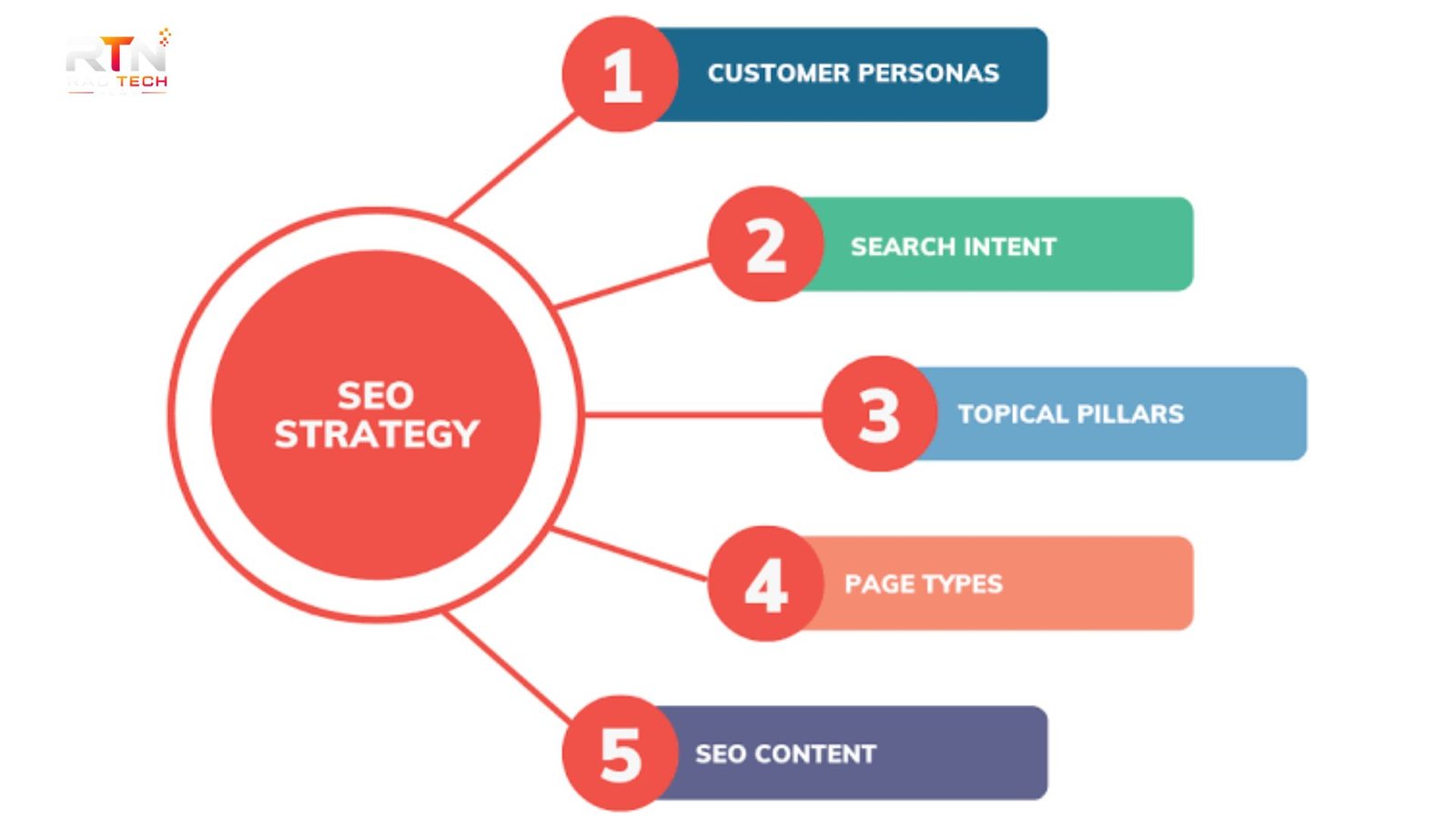
An effective seo content marketing strategy connects what people search for with content that genuinely helps them make a decision, solve a problem, or complete a task. It is more than adding keywords to blog posts. The strongest approach combines audience research, search intent, topic planning, content quality, optimization, distribution, and measurement.
For businesses in the USA and UK, the goal is not simply to publish more pages. It is to build a useful body of content that can attract qualified organic traffic and support broader marketing objectives.
What Is an SEO Content Marketing Strategy?
An seo content marketing strategy is a structured plan for creating, optimizing, publishing, and promoting content so it can serve both an audience and business goals.
Content marketing itself focuses on producing valuable, relevant content for a defined audience, while SEO helps that content become discoverable through search. The two disciplines work particularly well together when content decisions begin with audience needs rather than keywords alone.
A documented strategy should clarify the business purpose, target audience, editorial direction, channels, and measurement approach. Content Marketing Institute similarly distinguishes strategy from a content plan: strategy establishes the reasoning and direction, while the plan deals with execution.
How to Build an SEO Content Marketing Strategy
1. Start With a Business Objective
Before researching keywords, determine what the content program needs to accomplish.
Possible objectives include:
- Generating qualified organic leads
- Supporting product or service discovery
- Increasing relevant website traffic
- Educating potential customers
- Strengthening brand authority
- Supporting sales conversations
Choose a primary objective first. A strategy becomes difficult to evaluate when every article is expected to increase traffic, generate leads, build awareness, and drive immediate sales simultaneously.
2. Define the Audience and Search Intent
Your audience is more than a demographic profile. Identify what people need, what problems they are trying to solve, and where they are in the buying journey.
Then classify search intent. A query may be primarily:
- Informational: the searcher wants to learn something.
- Commercial: the searcher is researching options.
- Transactional: the searcher is ready to take action.
- Navigational: the searcher is looking for a particular website or brand.
For example, someone searching “how to improve local SEO” needs educational content, while someone searching “SEO agency pricing” is likely comparing commercial options.
Matching intent prevents a common mistake: creating a sales-heavy page for an audience that is still looking for basic information.
3. Build Topic Clusters Around Real Problems
Keyword research should identify themes, not just isolated phrases.
Start with a core subject and map related questions, subtopics, comparisons, definitions, tools, mistakes, and practical applications. This creates a topical structure in which several useful pages support broader coverage.
For example, a digital marketing company might build a cluster around content marketing that includes:
- Content strategy
- Keyword research
- Editorial calendars
- SEO writing
- Content distribution
- Content measurement
- Content updates
This approach gives readers multiple useful paths through the site and creates natural opportunities for internal links.
4. Create Content With a Distinct Purpose
Every page should have a reason to exist.
Before publishing, ask:
- What question does this page answer?
- Who is it for?
- What information will the reader gain?
- What should the reader do next?
- How is this page more useful than existing alternatives?
A strong seo content marketing strategy does not require every page to be long. A concise explanation can outperform a lengthy article when it answers the query more directly.
Original examples, first-hand business information, expert contributions, clear explanations, and genuinely useful resources can give a page greater practical value than generic summaries.
💡 Pro Tip: Before writing, create a one-sentence “reader outcome.” For example: “After reading this guide, a small business owner can choose three content topics and assign each one a search intent.” If a section does not help deliver that outcome, reconsider its place in the article.
On-Page SEO That Supports the Reader
Optimization should make a page easier to understand rather than harder to read.
Use the primary topic naturally in important elements such as the title, introduction, relevant headings, URL, and descriptive image text. Include related terminology where it helps establish context, but avoid repeating the same phrase unnaturally.
A useful on-page structure looks like this:
| Element | Recommended approach |
|---|---|
| Title | Clearly describe the page and its value |
| H1 | Match the central topic without unnecessary repetition |
| H2s | Address major subtopics or questions |
| URL | Keep it short and descriptive |
| Internal links | Connect related pages with meaningful anchor text |
| Images | Use relevant visuals with descriptive alt text |
| CTA | Match the reader’s intent and stage |
Search optimization should support helpful content rather than replace it. A page designed primarily to manipulate rankings can become less useful to the people it is supposed to serve.
Publish, Distribute, and Update
Publishing is not the end of the process.
A strong seo content marketing strategy considers how each important asset will reach its intended audience. Depending on the business, distribution may include organic search, email, social platforms, communities, partnerships, sales enablement, or digital PR.
Repurposing can extend the usefulness of a strong asset. A detailed article can become a newsletter, presentation, social post series, video script, or sales resource without simply duplicating the original text.
Content also needs maintenance. Review important pages when facts, products, search behavior, or business priorities change. Content Marketing Institute recommends periodically revisiting areas such as channels, core topics, and team processes rather than treating the strategy as permanently fixed.
📌 Key Takeaway: The most useful seo content marketing strategy is not a publishing quota. It is a decision-making system that connects audience needs, search intent, useful content, distribution, and measurable business objectives.
Frequently Asked Questions
What is the difference between SEO and content marketing?
SEO focuses on improving discoverability and search performance, while content marketing focuses on creating and distributing useful material for a defined audience. They overlap heavily, but neither completely replaces the other. Effective programs use SEO to understand demand and improve visibility while using content to provide meaningful value.
How often should a business publish SEO content?
There is no universal publishing frequency. A smaller business may benefit more from producing one well-researched, strategically relevant article each month than publishing several weak pages each week. Quality, consistency, available resources, audience demand, and the competitiveness of the subject should determine the publishing schedule.
Should every blog post target a keyword?
Every search-focused page should have a clear topic and purpose, but forcing a separate keyword onto every article can create unnecessary content. Start with audience questions and business priorities, then use keyword research to understand how people express those needs in search.
How do you measure content marketing success?
Measure outcomes that correspond with the original objective. Depending on the strategy, useful metrics may include organic visibility, qualified traffic, engagement, leads, assisted conversions, revenue influence, or content-assisted sales activity. Traffic alone does not necessarily demonstrate business value.
How long does an SEO content strategy take to work?
Results vary according to factors such as website authority, competition, content quality, technical health, search demand, and distribution. Organic search generally requires sustained effort rather than a guaranteed short-term result. Track progress over time and use performance data to refine topics, formats, and priorities.
Conclusion
A successful seo content marketing strategy begins with a clear understanding of the audience and the business problem content is meant to solve. From there, search intent can guide topic selection, useful content can answer real questions, and distribution can help those assets reach the right people.
The strongest strategy is not necessarily the one that produces the most content. It is the one that consistently turns audience needs into useful resources and connects those resources to measurable business goals.
