

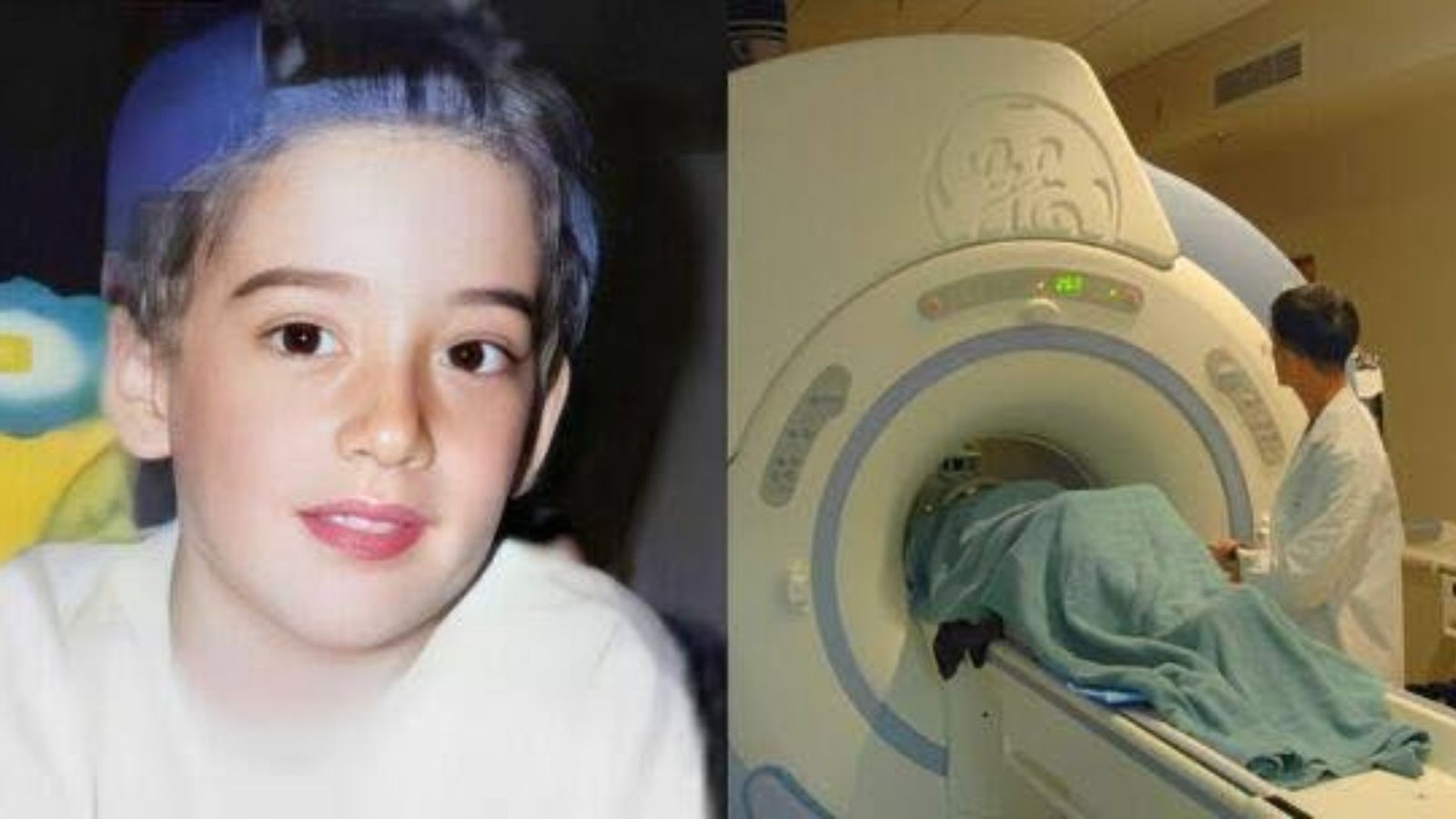
The death of six-year-old Michael Colombini remains one of the most widely discussed MRI safety tragedies in American medical history. A routine medical imaging procedure at Westchester Medical Center turned fatal when a metal oxygen tank entered the MRI room and was pulled toward the scanner by its powerful magnetic field. The accident raised serious questions about hospital safety, staff training and medical responsibility. Understanding the Michael Colombini case helps explain why strict MRI safety procedures are essential in every healthcare facility.
Who Was Michael Colombini?
Michael Colombini was a six-year-old boy from Croton-on-Hudson, New York. He was receiving medical treatment for a benign brain tumor and had undergone surgery before the MRI examination that led to the fatal accident.
His case became nationally known because of the unusual circumstances surrounding his death. Unlike many medical complications, this incident involved a dangerous interaction between an ordinary hospital oxygen tank and the powerful magnetic field of an MRI scanner.
According to the New York Appellate Division’s published court decision, Michael was sedated and positioned inside an MRI machine when medical staff identified a problem with his oxygen supply.
The incident occurred at Westchester Medical Center in Valhalla, New York, in July 2001.
Michael’s story later became an important example in discussions about patient protection, radiology procedures and medical facility safety.
What Happened to Michael Colombini in the MRI Accident?
The Michael Colombini MRI accident happened during a medical imaging procedure on July 26, 2001.
Michael was undergoing an MRI examination following surgery for a benign brain tumor. He was under sedation and positioned inside the scanner.
During the procedure, his oxygen supply became a concern. The anesthesiologist called for assistance because Michael was not receiving the oxygen he needed.
A hospital nurse who was passing through the hallway responded by handing the anesthesiologist a portable steel oxygen cylinder.
However, the oxygen tank contained ferrous metal, which is attracted to strong magnetic fields.
When the tank entered the MRI environment, the scanner’s magnetic force pulled it toward the machine. The cylinder struck Michael’s head and face while he was inside the scanner.
The impact caused catastrophic injuries. Michael later died from those injuries.
The New York appellate court documented these circumstances in Colombini v. Westchester County Healthcare Corp., 24 A.D.3d 712.
Michael Colombini MRI Accident: Complete Timeline
Understanding the sequence of events helps explain how a medical procedure became a fatal accident.
| Date or period | Event | Significance |
|---|---|---|
| Before July 2001 | Michael received treatment for a benign brain tumor. | He required further medical examination. |
| Before July 26, 2001 | Michael underwent surgery to remove the tumor. | The MRI was part of his subsequent medical care. |
| July 26, 2001 | Michael underwent an MRI examination at Westchester Medical Center. | The fatal incident occurred during this procedure. |
| July 26, 2001 | His oxygen supply became a concern. | The anesthesiologist requested assistance. |
| July 26, 2001 | A steel oxygen cylinder was handed to the anesthesiologist. | The cylinder entered the magnetic environment. |
| July 26, 2001 | The MRI magnet attracted the oxygen tank. | The tank struck Michael inside the scanner. |
| July 29, 2001 | Michael died from his injuries. | The incident became a major patient-safety concern. |
| September 2001 | The hospital received state penalties for safety violations. | The case highlighted institutional safety failures. |
| 2005 | The New York Appellate Division reviewed parts of the civil litigation. | The court addressed claims involving several defendants. |
| 2009–2010 | The civil litigation reached a reported settlement. | The legal dispute moved toward resolution. |
The timeline combines the documented accident and death dates with the dates of subsequent legal proceedings. It should not be interpreted as a complete record of every investigation or court filing.
Why Did the MRI Machine Pull the Oxygen Tank?
An MRI machine uses a powerful magnetic field to produce detailed images of the body’s internal structures.
Unlike an ordinary medical imaging room, an MRI room contains an environment where certain metal objects can become extremely dangerous.
The scanner’s magnetic field can attract ferromagnetic objects with tremendous force. If an unsuitable object enters the restricted area, it can accelerate toward the magnet.
This type of incident is commonly called the MRI projectile effect.
Understanding the MRI Projectile Effect
The MRI projectile effect occurs when a ferromagnetic object moves toward an MRI scanner because of magnetic attraction.
Examples of potentially dangerous objects include:
- Conventional steel oxygen cylinders.
- Ferromagnetic medical equipment.
- Metal tools.
- Certain wheelchairs and stretchers.
- Unapproved medical accessories.
- Other magnetic objects brought into the restricted MRI environment.
The oxygen cylinder involved in Michael Colombini’s accident was made of ferrous metal. Its interaction with the scanner’s magnetic field caused it to move toward the machine.
Why Ordinary Medical Equipment Can Become Dangerous
An oxygen cylinder may be essential in an emergency. However, equipment that is safe in an ordinary hospital room may not be suitable inside an MRI room.
Hospitals must use equipment specifically approved for the MRI environment.
The American College of Radiology provides professional guidance on MRI safety, including equipment assessment, access control and screening procedures.
Michael Colombini MRI Accident Investigation: What Did Investigators Find?
The accident attracted attention from hospital administrators, healthcare professionals and state authorities.
The central issue was not simply the strength of the MRI magnet. Investigators and subsequent legal proceedings examined how an unsuitable oxygen cylinder entered a restricted environment.
The New York State Department of Health investigated the incident. The hospital also conducted an internal review.
The New York appellate court’s published decision provides an important legal record of the incident and the parties involved.
The case raised several safety questions:
- Were MRI access restrictions properly enforced?
- Did staff understand the risks associated with ferromagnetic objects?
- Was the oxygen supply system functioning properly?
- Were emergency procedures appropriate for the MRI environment?
- Were responsibilities clearly assigned among hospital personnel and contractors?
These questions illustrate why MRI safety requires coordinated action rather than reliance on one employee’s judgment.
What Happened to Westchester Medical Center?
Westchester Medical Center faced regulatory consequences following the incident.
Contemporary reporting of the New York State Department of Health’s findings stated that the hospital received a $22,000 penalty for 11 code violations associated with the accident.
The reported violations concerned failures involving MRI safety safeguards and facility procedures.
This penalty is separate from the civil lawsuit brought by Michael’s family.
It is important to distinguish a regulatory penalty from a court judgment or a private settlement. They are different legal processes with different purposes.
Michael Colombini Nurse: What Was the Nurse’s Role?
One of the most frequently searched questions about the case concerns the nurse who handed over the oxygen tank.
The New York appellate court identifies the nurse as Mary Nadler.
According to the court record, she was passing through the hallway outside the MRI scanner room when she heard the anesthesiologist calling for oxygen.
She then handed him a ferrous-metal oxygen tank.
The tank was subsequently drawn toward the MRI magnet and struck Michael.
This detail is important because it shows how a decision made during an emergency can have serious consequences when staff members do not follow specialized safety procedures.
However, the nurse’s involvement should not be confused with a complete finding of individual legal responsibility.
The appellate court addressed different claims involving the nurse, MRI technicians, medical organizations and other defendants. It modified the lower court’s decision and allowed certain claims to proceed.
A fair account must distinguish the documented actions of an individual from the final legal outcome of claims against that individual.
Michael Colombini Lawsuit: Who Was Held Responsible?
Following Michael’s death, his family pursued civil legal action connected with the MRI accident.
The lawsuit involved several parties associated with the medical procedure and the operation of the MRI facility.
The case was known as Colombini v. Westchester County Healthcare Corp.
The New York Appellate Division published its decision in 2005.
Parties Identified in the Court Case
| Person or organization | Connection to the case |
|---|---|
| John Colombini | Michael’s father and a plaintiff. |
| Westchester County Healthcare Corporation | Healthcare organization associated with Westchester Medical Center. |
| University Imaging Medical Corporation | Organization responsible for MRI administration and supervision under an agreement. |
| Medical Associates, P.C. | Named in the litigation involving MRI services. |
| Jian Hou | Anesthesiologist who sedated Michael. |
| Valhalla Anesthesia Associates, P.C. | Anesthesia organization associated with the anesthesiologist. |
| Mary Nadler | Hospital nurse who handed over the oxygen cylinder. |
| Patricia Lauria | MRI technician named in the lawsuit. |
| Paul Daniels | MRI technician named in the lawsuit. |
| General Electric Company | Manufacturer of the MRI system. |
| New York Medical College | Organization named in the litigation. |
What Did the Court Decide?
The 2005 appellate decision addressed several important legal questions.
The court determined that certain claims against the MRI organization and employees should not have been dismissed at that stage of the litigation.
It also reinstated claims involving the nurse and MRI technicians.
However, the court did not allow every claim against every defendant to proceed.
For example, it upheld the dismissal of punitive damages claims against the anesthesiologist and his employer. It also upheld the dismissal of punitive damages against the MRI manufacturer.
The court’s decision was a procedural and legal ruling on specific claims. It was not a final finding that every named defendant was liable for the accident.
This distinction is essential when discussing the Michael Colombini lawsuit.
Michael Colombini Settlement: How Much Was Paid?
The settlement is another major subject of public interest.
Published legal-industry reporting from February 2010 stated that Michael Colombini’s estate received a $2.9 million settlement from Westchester County Health Care.
The agreement reportedly resolved the remaining civil claims arising from the accident.
The reported settlement followed years of litigation and legal proceedings.
However, an important distinction must be made: the $2.9 million figure is reported in legal-industry publications, rather than established by the 2005 appellate decision itself.
A settlement also does not automatically mean that every allegation against every defendant was proven in court.
Settlement Details at a Glance
| Question | Available information |
|---|---|
| Was there a civil lawsuit? | Yes. |
| Who brought the case? | Michael’s family and estate. |
| Was Westchester County Healthcare Corporation involved? | Yes. |
| What settlement amount was publicly reported? | $2.9 million. |
| When was the agreement reportedly reached? | October 2009. |
| When were settlement details reported publicly? | February 2010. |
| Does the appellate decision establish the settlement amount? | No. |
| Was every defendant found liable by a trial verdict? | The available records do not establish such a verdict. |
The reported settlement illustrates the financial and legal consequences that can follow serious failures in patient safety.
Michael Colombini Parents: What Is Publicly Known?
People searching for Michael Colombini parents often want to understand how his family responded after the accident.
The published New York court decision identifies his father as John Colombini. His father participated in the civil litigation following Michael’s death.
The court also addressed a claim brought by his father involving emotional distress.
The appellate court found that the circumstances raised a question about whether John Colombini entered the zone of foreseeable danger when he went into the MRI room to help remove his son.
The court therefore did not allow that particular claim to be dismissed at the summary-judgment stage.
This is an important part of the legal history because the case involved not only the child’s injuries and death but also the circumstances experienced by his father.
Beyond the information contained in public legal records, detailed personal information about Michael’s parents should not be assumed or presented without reliable documentation.
Michael Colombini Death: What Was the Cause?
Michael Colombini died on July 29, 2001, three days after the MRI accident.
The immediate cause of the tragedy was the impact of a ferrous-metal oxygen cylinder that was pulled toward the MRI scanner.
The New York court record states that the cylinder struck Michael’s head and face while he was inside the machine.
The accident caused fatal injuries.
His death was not caused by the MRI imaging process itself in the ordinary sense. It resulted from an unsafe interaction between the MRI magnetic environment and an unsuitable metal object.
This distinction matters because MRI examinations are widely used medical procedures. The danger described in this case involved a preventable equipment and access-control failure.
How Did the Michael Colombini Case Change MRI Safety Awareness?
The Michael Colombini accident became an important teaching example for MRI safety professionals.
Its significance extends beyond the events at one hospital.
The accident demonstrated why every person entering an MRI environment must understand the risks associated with strong magnetic fields.
The U.S. Department of Defense’s William Beaumont Army Medical Center later referenced Michael’s death during its 2023 MRI Safety Week activities.
The medical center described the incident as a reason to educate patients and hospital personnel about MRI-related dangers.
Important MRI Safety Measures
Healthcare facilities can reduce projectile risks through several essential precautions.
1. Strict access control
Only authorized and properly screened people should enter restricted MRI areas.
2. Equipment verification
Staff must confirm that oxygen cylinders, wheelchairs, stretchers and other equipment are approved for the specific MRI environment.
3. Staff education
Every healthcare worker who may enter an MRI area needs appropriate safety training.
4. Clear warning signs
Hospitals should display visible warnings about strong magnetic fields and prohibited metal objects.
5. Emergency planning
MRI departments need emergency procedures that allow staff to respond without introducing dangerous equipment.
6. Regular safety reviews
Hospitals should review their MRI policies, access controls and equipment procedures regularly.
These measures help protect patients, medical professionals and visitors.
What Can Hospitals Learn from the Michael Colombini MRI Accident?
The most important lesson is that patient safety depends on the entire healthcare system.
A hospital cannot rely only on MRI technicians to prevent dangerous objects from entering a scanner room.
Radiologists, nurses, anesthesiologists, administrators, contractors and support staff must understand their responsibilities.
The case highlights several broader lessons.
- Emergency response must follow MRI-specific safety procedures.
- Staff must understand that an MRI magnet presents a continuing hazard.
- Medical equipment must be checked before entering restricted areas.
- Hospital policies must be clear and consistently enforced.
- Responsibility must be assigned across departments.
- Safety training must include temporary staff and personnel outside radiology departments.
The tragedy also shows why safety procedures must work under pressure. An emergency is precisely when staff need clear instructions and safe equipment.
Michael Colombini Wikipedia: Is There an Official Biography?
Searches for Michael Colombini Wikipedia and Michael Colombini wiki often reflect a desire for a short biography or an overview of the case.
However, a Wikipedia page should not be assumed to exist simply because people search for the name.
The most reliable starting points for researching Michael Colombini are the published New York court decision and official medical safety materials that discuss the incident.
These sources provide information about:
- His age at the time of the accident.
- His medical procedure.
- The MRI accident.
- The oxygen cylinder.
- The hospital and personnel involved in the litigation.
- The subsequent legal proceedings.
- The continuing relevance of the incident to MRI safety.
Readers should prioritize primary legal and institutional records over unsourced biographies or social media posts.
Michael Colombini Grave: Is There Verified Information?
Some searches for Michael Colombini grave relate to the location of his burial or memorial.
However, the public court decision and official medical safety publication discussed in this article do not establish his burial location.
Without a verified cemetery record, family announcement or reliable memorial record, it would be inappropriate to identify a grave or burial site.
The same caution applies to personal family information that does not appear in reliable public documentation.
Michael Colombini Reddit: What Are People Discussing?
The Michael Colombini case is sometimes searched alongside Reddit because readers want public discussions and personal opinions about the tragedy.
Online discussions can provide insight into how people react to medical safety incidents. However, comments on Reddit are not equivalent to verified evidence.
Readers should check important claims against:
- Published court decisions.
- Official hospital or government statements.
- Medical safety guidance.
- Documented legal proceedings.
For example, claims about the nurse’s role, the settlement amount or the hospital’s regulatory penalties should not be accepted simply because someone repeats them in an online discussion.
The court record provides a much stronger basis for understanding the accident and the legal questions that followed.
Frequently Asked Questions About Michael Colombini
1. Who was Michael Colombini?
Michael Colombini was a six-year-old boy from Croton-on-Hudson, New York, who died following a fatal MRI accident at Westchester Medical Center in July 2001.
2. What happened in the Michael Colombini MRI accident?
A ferrous-metal oxygen cylinder entered the MRI environment and was pulled toward the scanner by its powerful magnetic field. It struck Michael while he was inside the machine, causing fatal injuries.
3. When did Michael Colombini die?
Michael Colombini died on July 29, 2001, three days after the MRI accident on July 26.
4. What was the Michael Colombini settlement amount?
Legal-industry reporting published in February 2010 reported a $2.9 million settlement involving Westchester County Health Care. The 2005 appellate decision did not establish that amount.
5. Who was the nurse involved in the Michael Colombini case?
The New York appellate court identified the nurse as Mary Nadler. It documented that she handed a ferrous-metal oxygen cylinder to the anesthesiologist after hearing his request for oxygen.
6. Why is the Michael Colombini case important for MRI safety?
The case demonstrates the serious risks of allowing ferromagnetic objects into MRI rooms. It highlights the need for equipment screening, controlled access, staff training and clear emergency procedures.
Conclusion: Remembering Michael Colombini and the Importance of MRI Safety
The Michael Colombini tragedy remains a significant reminder of the importance of patient safety in modern healthcare. A six-year-old boy lost his life during a medical examination because a metal oxygen cylinder entered an environment where it should not have been used.
The subsequent investigation and legal proceedings raised important questions about hospital procedures, equipment control and professional responsibilities.
The most meaningful lesson from this case is that MRI safety must involve everyone who works in or enters a medical imaging department. Proper screening, approved equipment, staff education and effective emergency planning can help prevent similar tragedies.
Michael Colombini’s story should be remembered not only as a tragic medical accident but also as a lasting reminder that patient safety must always come first.
