
Medical coding transforms healthcare services, diagnoses, procedures, and treatments into standardized codes used for billing, insurance claims, medical records, and healthcare data management. For anyone exploring a healthcare career or trying to understand how providers receive payment, medical coding explains the connection between clinical documentation and financial operations.
The field requires accuracy, attention to detail, and knowledge of healthcare terminology. Professional coders review patient records, identify relevant information, and assign the correct codes according to established coding systems. This article explains how the process works, the skills required, career options, and what beginners should know before entering the profession.
What Is Medical Coding?
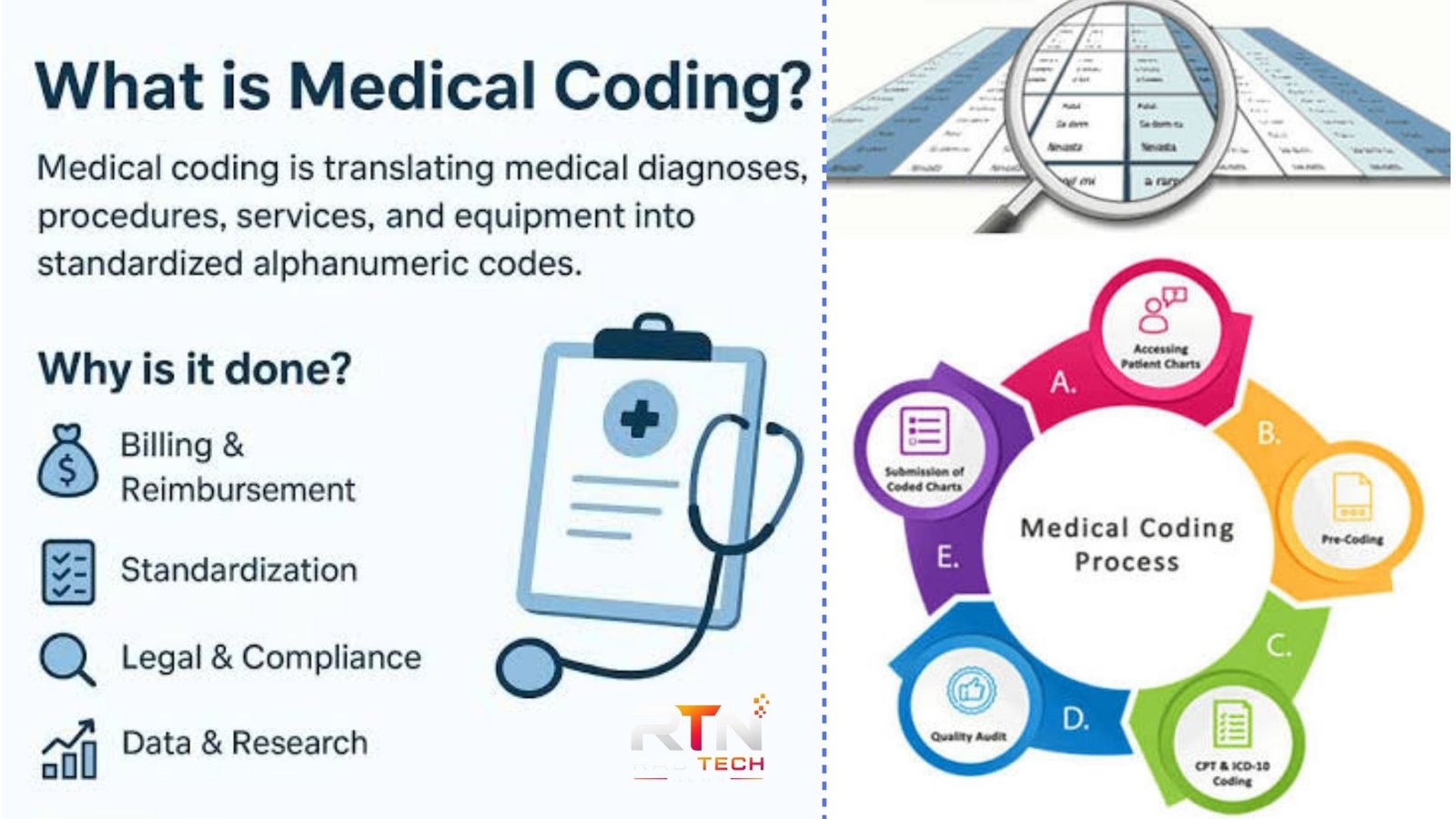
Medical coding is the process of converting healthcare information into universal alphanumeric codes. These codes represent medical conditions, diagnoses, treatments, procedures, and services provided during a patient visit.
Healthcare organizations use coding systems such as ICD (International Classification of Diseases), CPT (Current Procedural Terminology), and HCPCS (Healthcare Common Procedure Coding System). Each system serves a specific purpose. ICD codes describe diseases and conditions, while CPT and HCPCS codes generally represent procedures, services, and medical supplies.
Accurate coding helps healthcare providers submit correct insurance claims, maintain organized patient records, and analyze healthcare trends. Errors in coding can lead to claim delays, incorrect payments, or compliance concerns.
How Medical Coding Works in Healthcare
The coding process begins after a patient receives medical care. A healthcare provider documents the patient’s symptoms, diagnosis, treatment plan, and procedures performed. A coder then reviews this documentation and selects the appropriate codes.
The general workflow includes:
- Reviewing clinical documentation from physicians and healthcare providers.
- Identifying diagnoses, procedures, medications, and services.
- Applying the correct coding guidelines.
- Assigning standardized codes using approved classification systems.
- Checking records for accuracy before claims submission.
Medical coders do not decide diagnoses or create information. Their role is to accurately translate existing medical documentation into recognized coding formats.
Common Medical Coding Systems Explained
Different coding systems are used depending on the type of healthcare information being reported.
| Coding System | Main Purpose | Common Use |
|---|---|---|
| ICD-10-CM | Represents diagnoses and medical conditions | Patient illnesses, injuries, symptoms |
| CPT | Represents healthcare procedures and services | Office visits, surgeries, medical procedures |
| HCPCS | Represents additional healthcare services and supplies | Equipment, medications, ambulance services |
Understanding these systems is one of the most important parts of becoming a successful coder. Each system has detailed rules, updates, and guidelines that professionals must regularly review.
Skills Needed for a Medical Coding Career
Successful coders combine healthcare knowledge with strong analytical skills. Although the job does not usually involve direct patient care, it requires a detailed understanding of medical information.
Important skills include:
- Medical terminology knowledge: Coders must understand anatomy, diseases, treatments, and clinical language.
- Attention to detail: Small errors can affect claims, records, and compliance.
- Research ability: Coding guidelines frequently require careful reference checking.
- Computer skills: Most coding work involves electronic health record systems and coding software.
- Communication skills: Coders often work with healthcare providers, billing teams, and compliance departments.
A strong foundation in these areas helps professionals handle complex documentation and changing healthcare requirements.
💡 Pro Tip: Beginners should practice reading real-world medical documentation examples and become comfortable with anatomy, terminology, and coding guidelines before attempting complex cases. Strong fundamentals usually matter more than memorizing individual codes.
Medical Coding vs Medical Billing
Although they are closely connected, coding and billing involve different responsibilities. Coding focuses on translating healthcare information into standardized codes, while billing focuses on submitting claims, managing payments, and communicating with insurance companies.
| Aspect | Medical Coding | Medical Billing |
|---|---|---|
| Primary Role | Converts medical information into codes | Handles healthcare payment processes |
| Main Focus | Accuracy of documentation and code selection | Claims submission and payment follow-up |
| Knowledge Required | Anatomy, terminology, coding guidelines | Insurance policies, claims procedures |
| Common Workplace | Hospitals, clinics, coding companies | Billing departments, healthcare offices |
Some professionals learn both areas because combined skills can create broader career opportunities in healthcare administration.
Career Opportunities and Work Settings
Medical coding professionals can work in various healthcare environments, including hospitals, physician offices, outpatient centers, insurance companies, and specialized coding service providers.
Common job titles include:
- Medical Coder
- Certified Professional Coder
- Inpatient Coder
- Outpatient Coder
- Coding Auditor
- Clinical Documentation Specialist
Many coding positions also offer remote work opportunities because much of the job involves reviewing digital records and using online coding resources.
Career growth often depends on experience, certifications, specialty knowledge, and understanding of healthcare compliance standards.
Certifications and Training Options
Formal education requirements vary by employer, but many professionals complete training programs and earn industry-recognized certifications.
Popular certification paths include credentials offered by organizations such as the American Academy of Professional Coders (AAPC) and the American Health Information Management Association (AHIMA).
Common certifications include:
- Certified Professional Coder (CPC)
- Certified Coding Specialist (CCS)
- Certified Coding Associate (CCA)
Training programs typically cover medical terminology, anatomy, healthcare regulations, coding systems, and practical coding exercises.
Common Challenges in Medical Coding
Although coding can provide a stable healthcare career path, it requires continuous learning. Coding guidelines change regularly, and professionals must stay updated with new regulations and industry practices.
Some common challenges include:
- Managing complex medical documentation.
- Understanding specialty-specific procedures.
- Keeping up with annual code updates.
- Maintaining accuracy under productivity expectations.
Strong organization and ongoing education help coders manage these challenges effectively.
📌 Key Takeaway
Medical coding connects healthcare documentation with insurance, billing, and patient record systems. Professionals who develop strong medical knowledge, coding accuracy, and compliance awareness can build valuable careers in this growing healthcare support field.
Frequently Asked Questions
What does a medical coder do?
A medical coder reviews healthcare records and converts diagnoses, procedures, and treatments into standardized codes. These codes help healthcare providers create accurate insurance claims, maintain patient records, and support healthcare data management.
Is medical coding a good career choice?
Medical coding can be a suitable career for individuals who enjoy healthcare, organization, and detail-focused work. Opportunities exist in hospitals, clinics, insurance companies, and remote healthcare support roles.
How long does it take to learn medical coding?
The learning period depends on the training program, prior knowledge, and study commitment. Many beginners spend several months learning medical terminology, coding systems, and practical application before seeking entry-level opportunities.
Do medical coders need certification?
Certification is not always legally required, but many employers prefer certified professionals because credentials demonstrate knowledge of coding standards, healthcare regulations, and professional practices.
Can medical coding be done from home?
Yes, many experienced coders work remotely. Remote positions typically require reliable internet access, coding knowledge, familiarity with electronic health records, and the ability to maintain accuracy while working independently.
Conclusion
Medical coding plays a critical role in keeping healthcare systems organized, accurate, and financially functional. By translating clinical information into standardized codes, professionals support insurance processing, medical records, and healthcare operations.
For individuals interested in a detail-oriented healthcare career without direct patient care responsibilities, medical coding offers opportunities to develop specialized skills and work across different healthcare environments. Building strong knowledge of coding systems, terminology, and industry standards is the foundation for long-term success.
