

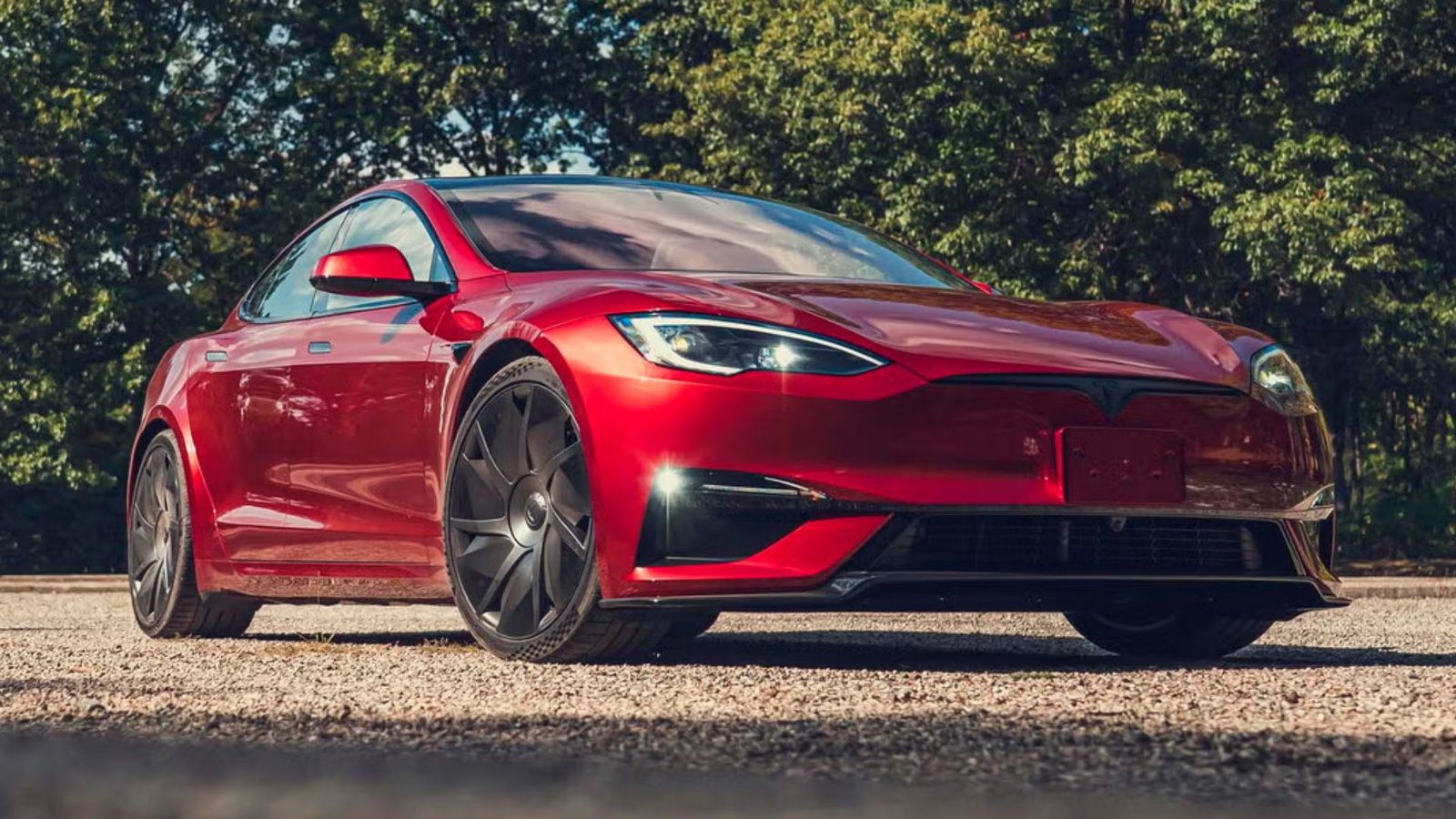
The Tesla Model S remains one of the most recognizable luxury electric sedans, combining long-distance range, strong acceleration, minimalist technology, and all-electric power. For drivers researching the Tesla Model S in 2026, however, there is an important distinction: Tesla’s current U.S. website states that the Model S is no longer in production, although pre-owned inventory may still be available.
That makes the car particularly interesting for buyers comparing used luxury EVs. Its specifications, cabin technology, charging capability, and performance still make it relevant, but availability and vehicle condition matter more than they would with a newly produced model.
What Is the Tesla Model S?
The Tesla Model S is a premium four-door electric sedan that helped establish Tesla as a major player in the luxury-car market. Unlike conventional gasoline sedans, it uses an electric powertrain, battery pack, regenerative braking, and Tesla’s Supercharger network.
The current Tesla specifications page lists two versions: Model S and Model S Plaid. The standard version uses dual-motor all-wheel drive and is listed with an EPA-estimated range of 410 miles, while Plaid uses a tri-motor setup and is listed at 368 miles.
For shoppers, those figures are useful benchmarks rather than guarantees. Real-world range can change with speed, temperature, elevation, wheel configuration, driving style, and other conditions.
Tesla Model S Performance and Driving Character
Performance has always been central to the Model S identity. Tesla lists the standard version at 3.1 seconds from 0 to 60 mph and 670 horsepower. Plaid takes that further, with a claimed 1.99-second 0-to-60-mph time and 1,020 horsepower.
Plaid also has a listed top speed of 200 mph when the required paid hardware upgrade is installed. Without that upgrade, Tesla says the top speed is 163 mph.
The result is a sedan that can serve very different buyers. The standard model focuses more on combining range and performance, while Plaid is aimed at drivers who prioritize extreme acceleration and track-oriented capability.
| Feature | Model S | Model S Plaid |
|---|---|---|
| Drive system | Dual Motor AWD | Tri-Motor AWD |
| EPA-estimated range | 410 miles | 368 miles |
| 0–60 mph | 3.1 seconds | 1.99 seconds |
| Peak power | 670 hp | 1,020 hp |
| Top speed | 130 mph | Up to 200 mph* |
| Supercharging max | 250 kW | 250 kW |
*Tesla notes that the Plaid’s 200-mph figure requires a paid hardware upgrade.
Range and Charging
Range is one of the biggest reasons shoppers consider the Tesla Model S. The standard version’s EPA-estimated 410-mile range provides substantial flexibility for commuting and longer journeys, while Plaid’s 368-mile estimate reflects its greater performance focus.
Tesla also states that the car can add up to 205 miles of range in 15 minutes under its stated test conditions, with access to the company’s global Supercharger network. Actual charging performance depends on factors such as battery temperature, state of charge, Supercharger type, vehicle configuration, and weather.
For used-car shoppers, charging history and battery condition deserve attention alongside the headline range number.
💡 Pro Tip:
If you’re considering a used Model S, check the vehicle’s current estimated range at a high state of charge and review its charging history where available. Comparing that information with the original specification can give you a more useful picture than relying only on the model year.
Interior, Displays and Practicality
Inside, the Tesla Model S takes a technology-focused approach rather than following the traditional luxury-sedan formula. Tesla lists a 17.4-inch first-row touchscreen, a 9.4-inch rear touchscreen, and a separate driver display. The cabin also includes ventilated front seats, heated seats, wireless phone charging, and an all-glass roof.
The second row is designed to accommodate three adults, while Tesla lists 28 cubic feet of cargo capacity for the current specification.
That combination makes the car more practical than its performance credentials might suggest. Buyers who frequently carry passengers or luggage should still inspect the exact vehicle in person because used examples can differ by model year, configuration, and equipment.
Technology and Driver Assistance
Technology is another defining part of the Tesla Model S experience. The vehicle uses multiple cameras and Tesla Vision for functions such as monitoring surrounding traffic, parking assistance, and collision-avoidance features. Tesla also offers Full Self-Driving (Supervised), which it describes as providing additional driving assistance while requiring active supervision from the driver.
These systems should not be treated as autonomous driving. Drivers remain responsible for supervising the vehicle and following applicable traffic laws.
The software-driven approach also means the ownership experience can evolve through updates, although available features may depend on the vehicle’s hardware, software configuration, connectivity, and subscription requirements.
Safety and Ownership Considerations
Tesla says the Model S uses a strong passenger compartment, impact-absorbing structures, airbags, and active safety systems including Forward Collision Warning, Active Emergency Braking, and Lane Departure Avoidance.
However, shoppers should distinguish manufacturer safety claims from independent crash-test results. The IIHS publishes vehicle-specific ratings and notes that its evaluations cover both crashworthiness and crash avoidance.
For a used Model S, ownership considerations extend beyond safety. Battery condition, tire wear, suspension components, brakes, charging equipment, software features, service records, and accident history can all influence the total cost of ownership.
Is the Tesla Model S Still Worth Considering?
The answer depends heavily on what you want from an electric sedan and whether you are buying new or used. Tesla’s current U.S. page says the Model S is no longer in production, so buyers should not approach it like a conventional new-car purchase. Pre-owned inventory can still provide access to the model, but condition and specification become especially important.
A used Model S can make sense for someone looking for a fast luxury EV with substantial range, a technology-heavy cabin, and access to Tesla’s charging ecosystem. On the other hand, buyers who want the latest production vehicle, the newest hardware, or straightforward new-car availability may need to consider other Tesla models or competing electric sedans.
📌 Key Takeaway:
The Model S remains notable for its combination of range, acceleration, technology, and practicality, but its current production status changes the buying equation. For a used example, condition, battery health, configuration, service history, and charging capability deserve as much attention as headline performance numbers.
Frequently Asked Questions
Is the Tesla Model S still being produced?
Tesla’s current U.S. Model S page states that the vehicle is no longer in production, although pre-owned non-Signature Edition inventory may still be available. Buyers therefore need to distinguish between existing inventory and newly manufactured vehicles when researching availability.
How far can a Model S travel on one charge?
Tesla currently lists an EPA-estimated 410-mile range for the standard version and 368 miles for Plaid. These are estimates, and actual range varies with factors such as speed, weather, elevation, battery temperature, and vehicle configuration.
How fast is the Tesla Model S Plaid?
Tesla lists a 1.99-second 0-to-60-mph time for Model S Plaid, with rollout subtracted. It also lists 1,020 horsepower and a 200-mph top speed when the required paid hardware upgrade is installed.
How quickly can it charge?
Tesla lists a maximum Supercharging rate of 250 kW and says the Model S can add up to 205 miles in 15 minutes under its stated test conditions. Charging speed varies depending on battery temperature, state of charge, charger type, and other conditions.
Is a used Model S worth checking out?
A used example can be worth researching if you value long-range electric driving, strong performance, and Tesla’s technology ecosystem. Before purchasing, inspect battery condition, service history, tires, suspension, charging performance, accident history, and the exact features included with the vehicle.
Conclusion
The Tesla Model S continues to stand out for its unusual combination of electric range, high performance, advanced cabin technology, and everyday practicality. Its current production status means today’s buyer should approach it primarily as a pre-owned opportunity rather than assuming a new vehicle can be ordered.
For anyone comparing used luxury EVs, the key is to look beyond acceleration figures and headline range. Vehicle condition, battery health, configuration, charging capability, and ownership history ultimately determine whether a particular example fits your needs.
