

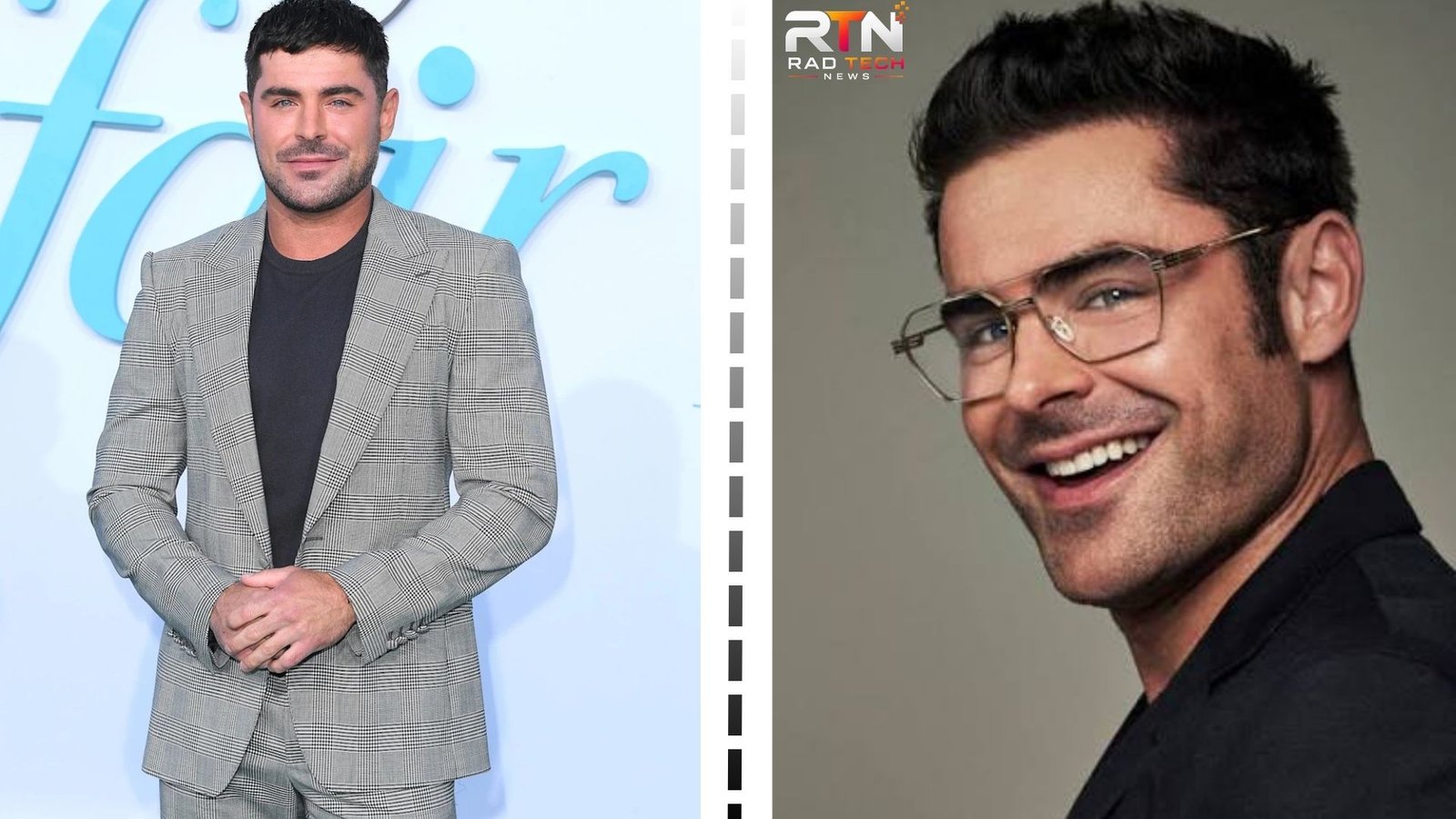
If you recently came across a stylish photo of Zac Efron supposedly appearing in a Prada campaign, you may have had the same reaction as thousands of other people: Is that really him, and is this an actual Prada advertisement? The Zac Efron Prada ad became a surprisingly confusing internet moment because the picture looked convincing enough to pass as a genuine luxury-fashion campaign.
The short answer is important: there is no solid evidence that the viral Zac Efron image was an official Prada campaign. The picture circulated online with Prada branding and quickly attracted attention, partly because viewers were surprised by Efron’s appearance. However, Prada’s official campaign records do not establish Zac Efron as the star of the supposed advertisement.
That distinction matters. Online posts can now look almost identical to professional advertising, particularly after being edited, reposted, cropped, or stripped of their original context.
So, what exactly happened? Here is a closer look at the viral image, why people believed it, who actually appeared in notable Prada campaigns, and what the story tells us about celebrity advertising in the social-media era.
Is the Zac Efron Prada Ad Real?
The viral Zac Efron Prada ad does not appear to be an official Prada advertisement.
The image gained attention after circulating online as though it belonged to a Prada fashion campaign. Zac Efron appeared dressed in an elegant light-colored outfit, with his facial features, particularly his jaw and chin, becoming a major talking point.
That combination was almost guaranteed to generate attention.
You had:
- A globally recognizable actor
- A major Italian luxury brand
- Professional-looking styling
- An unexpected appearance
- An image formatted like fashion advertising
Put those elements together, and many viewers naturally assumed Prada had released a new campaign.
The problem was that the assumption traveled faster than verification.
Prada’s documented campaigns around the period provide an important reality check. For example, the brand officially announced actor Harris Dickinson as the protagonist of its Spring/Summer 2025 menswear campaign. There is no comparable official Prada announcement establishing the viral Zac Efron picture as one of its campaigns.
This makes the distinction between a Prada-style image featuring Zac Efron and an official Prada advertisement starring Zac Efron crucial.
They are not the same thing.
Where Did the Viral Zac Efron Prada Picture Come From?
The confusion appears to have developed through social-media circulation rather than a conventional campaign launch.
Reports about the viral picture noted that it was shared through parody or meme-related accounts before spreading more widely. As the image moved between platforms, much of that original context disappeared.
This happens constantly online.
Someone sees an unusual picture on one platform, saves it, and uploads it elsewhere with a new caption. Another account reposts the second version. Eventually, viewers encounter an image without knowing where it originally came from.
At that stage, Prada’s recognizable branding can become more influential than the source itself.
People think:
“It says Prada, so Prada must have published it.”
But branding inside an image is not proof of authorship.
Why the Picture Looked Convincing
Luxury advertisements actually make particularly effective material for this type of viral confusion.
Prada’s visual identity often favors controlled photography, carefully selected clothing, minimalist compositions, strong personalities, and editorial presentation.
A well-edited celebrity photograph can therefore be made to resemble a fashion advertisement without requiring an extremely complicated design.
That leads to one useful rule:
The more professional an online image looks, the more important source verification becomes, not less.
Professional appearance is no longer reliable evidence that a brand created something.
Why Did Zac Efron’s Face Become the Main Story?
Interestingly, Prada itself was not what kept the story circulating.
Zac Efron’s appearance did.
Viewers focused heavily on his jawline, chin, facial proportions, and overall look. Some social-media discussions immediately connected the picture with years of speculation surrounding changes in Efron’s face.
That speculation needs to be handled carefully.
Efron has previously publicly discussed suffering a serious jaw injury. According to his own explanation, he shattered his jaw after slipping and hitting his chin, and changes associated with his recovery contributed to differences people noticed in his appearance.
That is substantially different from treating online cosmetic-surgery theories as established fact.
Why One Picture Can Be Misleading
A single celebrity photograph is especially poor evidence for judging someone’s appearance.
Consider everything that can alter a face in a photograph:
- Camera focal length
- Shooting angle
- Facial expression
- Lighting direction
- Facial hair
- Makeup
- Weight changes
- Digital retouching
- Image compression
- AI or manual manipulation
Even an untouched photograph can make someone look noticeably different depending on the lens and angle.
Once editing enters the equation, conclusions become even less reliable.
That is why the most interesting part of the Zac Efron Prada story is not really whether his jaw looked different. It is how quickly an unusual-looking celebrity picture encouraged people to accept an unverified advertising claim.
Was Zac Efron Ever a Prada Model?
There is an important difference between wearing Prada and fronting an official Prada advertising campaign.
Celebrities regularly wear luxury brands at premieres, award ceremonies, photo shoots, fashion events, and other public appearances. Stylists also frequently select designer clothing without the celebrity becoming an official ambassador for that label.
Therefore, seeing Zac Efron wearing Prada would not automatically mean he had a Prada contract.
For a campaign claim to be convincing, you would ideally expect supporting evidence such as:
- An official brand announcement
- Campaign material published by Prada
- Credible industry reporting
- Named photographers or creative directors
- A campaign appearing within Prada’s official archive
Those signals are much stronger than a viral social-media caption.
Who Was Actually in the Famous Prada Fragrance Ad?
This is another source of potential confusion.
One of Prada’s best-known recent men’s fragrance campaigns stars Jake Gyllenhaal, not Zac Efron.
Gyllenhaal became the face of Prada Luna Rossa Ocean when the fragrance launched globally in 2021. The campaign film was directed by Johan Renck and placed Gyllenhaal in a dramatic ocean setting aboard a technologically advanced sailing vessel.
The concept centered on exploration, human capability, technology, and pushing beyond perceived limits.
Because Zac Efron and Jake Gyllenhaal are both internationally recognized American actors with strong leading-man images, people encountering fragmented advertising content online can potentially mix up names, campaigns, and photographs.
Prada Luna Rossa Ocean and Jake Gyllenhaal
The genuine campaign had a clear creative idea.
Rather than simply placing an actor beside a fragrance bottle, Prada presented Gyllenhaal as a modern adventurer confronting the power of the ocean.
The sea represented something larger than scenery. It communicated uncertainty, challenge, and discovery.
Technology played an equally important role.
Gyllenhaal’s relationship with the advanced Luna Rossa vessel reinforced the campaign’s broader idea of humans using innovation to extend their abilities.
This is very different from the viral Zac Efron picture, which became notable primarily because viewers questioned the photograph itself.
Why People Believed the Fake or Misleading Ad
The episode reveals something interesting about how we judge information online.
Most people do not consciously verify every advertisement they encounter. Instead, they use visual shortcuts.
A recognizable logo creates legitimacy.
A famous actor creates familiarity.
Professional typography creates credibility.
Fashionable clothing establishes context.
Put all four together and the brain quickly fills in the missing information: This must be a real campaign.
That process worked reasonably well when producing convincing commercial photography required access to photographers, studios, designers, retouchers, and significant budgets.
It works much less reliably today.
The Context Collapse Problem
Here is one overlooked part of the story.
The original creator of an altered image might clearly present something as parody. But once somebody screenshots it and reposts it, the parody label may disappear.
This can be described as context collapse.
The image stays the same while its meaning changes.
A joke becomes a rumor.
A fan edit becomes an advertisement.
A speculative post becomes “news.”
This helps explain why misinformation does not always require someone deliberately trying to deceive millions of people. Sometimes information simply loses its original context as it travels.
How to Check Whether a Celebrity Fashion Ad Is Genuine
You do not need sophisticated fact-checking software.
A quick three-stage check usually works.
1. Look for the Brand’s Original Announcement
Start with the company rather than social media.
Major fashion houses document important campaigns. A celebrity appointment involving someone as recognizable as Zac Efron would normally generate official promotional material.
If dozens of social posts discuss a campaign but the supposed advertiser appears silent, that should immediately raise questions.
2. Check Established Fashion and Advertising Coverage
Major campaigns leave a digital trail.
There are photographers, stylists, creative directors, agencies, press releases, interviews, launch dates, product details, and advertising placements.
A genuine global Prada campaign is unlikely to exist only as one mysterious screenshot.
3. Trace the Earliest Version
Instead of searching only for “Zac Efron Prada,” look for the earliest appearance of the exact photograph.
The first version often reveals whether the content began as:
- A meme
- A parody
- Fan art
- An edited celebrity photo
- A legitimate campaign
- Satirical content
Reposts frequently remove precisely the information needed to understand the original.
What Makes the Zac Efron Prada Story Different?
Most discussions focus on Efron’s face, but there are several more useful lessons hiding underneath the viral moment.
Insight #1: Luxury Branding Makes False Ads More Believable
Minimalist luxury advertising can be unusually easy to imitate.
You do not necessarily need complex product photography. A celebrity portrait, sophisticated styling, clean typography, and a familiar logo may be enough to create something that feels authentic.
Ironically, the simplicity that makes luxury advertising powerful can also make imitation convincing.
Insight #2: Celebrity Recognition Can Override Source Checking
People recognized Zac Efron immediately, which may have reduced their instinct to question the rest of the picture.
This is a psychological shortcut.
When one part of an image is familiar and genuine, viewers can subconsciously extend that credibility to unrelated elements.
Zac Efron is real. Prada is real.
That does not mean the connection between them is real.
Insight #3: Appearance Controversy Became a Distribution Engine
The picture probably would not have attracted the same attention if Efron had looked exactly as viewers expected.
His perceived facial difference gave people something to discuss.
Comments about his appearance encouraged engagement, engagement increased distribution, and increased distribution exposed more people to the “Prada ad” claim.
In other words, the controversy surrounding the person’s appearance helped spread the underlying advertising misconception.
That is an important feature of modern viral misinformation: the detail attracting attention does not necessarily have to be the false part.
Common Mistakes When Discussing the Zac Efron Prada Ad
The first mistake is describing the image as an official Prada campaign without qualification.
The second is assuming every altered-looking celebrity photograph has been generated entirely by artificial intelligence. Traditional photo editing, retouching, compositing, filters, parody graphics, and manipulated existing photographs existed long before generative AI became mainstream.
Another mistake is treating speculation about cosmetic procedures as fact.
Unless reliable evidence exists, it is better to distinguish between what viewers think they see and what the person involved has actually said publicly.
Finally, avoid confusing Zac Efron with Jake Gyllenhaal’s documented Prada fragrance work.
Gyllenhaal’s Prada Luna Rossa Ocean relationship is real and officially documented. That fact does not authenticate unrelated Zac Efron imagery.
What the Viral Ad Says About Celebrity Marketing Today
Celebrity advertising used to follow a fairly predictable route.
A brand announced an ambassador, publications covered the partnership, advertisements appeared, and audiences encountered the campaign afterward.
Social media has disrupted that sequence.
Now audiences can encounter a fabricated or altered campaign before they ever ask whether a partnership exists.
That changes the meaning of “I saw the ad.”
Seeing something formatted like an advertisement does not necessarily mean an advertisement ever existed.
For consumers, journalists, bloggers, and entertainment writers, source verification has therefore become part of basic media literacy.
The Zac Efron Prada situation is a good example because the claim sounds completely plausible. Efron is famous enough to front a luxury campaign, and Prada regularly works with prominent actors.
Plausibility, however, is not evidence.
FAQs
Is the Zac Efron Prada ad real?
The widely circulated Zac Efron Prada image does not appear to represent a verified official Prada advertising campaign. Prada’s documented campaign material does not establish the viral picture as an official collaboration with Efron. The confusion appears to have been driven largely by social-media reposting and altered context.
Did Zac Efron model for Prada?
There is no reliable evidence supporting the claim that the viral image came from an official Zac Efron Prada modeling campaign. A celebrity wearing clothing from a designer is also different from being contracted as that brand’s campaign star or ambassador.
Why does Zac Efron look different in the Prada picture?
The viral picture prompted considerable discussion about Efron’s jaw and facial appearance, but an altered or isolated online photograph is not reliable evidence of physical changes. Lighting, angles, facial hair, retouching, manipulation, and other factors can dramatically affect appearance. Efron has also previously explained that he suffered a serious jaw injury.
Who is the actor in the Prada Luna Rossa Ocean ad?
Jake Gyllenhaal is the actor associated with Prada’s Luna Rossa Ocean fragrance campaign. Prada launched the campaign in 2021, with Johan Renck directing its cinematic advertising film. Gyllenhaal appears as an adventurer navigating the ocean aboard the Luna Rossa vessel.
Was the Zac Efron Prada image AI-generated?
It is safer not to automatically label the viral picture AI-generated without reliable evidence establishing exactly how it was produced. Digital manipulation, conventional photo editing, filters, compositing, and generative AI can all create convincing altered imagery. What can be established more confidently is that the viral picture should not be treated as proof of an official Prada campaign.
Why did the Zac Efron Prada ad become viral?
The image combined celebrity recognition, luxury branding, and surprise about Efron’s appearance. Those factors encouraged people to comment and repost it before checking its original source. As reposts accumulated, the distinction between parody or altered content and genuine advertising became increasingly difficult for casual viewers to recognize.
Conclusion
The Zac Efron Prada ad is a useful reminder that an image can look completely authentic without representing a genuine advertising campaign.
The viral picture attracted attention because Zac Efron appeared noticeably different to some viewers and because Prada branding gave the image an immediate sense of legitimacy. But the available evidence does not support treating it as an official Zac Efron campaign for Prada.
There is also an easy mix-up worth remembering: Jake Gyllenhaal genuinely stars in Prada’s Luna Rossa Ocean fragrance advertising.
More broadly, this story shows why checking the original source matters more than ever. Logos, celebrity faces, professional editing, and thousands of reposts can make a claim look convincing. None of them replaces confirmation from the brand or credible campaign records.
When a celebrity advertisement suddenly appears everywhere online, the best first question is no longer simply “Have you seen this?”
It is “Who originally published it?”
Meta Description: Discover the truth behind the Zac Efron Prada ad, why the viral image caused confusion, whether it was official, and who actually starred for Prada.
