

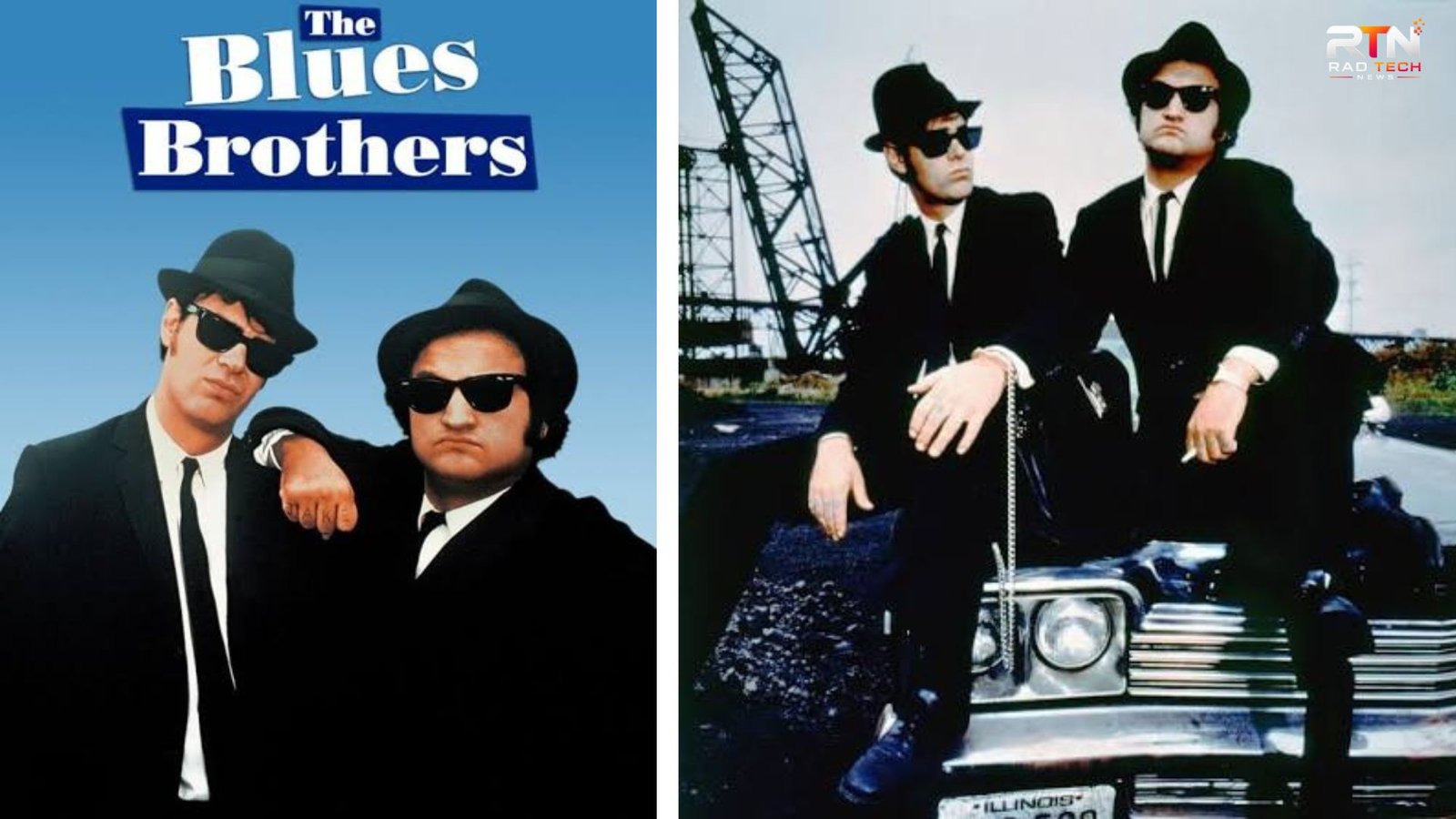
The Blues Brothers is one of the most recognizable musical comedies in American cinema. Released in 1980 and directed by John Landis, the film stars John Belushi as Jake “Joliet” Blues and Dan Aykroyd as his brother Elwood. Their mission is simple: reunite their band and raise money to save the Catholic orphanage where they grew up. What follows is a wildly destructive road trip packed with blues, soul, comedy, car chases, and legendary musicians.
More than four decades later, the movie remains relevant because it works on several levels. It is a comedy, a musical showcase, a tribute to American rhythm and blues, and an unusually ambitious action film. Its journey from Saturday Night Live sketch to National Film Registry selection also makes it an important part of American popular culture.
How The Blues Brothers Began on Saturday Night Live
The story began before the movie. Dan Aykroyd and John Belushi developed the characters through performances connected with Saturday Night Live. The act officially made its television debut on April 22, 1978, after earlier experiments that featured Belushi singing blues material while Aykroyd played harmonica.
The characters gradually acquired their familiar appearance: black suits, black hats, sunglasses, and an almost deadpan attitude. Belushi’s enthusiasm for blues music was particularly important to the act’s development. During the filming of Animal House, he became acquainted with blues musician Curtis Salgado, whose influence helped deepen Belushi’s interest in the genre and shaped elements of the Blues Brothers’ musical identity.
The transition from television characters to a genuine musical act was unusually successful. The duo recorded and performed with accomplished musicians, establishing that the concept was more than a comedy sketch.
The 1980 Film: Story and Main Characters
In the film, Jake Blues is released from prison and reunited with his brother Elwood. They learn that the orphanage where they were raised faces a financial crisis. Rather than accept defeat, the brothers decide to assemble their old band and earn enough money to save it.
Their quest becomes the film’s central joke and driving force. They describe themselves as being on a “mission from God,” and their determination becomes increasingly chaotic as they encounter police officers, angry former associates, neo-Nazis, and countless obstacles.
| Element | Details |
|---|---|
| Release year | 1980 |
| Director | John Landis |
| Jake Blues | John Belushi |
| Elwood Blues | Dan Aykroyd |
| Genre | Comedy, adventure, musical |
| Running time | 2 hours 13 minutes |
| Rating | R |
| Major musical guests | James Brown, Aretha Franklin, Ray Charles, Cab Calloway |
Universal lists the movie as a comedy, adventure, and musical, with a 2-hour-13-minute running time. Its ensemble includes major performers such as James Brown, Aretha Franklin, Ray Charles, John Lee Hooker, and Cab Calloway.
Why the cast is so memorable
The musical guests are not simply decorative cameos. Many are given substantial opportunities to perform, allowing the movie to function as a showcase for artists whose music had already shaped American popular culture.
James Brown delivers a memorable church performance, Ray Charles appears in a music-store sequence, and Aretha Franklin performs one of the film’s best-known musical numbers. Cab Calloway also receives a major spotlight.
The combination of comedy actors and established musicians gives the film an unusual rhythm. A comic scene can suddenly become a full-scale musical performance, then return to the story without feeling completely disconnected.
💡 Pro Tip: If you are watching the movie for the first time, pay attention to the musicians as much as the plot. The performances provide a useful introduction to the blues, soul, and R&B traditions that inspired the characters.
The Music Is Central to the Movie
Music is the foundation of The Blues Brothers rather than background decoration. The film draws heavily on blues, soul, gospel, and rhythm and blues, bringing together performers from different generations.
The Blues Brothers Band itself included highly respected musicians, including guitarist Steve Cropper and bassist Donald “Duck” Dunn. Their presence helped give the performances a professional musical character instead of making them sound like novelty numbers.
The film’s soundtrack and concert sequences also helped introduce audiences to artists and songs that might otherwise have been unfamiliar to younger viewers. That musical focus is one reason the movie has retained its appeal among both comedy fans and music enthusiasts.
The Oscar collection describes the film as one of the major comedy epics of the early 1980s and highlights its remarkable roster of music legends.
The Car Chases and Chicago Identity
A major part of the movie’s appeal comes from its spectacular car sequences. The Blues Brothers’ battered police car becomes almost as recognizable as Jake and Elwood themselves.
The action escalates from ordinary pursuit to extraordinary destruction, with police cars piling up and public spaces becoming stages for increasingly absurd chases. The scale of these sequences was unusual for a comedy and contributed heavily to the film’s distinctive personality.
Chicago is equally important. The city is not merely a backdrop; its streets, architecture, bridges, shops, and musical history help establish the movie’s identity. The result is a road movie deeply connected to the urban character of the American Midwest.
Why The Blues Brothers Became a Cult Classic
The movie’s reputation has grown over time because its ingredients are difficult to reproduce. It combines two charismatic comedians, a genuine working band, major music legends, large-scale action, and a deliberately exaggerated story.
Its cultural importance was formally recognized in 2020, when the Library of Congress selected The Blues Brothers for the National Film Registry. The Registry identifies films that represent the range and diversity of American film heritage and preserve important parts of the country’s cinematic history.
That recognition places the film beyond the category of a nostalgic comedy. It is now regarded as part of the broader American film canon.
📌 Key Takeaway
The lasting strength of The Blues Brothers comes from the way its comedy and music support each other. John Belushi and Dan Aykroyd provide the comic center, while the musicians give the film genuine musical credibility. The result is a movie that can be appreciated as both entertainment and a celebration of American music.
Frequently Asked Questions
Is The Blues Brothers based on a true story?
No. Jake and Elwood Blues are fictional characters created by Dan Aykroyd and John Belushi. However, the musical world surrounding them draws heavily from real blues and soul traditions, and the film features numerous genuine music legends.
Who directed The Blues Brothers?
John Landis directed the 1980 film. Dan Aykroyd and Landis are credited as the writers, while Robert K. Weiss produced the movie.
Who are the two Blues Brothers?
The central characters are Jake “Joliet” Blues, played by John Belushi, and Elwood Blues, played by Dan Aykroyd. Despite their surname and the film’s title, they are presented as brothers who reunite to help save their childhood orphanage.
Which famous musicians appear in the film?
The cast includes major performers such as James Brown, Aretha Franklin, Ray Charles, Cab Calloway, and John Lee Hooker. Their appearances help make the movie as much a musical showcase as a comedy.
Is the movie worth watching today?
Yes, particularly for viewers interested in classic comedy, blues, soul, or American cinema. Its humor and action reflect its era, but the musical performances and chemistry between Belushi and Aykroyd remain central to its enduring appeal.
Conclusion
The Blues Brothers stands apart because its unusual combination of comedy, music, and action never feels accidental. What began as a Saturday Night Live musical creation became a feature film with an extraordinary cast of performers and a lasting place in American cinema. Its National Film Registry recognition confirms the cultural importance of a movie that still brings together audiences who love comedy and great music.
