

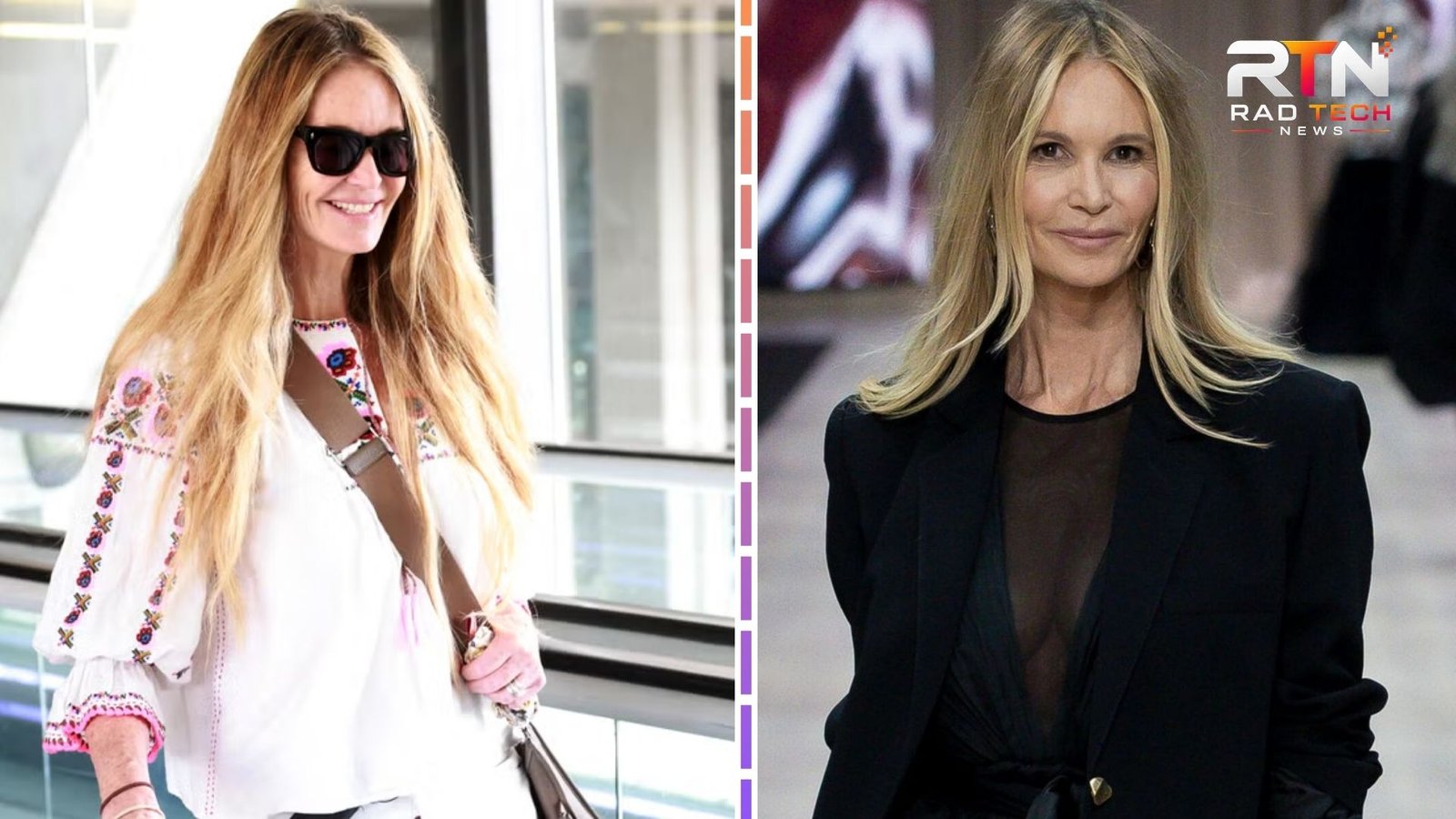
When people search for Elle Macpherson young, they are usually looking for more than a simple collection of facts. They want to understand how a young Australian woman became one of the most recognizable models of the 1980s and 1990s, what made her stand out during an unusually competitive period in fashion, and how her early career shaped everything that followed.
Elle Macpherson’s rise was not simply a story of being tall, photogenic, and discovered at the right moment. Born Eleanor Nancy Gow in Sydney, Australia, on March 29, 1964, she originally had an academic path in mind and briefly studied law. Modeling was initially connected to earning money rather than becoming a lifelong identity. Yet within a few years, magazine covers, advertising campaigns, runway work, and especially Sports Illustrated transformed her into an international figure.
What makes her younger years particularly interesting is the transition. You can see a relatively natural, sporty Australian model gradually learning how to turn visibility into a career, a recognizable identity, and eventually a business platform.
Who Was Elle Macpherson When She Was Young?
Elle Macpherson grew up in Sydney and completed high school before briefly attending the University of Sydney to study law. Her original surname was Gow, while Macpherson came from her stepfather’s surname and remained the name by which she became internationally known.
The important part of her early story is that modeling did not appear to begin as a carefully designed celebrity plan.
She entered the industry while still young and started working professionally in the early 1980s. A 1982 Tab television commercial helped establish her in Australia, presenting the relaxed and approachable quality that would become important to her public image.
That matters because the young Elle Macpherson people remember today was not originally presented as a distant haute-couture personality. Her strongest early appeal combined several qualities:
- An athletic appearance
- Exceptional height and strong proportions
- Natural-looking hair and makeup
- A broad, recognizable smile
- An approachable Australian beach lifestyle
- Enough versatility for commercial and editorial work
That combination made her useful across several parts of the fashion industry rather than limiting her to one particular type of modeling.
How Did Young Elle Macpherson Become Famous?
Macpherson’s international breakthrough did not happen through one isolated event. It was built through repeated exposure.
During the 1980s, she appeared in major fashion publications and became particularly associated with Elle. Her profile then expanded dramatically through Sports Illustrated.
Her first Sports Illustrated Swimsuit appearance came in 1985. She subsequently appeared on the cover in 1986, 1987 and 1988 in three consecutive years. Later covers followed in 1994 and 2006, giving her a record five Sports Illustrated Swimsuit covers.
Why the Three Consecutive Covers Were So Important
Seeing the 1986, 1987 and 1988 covers simply as three successful modeling jobs misses the bigger point.
This was an era before Instagram, TikTok, personal websites, and daily celebrity social feeds. Models became culturally recognizable through repeated appearances in a relatively limited number of high-circulation magazines, advertisements, television appearances, and fashion campaigns.
Three consecutive major covers therefore created something modern audiences might associate with constant digital exposure.
Readers did not merely see Macpherson once. They kept seeing her.
Repeated visibility helped turn a successful model into a recognizable public figure.
That is one reason the young Elle Macpherson period remains so closely associated with Sports Illustrated even though her modeling career extended far beyond the magazine.
Why Was Elle Macpherson Called “The Body”?
By the end of the 1980s, Macpherson’s athletic physique had become such a central part of her public image that the nickname “The Body” became permanently associated with her. Time magazine famously used the description in connection with her in 1989.
The nickname can sound simplistic today, but historically it represented something larger about how she was marketed.
Macpherson was not especially associated with the fragile or extremely delicate fashion aesthetic. Her image emphasized height, fitness, movement, swimwear, outdoor settings, and a visibly athletic build.
That helped distinguish her.
It is also worth remembering that fashion success depends heavily on recognizability. A model does not necessarily become memorable because she matches every conventional expectation perfectly. She becomes memorable when audiences can identify something distinctly hers.
Macpherson herself once reflected on the idea that being less obviously conventional could provide a model with greater photographic range. Sports Illustrated later revisited those comments from an early-1990s shoot.
That observation gives a more interesting explanation of her success than simply saying she was beautiful. Versatility was commercially valuable.
What Did Elle Macpherson Look Like in Her Early Career?
The young Elle Macpherson aesthetic changed throughout the 1980s and early 1990s, but several characteristics remained consistent.
Natural Styling
Early photographs frequently emphasized long hair, relatively uncomplicated makeup, sun-kissed styling, and an energetic rather than overly formal presentation.
Macpherson has said that when she began modeling in Australia during the 1980s, models sometimes handled their own hair and makeup. She recalled having little makeup experience when she entered the industry.
That detail is surprisingly useful when looking back at her early work.
The natural quality people now associate with vintage Elle Macpherson photographs was not always the product of elaborate modern beauty production. Some of it came from the working conditions and aesthetic expectations of the period.
Athletic Rather Than Delicate
Her height and physical presence made her especially suited to:
- Swimwear
- Sports-oriented shoots
- Strong tailoring
- Oversized 1980s jackets
- Simple dresses
- Resort fashion
- Active lifestyle advertising
She could appear glamorous without losing the sporty quality that had originally helped audiences recognize her.
Fashion Changed Around Her Too
Another common mistake is looking at old celebrity photographs and assuming every difference comes from the person herself.
Hairstyles, eyebrow trends, lighting, film photography, tanning preferences, makeup techniques, swimsuit cuts, clothing silhouettes, and retouching standards all changed considerably between the early 1980s and late 1990s.
So when comparing young Elle Macpherson with later appearances, you are also comparing different eras of fashion production.
Elle Macpherson’s Young Career Timeline
| Period | Major development |
|---|---|
| 1964 | Born in Sydney, Australia |
| Early 1980s | Briefly pursued university studies and entered modeling |
| 1982 | Appeared in a Tab commercial during her early career |
| 1985 | Made her Sports Illustrated Swimsuit debut |
| 1986 | First Sports Illustrated Swimsuit cover |
| 1987 | Second consecutive cover |
| 1988 | Third consecutive cover |
| 1989 | “The Body” nickname became strongly associated with her |
| Early 1990s | Expanded from modeling into brand and business opportunities |
| 1994 | Appeared on another Sports Illustrated cover and starred in Sirens |
| 1996–1997 | Expanded acting work with films including Jane Eyre, Batman & Robin and The Edge |
| 1999–2000 | Appeared as Janine LaCroix on Friends |
Her screen career included Sirens, Jane Eyre, The Mirror Has Two Faces, Batman & Robin, The Edge and a recurring role on Friends.
Elle Macpherson Young vs. Other 1980s and 1990s Supermodels
Macpherson emerged during a period that produced an unusually influential generation of models, including Cindy Crawford, Naomi Campbell, Christy Turlington, Linda Evangelista and Claudia Schiffer.
Trying to rank them purely by appearance misses why each became famous.
Their strongest identities were different.
Macpherson’s particular advantage was the combination of fashion credibility and mass-market accessibility.
She could appear in fashion editorial work while also fitting naturally into swimwear, fitness, beauty, advertising, television and eventually consumer products.
That flexibility matters more than it may initially seem.
A runway specialist might dominate fashion circles without becoming equally recognizable to mainstream audiences. A purely commercial model might become recognizable but struggle to build prestige within high fashion.
Macpherson occupied both worlds.
Sports Illustrated later ranked her first in its retrospective list of prominent Swimsuit models, noting her decade-long history with the publication and record cover total.
The Overlooked Reason Her Early Career Lasted
One of the more interesting things about Elle Macpherson’s younger career becomes clear only when you stop treating it as a beauty story.
She developed commercial leverage.
By the time many models would simply have continued accepting endorsement fees, Macpherson was increasingly interested in the business structure behind the products carrying her name.
Years later, she explained that she had moved from being paid simply as a spokesperson toward licensing arrangements that allowed her to participate more directly in the commercial success of products.
That was a significant mindset shift.
Unique Insight #1: She Treated Recognition as an Asset
Most people think the important achievement was earning the nickname “The Body.”
The smarter move was recognizing that a memorable public identity could become intellectual and commercial value.
Rather than allowing the nickname to remain only magazine language, it became connected with later branded ventures.
Unique Insight #2: Her Career Was Built for Several Media Formats
Macpherson was not dependent entirely on runway fashion.
She worked across magazines, swimwear, commercials, campaigns, television, film and product businesses.
That diversification reduced the risk of disappearing when one segment of fashion changed.
It resembles what creators call platform diversification today, except she was doing it before digital platforms existed.
Unique Insight #3: Her “Natural” Look Was Professionally Useful
Natural beauty is often discussed as though it simply means wearing less makeup.
For a working model, however, a relatively adaptable face and styling identity can make it easier for photographers, editors and brands to create multiple interpretations.
Her combination of approachable and glamorous qualities gave clients room to reposition her without making her unrecognizable.
That may help explain why she could move from relaxed swimwear photographs to luxury fashion, tailoring and celebrity media while maintaining the same public identity.
How Elle Macpherson Moved Beyond Modeling
By the 1990s, Macpherson was already showing signs that she did not intend to remain only the person appearing in front of a camera.
Her career broadened into lingerie and other commercial ventures, while she also explored acting.
This transition matters because modeling careers traditionally faced strong pressure around age. Building businesses offered greater control over how her name and public recognition could continue generating value.
Her later interview discussing entrepreneurship makes that philosophy particularly clear. She emphasized the difference between representing another company’s product and becoming actively involved in ownership and management.
For anyone studying celebrity branding, that transition may be more important than any individual magazine cover.
The covers created attention.
The business decisions helped turn attention into longevity.
Common Mistakes When Looking Up Young Elle Macpherson
Because photographs from several decades now circulate together, it is easy to misunderstand her timeline.
Assuming every vintage photograph is from the 1980s: Many widely circulated photographs come from the 1990s, when she was already an established international celebrity.
Thinking Sports Illustrated discovered her: Her modeling career had already begun before her 1985 Swimsuit debut.
Assuming all five covers came during her youth: Three consecutive covers appeared from 1986 to 1988, another came in 1994, and her fifth arrived much later in 2006.
Treating “The Body” as her entire career: The nickname was powerful branding, but she also worked in editorial fashion, acting, television and business.
Comparing photographs without considering the era: Film stock, lighting, makeup, styling and retouching practices can dramatically affect how someone appears.
Keeping the timeline straight gives a much more accurate picture of how her career actually developed.
Why Are People Still Interested in Young Elle Macpherson?
Part of the interest is simple nostalgia. The 1980s and 1990s supermodel era remains culturally influential, and Macpherson was one of its most recognizable figures.
But there is another reason.
Her early career shows a type of celebrity development that is much harder to see today.
Modern public figures can become internationally visible in weeks through social media. Macpherson’s fame accumulated through magazine covers, campaigns, repeated bookings, television exposure and years of industry work.
That slower process meant recognizability had to be repeatedly reinforced.
Her career therefore provides an interesting example of how pre-social-media fame was built: repetition, distinct identity, versatility and commercial awareness.
Frequently Asked Questions
How old was Elle Macpherson when she started modeling?
Elle Macpherson began working professionally while still in her late teens, with her early modeling career taking shape around 1982. Modeling initially developed alongside plans connected with university study rather than as an obvious lifelong career. Within only a few years, however, international assignments had changed that direction considerably.
What made young Elle Macpherson famous?
Her international fame grew through major fashion work and especially her association with Sports Illustrated. She appeared in the Swimsuit Issue beginning in 1985 and then secured three consecutive covers in 1986, 1987 and 1988. That repeated exposure helped turn her from a successful model into a mainstream celebrity.
Why was Elle Macpherson known as The Body?
The nickname referred to the tall, athletic physique that became a major part of her modeling identity. It became particularly famous following Time magazine’s coverage of her in 1989. She later proved unusually effective at turning that recognition into a broader personal brand.
How many Sports Illustrated covers did Elle Macpherson have?
Elle Macpherson appeared on five Sports Illustrated Swimsuit covers: 1986, 1987, 1988, 1994 and 2006. Sports Illustrated identifies that as the record for the most Swimsuit cover appearances by one model.
Was Elle Macpherson an actress when she was younger?
Modeling came first, but Macpherson later expanded into acting. Her notable 1990s work included Sirens, Jane Eyre, The Mirror Has Two Faces, Batman & Robin and The Edge. She later became familiar to another generation of viewers through her role as Janine LaCroix on Friends.
Did Elle Macpherson study law before becoming famous?
Yes. Before modeling became her full-time career, Macpherson briefly studied law at the University of Sydney. Her professional opportunities developed quickly enough that modeling ultimately replaced the academic path she had originally considered.
Conclusion
Looking back at Elle Macpherson young reveals much more than the beginning of a famous modeling career. Her rise shows how a distinctive appearance, repeated high-profile exposure, adaptability and good commercial instincts can reinforce one another.
The Sports Illustrated covers made her internationally recognizable. The “The Body” identity made her memorable. Fashion campaigns gave her industry credibility. Acting introduced her to broader audiences. Most importantly, her move toward ownership and branded businesses gave her a path beyond the normal lifespan of a modeling career.
That is probably the most useful way to understand her younger years. Elle Macpherson did not simply become one of the faces associated with the supermodel era. She learned how to turn that moment of fame into something much longer-lasting.
