
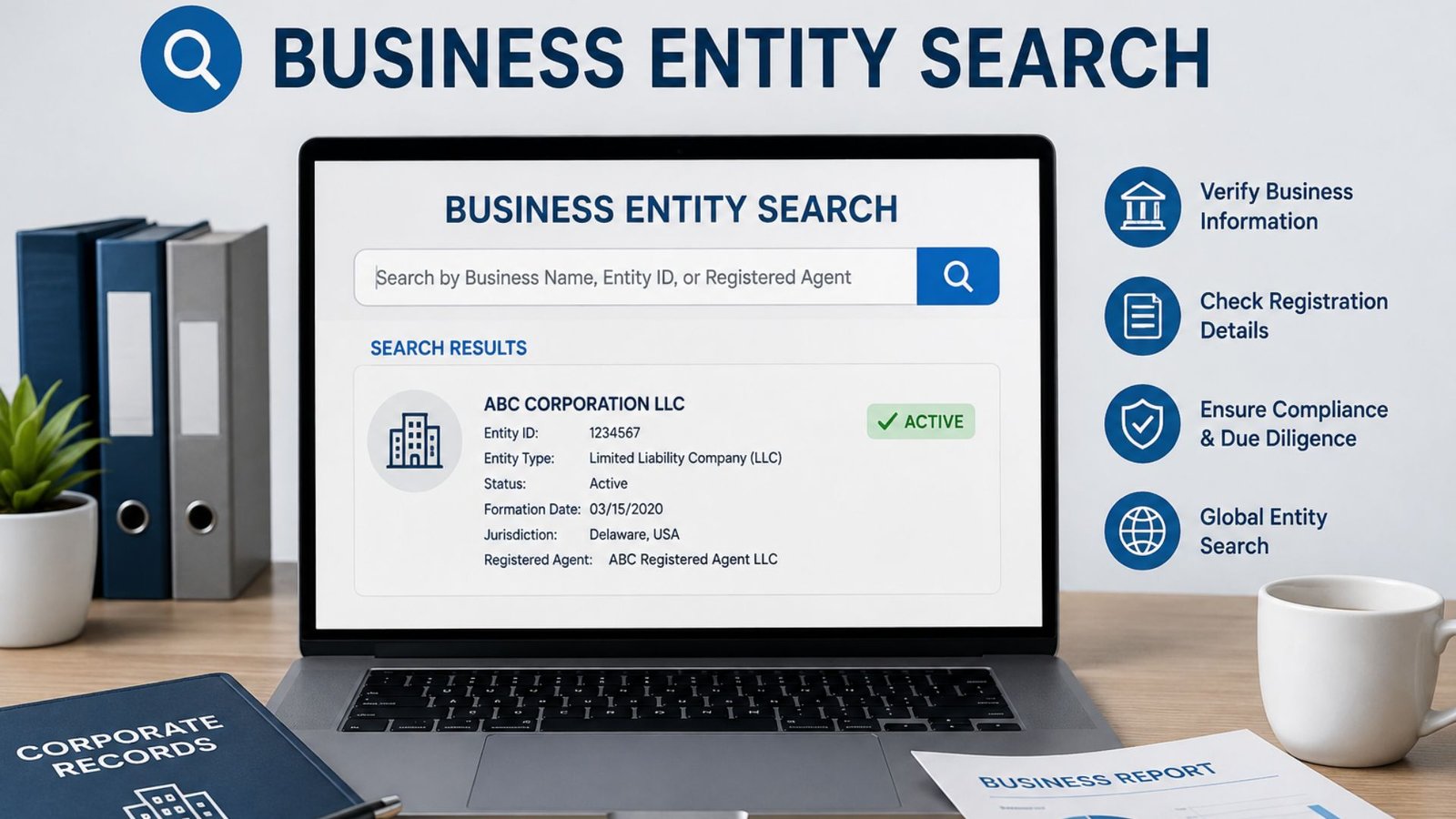
De business entity search helps you confirm whether a company exists, identify its legal structure, and inspect state-filed records before you sign a contract or form a new venture. Delaware’s Division of Corporations maintains the official registry, making it the most authoritative starting point for checking a corporation, LLC, limited partnership, or other registered entity.
Across the USA, UK, Canada, Australia, Pakistan, Germany, and other jurisdictions, business registries serve a similar purpose: they show the legal identity and current status of an incorporated entity. A targeted de business entity search focuses on Delaware, where many global companies choose to register—even if they operate worldwide.
What a Delaware business entity search reveals
A typical record can show the entity’s exact legal name, file number, formation date, entity type, and current status. Depending on the record and document access, you may also find a registered agent, principal address, annual reports, certificates, amendments, and other filing history.
The result is not a complete background check. A state registry generally confirms registration and filing status; it does not prove that a company is financially sound, properly licensed for every activity, or reputable. For deeper due diligence, combine the search with contract review, license checks, litigation screening, sanctions lookups, and beneficial‑ownership information from appropriate sources.
Key details you should review
| Record detail | Why it matters |
|---|---|
| Legal name and file number | Identifies the correct entity in contracts and searches |
| Entity type and formation date | Clarifies the organization’s legal form and history |
| Status and filing history | Flags whether the record appears current and compliant |
| Registered agent | Provides the official contact for service of process |
These fields help buyers, founders, lenders, journalists, and compliance teams distinguish between similar names and confirm they are dealing with the right legal entity.
💡 Pro Tip: Save the search date, result URL, entity ID, and downloaded documents in your due‑diligence file. Registry data can change, and a dated snapshot makes later verification much easier during audits or disputes.
How to use the Delaware business entity search
- Open the Delaware Division of Corporations website or another official state portal, not a third‑party aggregator that may mirror incomplete data.
- Search the legal name, not just the brand. Start with distinctive words, then test variations such as “LLC”, “L.P.”, “Inc.”, punctuation, and spacing.
- Confirm you have the right entity by checking the file number, formation date, and registered agent; similar names are common.
- Review the status and filing history. Active, cancelled, dissolved, or forfeited statuses have different legal consequences.
- Download available certificates or filed documents when banks, investors, procurement teams, or legal advisers need proof.
This step‑by‑step approach works well beyond Delaware. Most corporate registries in the USA, UK, Canada, Australia, Pakistan, Germany, and other countries allow searches by name or ID and provide comparable information.
Delaware name availability and verification
Founders often run a de business entity search before filing formation documents to reduce the chance of rejection or confusion. The search can reveal conflicting or confusingly similar names, but visible results do not guarantee approval. The Division of Corporations applies its own naming rules, and final availability is determined during the filing or by a qualified professional reviewing the proposed name.
For vendor onboarding and KYC, compare the registry record with the company’s tax forms, invoices, contracts, website, and payment instructions. Watch for mismatched legal names, recently changed agents, unexplained status shifts, or requests to send funds to accounts that do not match the entity details. Those signals merit careful verification, not automatic accusations.
📌 Key Takeaway: Use de business entity search to establish a company’s legal identity and filing status, then combine that result with licensing, financial, contractual, and sanctions checks before relying on it for high‑value decisions.
Conclusion
A well‑executed de business entity search is a practical first layer of due diligence, especially when dealing with companies registered in Delaware but operating globally. By focusing on official records, matching legal names, capturing supporting documents, and treating registration as one factor among many, businesses and professionals build a clearer audit trail and reduce avoidable identity and payment mistakes.
Frequently Asked Questions
Is a Delaware business entity search free?
Basic online searches may be offered at low or no cost through Delaware’s official corporate records services, while certificates, certified copies, and some document requests can carry fees. Always check the latest state portal information before budgeting. When accuracy or legal proof matters, rely on the official record rather than third‑party directories.
Can I search a Delaware LLC by owner name?
The most reliable method is to search by the legal entity name or Delaware file number. Public corporate records may show the registered agent and, in some cases, specific officers or signatories, but they usually do not list every owner or beneficial owner. If ownership is critical, request appropriate documentation and follow applicable legal and privacy requirements.
Does registration alone prove a company is legitimate?
Registration confirms that an entity exists or existed in a government database; it does not guarantee financial health, ethical conduct, licensing, or performance. Combine the de business entity search result with independent verification of contact details, license checks, reference calls, and contract reviews before making payments or entering binding agreements.
What if I cannot find the company in the Delaware registry?
First, check spelling, remove suffixes like “LLC” or “Inc.”, and search using distinctive words only. Confirm that Delaware is actually the formation state, because a business can operate there without being incorporated there. Ask the company for its exact legal name and file number, then verify those details using the official portal once you have them.
Is a Delaware record enough for cross‑border transactions?
A Delaware record is a strong starting point for cross‑border deals, but it is only one piece of the compliance puzzle. For international transactions, review local registrations where the company operates, check tax and regulatory obligations, and ensure sanctions, AML, and KYC screenings align with your jurisdiction’s requirements before proceeding.
