

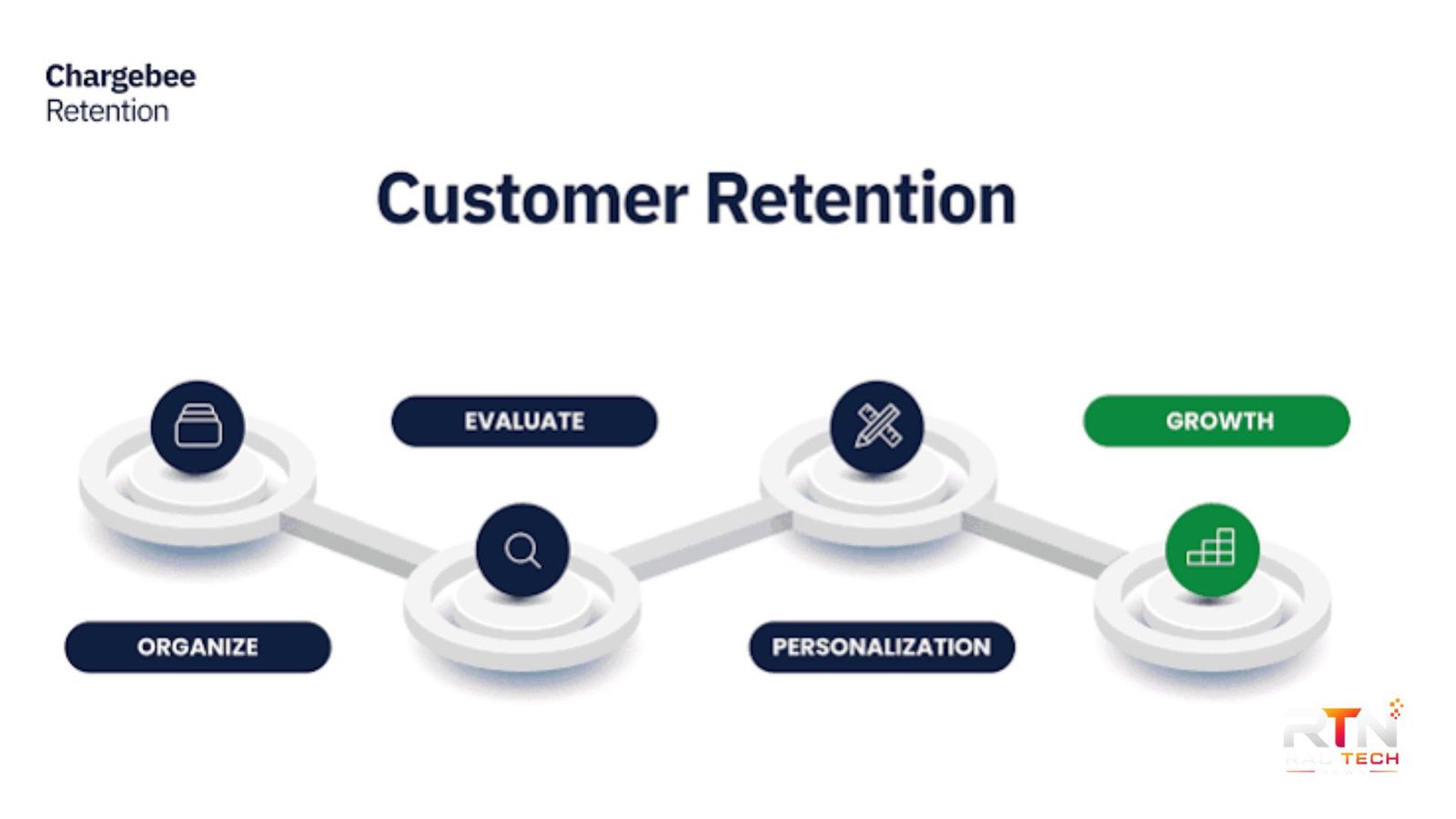
Customer retention strategies help businesses keep existing customers engaged, satisfied, and willing to buy again. The strongest approach is not simply offering discounts. It combines reliable service, useful communication, thoughtful personalization, strong onboarding, and consistent value.
For small businesses, ecommerce brands, SaaS companies, and service providers, retention can also make growth more sustainable. Instead of constantly replacing customers who leave, companies can focus on improving the experience for people who already understand and value the brand.
Why Customer Retention Matters
Customer retention measures how effectively a business keeps customers over a defined period. A related metric, churn rate, tracks the customers who stop buying or cancel their relationship with a company. Salesforce recommends monitoring retention alongside measures such as churn, customer lifetime value, and purchase frequency to understand customer behavior more completely.
Retention also gives businesses a clearer opportunity to build trust. Existing customers already know the product or service, so improving their experience can create repeat purchases, referrals, renewals, and opportunities for relevant upselling.
The goal is not to keep every customer at any cost. A better objective is to understand why valuable customers stay, why others leave, and which improvements can strengthen the relationship.
7 Customer Retention Strategies That Work
1. Improve the customer experience
Start with the basics: make buying, using, paying for, and getting help with your product straightforward.
Customers notice unnecessary friction. Complicated checkout processes, slow responses, unclear policies, broken links, and difficult cancellation procedures can weaken trust quickly.
Map the customer journey from the first interaction through repeat purchase. Look for points where customers hesitate, ask the same questions repeatedly, or require unnecessary assistance. Fixing these problems can be more valuable than adding another promotional campaign.
2. Build a strong onboarding process
A customer who does not understand how to get value from a product is more likely to disengage.
Good onboarding should show customers what to do first, what success looks like, and where to get help. For software, that might mean guided setup and educational resources. For ecommerce, it could include product-use instructions and post-purchase support.
Salesforce similarly identifies improved onboarding as a practical way to reduce customer loss by helping users understand a product’s benefits early in the relationship.
3. Personalize communication with purpose
Personalization works best when it solves a genuine customer need rather than simply inserting someone’s name into an email.
Use relevant information such as purchase history, product usage, preferences, or lifecycle stage to determine what customers may actually need next. Segmenting customers can help businesses send different messages to new buyers, active customers, inactive customers, and long-term clients.
Avoid excessive messaging. Relevance matters more than frequency.
4. Act on customer feedback
Feedback should lead to decisions, not disappear into a survey dashboard.
Ask customers why they were satisfied, where they experienced friction, and what would make the product or service more useful. Analyze recurring themes across reviews, support conversations, surveys, and cancellation reasons.
Then communicate meaningful improvements. When customers can see that their feedback influences the business, the relationship becomes more collaborative.
5. Create loyalty incentives carefully
Loyalty programs can encourage repeat purchases, but the reward must be worthwhile and easy to understand.
Possible incentives include:
- Points or rewards for repeat purchases
- Early access to selected products
- Exclusive benefits for loyal customers
- Referral rewards
- Member-only services or educational content
The strongest programs reinforce genuine customer value instead of training customers to purchase only when a discount appears. Salesforce notes that loyalty programs and personalized experiences can support deeper customer relationships and engagement.
6. Identify customers at risk of leaving
Retention becomes easier when a business recognizes warning signs before a customer disappears.
Depending on the business model, signals may include declining purchase frequency, reduced product usage, unresolved support issues, missed renewals, or prolonged inactivity.
A simple customer-health framework can divide accounts into healthy, watch-list, and at-risk groups. Teams can then respond appropriately instead of sending the same generic message to everyone.
💡 Pro Tip: Compare the behavior of customers who stay with those who leave. The difference can reveal practical warning signals—such as fewer logins, longer gaps between orders, or unresolved complaints—that are more useful than guessing why churn happens.
7. Make support fast, clear, and human
Customer service often becomes most important when something goes wrong. A good recovery experience can protect trust, while a frustrating support process can accelerate churn.
Give customers clear ways to contact the business, provide useful self-service resources, and make escalation easy when an issue cannot be resolved automatically.
Continued post-sale engagement also matters. Salesforce recommends staying in contact, monitoring satisfaction, conducting customer reviews, and using customer relationships to identify future needs.
Which Retention Tactics Should You Prioritize?
Not every business needs a loyalty program, complex automation, or an extensive customer-data platform. Prioritize the areas closest to the reason customers leave.
| Business problem | Useful retention response | Metric to monitor |
|---|---|---|
| Customers leave soon after purchase | Better onboarding and education | Early churn |
| Customers stop buying | Personalized re-engagement | Purchase frequency |
| Complaints are increasing | Faster support and issue resolution | Satisfaction or complaint rate |
| Customers buy only during promotions | Stronger product value and loyalty benefits | Repeat purchase rate |
| Subscription cancellations rise | Proactive customer success and renewal support | Churn rate |
| Customers feel overlooked | Segmentation and relevant communication | Engagement rate |
The right mix depends on the customer journey, business model, purchase cycle, and reasons for churn.
Measure What Actually Changes
A retention program needs measurable goals. One useful starting point is customer retention rate:
Customer Retention Rate = ((Customers at End − New Customers Acquired) ÷ Customers at Start) × 100
For example, if a business begins with 1,000 customers, gains 200 new customers, and finishes with 1,150, its retention rate is 95%.
Do not rely on this number alone. Track churn rate, repeat purchase frequency, customer lifetime value, average order value, renewal rate, and customer satisfaction where relevant. These metrics help explain whether retention is improving and why.
Customer data should also be handled responsibly. The U.S. Federal Trade Commission advises businesses to collect only information they genuinely need, keep it only as long as necessary, and protect information they retain.
📌 Key Takeaway: The most effective customer retention strategies begin with the reasons people stay or leave. Improve the customer experience first, use data to identify risks and opportunities, and make communication genuinely useful rather than simply more frequent.
Frequently Asked Questions
What are the most effective customer retention strategies?
The most effective approaches usually include improving customer experience, strengthening onboarding, personalizing relevant communication, acting on feedback, providing responsive support, and creating useful loyalty incentives. The right combination depends on why customers leave and how frequently they normally purchase.
How do you measure customer retention?
Customer retention rate measures the percentage of starting customers who remain after accounting for newly acquired customers. Businesses should also examine churn, repeat purchase frequency, renewals, customer lifetime value, and satisfaction to understand the broader retention picture.
How can small businesses improve retention?
Small businesses can start by improving communication, resolving customer problems quickly, making onboarding clear, and following up after purchases. They do not necessarily need sophisticated technology. Consistent service and a clear understanding of customer needs can provide a strong foundation.
Does personalization improve customer loyalty?
Relevant personalization can strengthen relationships by making communications and recommendations more useful. However, personalization should be based on legitimate customer needs and handled responsibly. Collecting excessive information or sending overly targeted messages can damage trust rather than improve it.
What causes customers to leave?
Common causes include poor service, unclear value, product problems, complicated experiences, unmet expectations, lack of communication, and stronger alternatives. The exact causes vary by industry, so businesses should use cancellation feedback, support records, surveys, and behavioral data to identify their own churn patterns.
Conclusion
Retention is built through repeated experiences, not a single campaign. Businesses that make products easier to use, respond well to problems, listen to feedback, and communicate with relevance give customers stronger reasons to stay.
The best customer retention strategies are therefore connected to the entire customer journey. Start by finding the biggest source of customer frustration, fix it, measure the result, and keep improving from there.
