
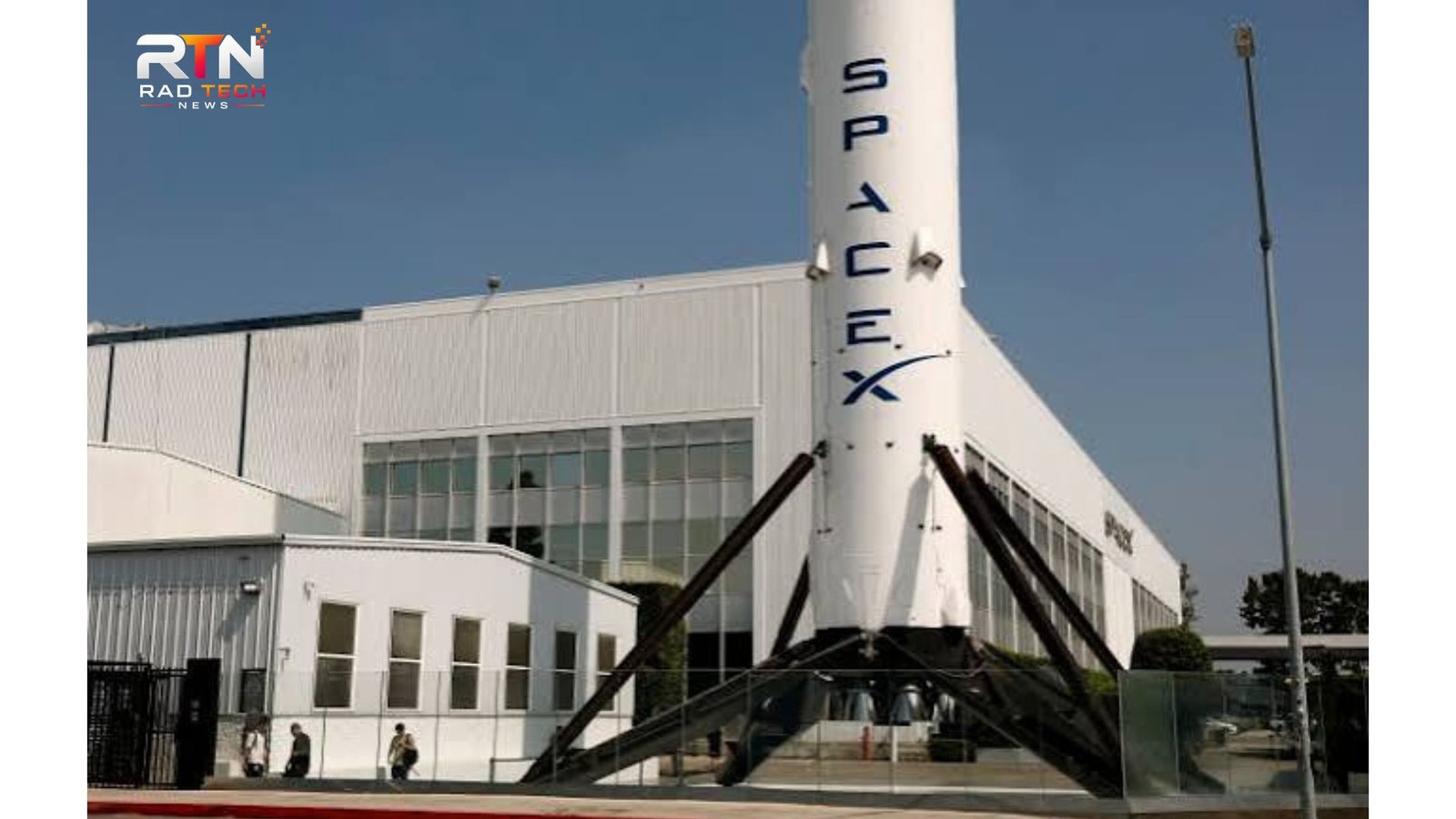
SpaceX stock is now publicly traded, ending years of speculation about when ordinary investors would be able to buy shares in Elon Musk’s aerospace company. SpaceX priced its initial public offering at $135 per share in June 2026, and the shares began trading on Nasdaq under the ticker SPCX on June 12. The company subsequently completed the offering, raising approximately $85.7 billion in gross proceeds.
For investors, the bigger question is no longer whether SpaceX will go public. It is whether the company’s enormous valuation can be justified by growth in Starlink, launch services, artificial intelligence infrastructure and future Starship operations.
What Is SpaceX Stock and What Is the Ticker?
SpaceX stock represents publicly traded shares of Space Exploration Technologies Corp., the Texas-based company founded in 2002. Its common stock trades under the ticker SPCX.
The IPO initially offered 555,555,555 Class A shares at $135 each. Underwriters also exercised their additional-share option, bringing the total offering to 638,888,888 shares and gross proceeds to roughly $85.7 billion.
This distinction matters because older articles often describe SpaceX as a private company. That information is now outdated. Since June 2026, public-market investors have been able to buy and sell SPCX through eligible brokerage accounts.
Recent market data shows how volatile the newly listed shares can be. SPCX closed at $148.15 on September 14, 2026, after trading between $146.00 and $152.56 during the session. Its recent 52-week range was reported at roughly $104.83 to $225.64.
SpaceX stock at a glance
| Item | Current information |
|---|---|
| Company | Space Exploration Technologies Corp. |
| Ticker | SPCX |
| Exchange | Nasdaq |
| IPO price | $135 per share |
| IPO trading began | June 12, 2026 |
| IPO gross proceeds | Approximately $85.7 billion |
| Main businesses | Launch services, Starlink, space systems and AI infrastructure |
Why Investors Are Watching SpaceX
The investment case extends well beyond rockets.
SpaceX operates a major launch business built around reusable Falcon rockets and Dragon spacecraft. It also operates Starlink, a satellite internet network that has become an important commercial growth engine. The company’s own website describes Starlink as a low-Earth-orbit satellite constellation providing broadband connectivity.
The next major opportunity is Starship. SpaceX describes Starship and Super Heavy as a fully reusable transportation system designed for missions involving Earth orbit, the Moon, Mars and beyond.
That creates several potential growth paths:
- Starlink: Recurring connectivity revenue and expansion into mobile and other communications services.
- Launch services: Continued demand for commercial, government and satellite launches.
- Starship: Potentially lower launch costs and much greater payload capacity if full reusability is achieved.
- AI infrastructure: SpaceX is increasingly positioning itself around orbital and terrestrial computing opportunities.
Recent reporting also points to growing interest in SpaceX’s AI-compute ambitions, including large commercial agreements and plans for orbital computing infrastructure. These initiatives could eventually become an important part of the company’s investment story, although they also introduce substantial execution risk.
SpaceX Stock Price: What Is Moving It?
The early trading history demonstrates why investors should avoid treating the IPO price as a permanent reference point.
Shares initially attracted intense demand, but the stock later experienced significant swings. Reuters reported in August that shares had nearly halved from their post-IPO peak, while options markets were pricing in substantial volatility around earnings and the expiration of shareholder lockups.
Several factors can move SPCX:
Starlink growth: Subscriber expansion, pricing, margins and new services can affect expectations for recurring revenue.
Starship progress: Successful testing and eventual operational deployment could strengthen the long-term valuation thesis. Delays or failures could have the opposite effect.
AI spending: SpaceX’s expansion into computing creates another potential growth market, but it also ties part of the story to highly competitive and capital-intensive infrastructure spending.
Valuation: A company priced for exceptional growth has less room for disappointing results than a mature business.
💡 Pro Tip: When evaluating SpaceX stock, compare the company’s valuation with measurable operating milestones rather than focusing only on daily price movements. Track Starlink growth, launch cadence, Starship progress, cash generation and new commercial contracts over several quarters.
The Biggest Risks to Consider
The SpaceX story has extraordinary potential, but potential is not the same as guaranteed shareholder returns.
First, valuation risk is significant. A high-growth company can produce excellent operational results while its stock still falls if investors previously expected even faster growth.
Second, Starship remains a major execution challenge. The technology is central to SpaceX’s longer-term ambitions, and delays could affect expected economics for future launches, satellite deployment and other projects.
Third, the business is capital intensive. Rockets, satellites, launch infrastructure and computing systems require substantial investment. Large capital requirements can affect free cash flow even when revenue is expanding.
Regulatory and geopolitical considerations also matter. SpaceX operates in industries closely connected to governments, communications regulation, national security and international markets.
Finally, investors should remember that SpaceX has a complex corporate structure and a broad set of businesses. Understanding consolidated financial results may be more difficult than evaluating a simpler public company.
Is SpaceX Stock a Buy?
There is no universal answer because the right decision depends on valuation, risk tolerance, portfolio construction and investment horizon.
For a long-term investor, the attraction is clear: SpaceX combines a leading launch business with Starlink and ambitious plans involving Starship and AI infrastructure. The company could potentially develop several large revenue streams rather than relying on a single product.
The counterargument is equally important. Much of the future value investors are paying for depends on continued execution. If Starship takes longer than expected, AI infrastructure produces lower returns, or Starlink growth slows, the valuation could come under pressure.
Investors should therefore separate business quality from stock valuation. A remarkable company can still be an expensive investment.
📌 Key Takeaway: SpaceX stock offers exposure to one of the most ambitious businesses in the space and connectivity industries, but its investment case depends heavily on future growth. Investors should assess SPCX using operating performance, valuation and execution milestones rather than enthusiasm around the SpaceX brand alone.
Frequently Asked Questions
What is the SpaceX stock ticker?
The publicly traded shares of Space Exploration Technologies Corp. trade under the ticker SPCX on Nasdaq. The shares began trading on June 12, 2026, following SpaceX’s initial public offering at $135 per share.
Can I buy SpaceX shares?
Yes. Since the IPO, eligible investors can purchase SPCX through a brokerage account that provides access to Nasdaq-listed securities. Availability, account requirements, commissions and tax treatment can differ between U.S. and UK investors.
Does Starlink affect SpaceX’s valuation?
Yes. Starlink is one of the most important commercial components of SpaceX’s business because satellite connectivity can generate recurring revenue. Subscriber growth, service expansion and profitability therefore matter when investors assess the company’s longer-term prospects.
What could make SpaceX stock rise?
Potential catalysts include stronger Starlink growth, successful Starship development, higher launch activity, expansion of AI infrastructure and improving financial performance. These factors could strengthen expectations for future revenue and cash generation, although none guarantees higher share prices.
What are the main risks?
The key risks include high valuation, execution problems, capital requirements, regulatory exposure, competition and delays in major programs. New investors should also expect considerable volatility because public-market expectations for SpaceX remain closely tied to ambitious future growth.
Conclusion
SpaceX stock has moved from private-market speculation to a publicly traded security, giving investors direct exposure to the company’s launch, satellite connectivity and emerging AI ambitions. The IPO provides a new way to participate in SpaceX’s growth, but it does not eliminate the uncertainty surrounding ambitious technology projects.
For investors assessing SPCX, the most useful approach is to watch what the company delivers: Starlink expansion, launch performance, Starship development, AI infrastructure and sustainable financial growth. The share price matters, but the underlying progress of the business matters more.
