
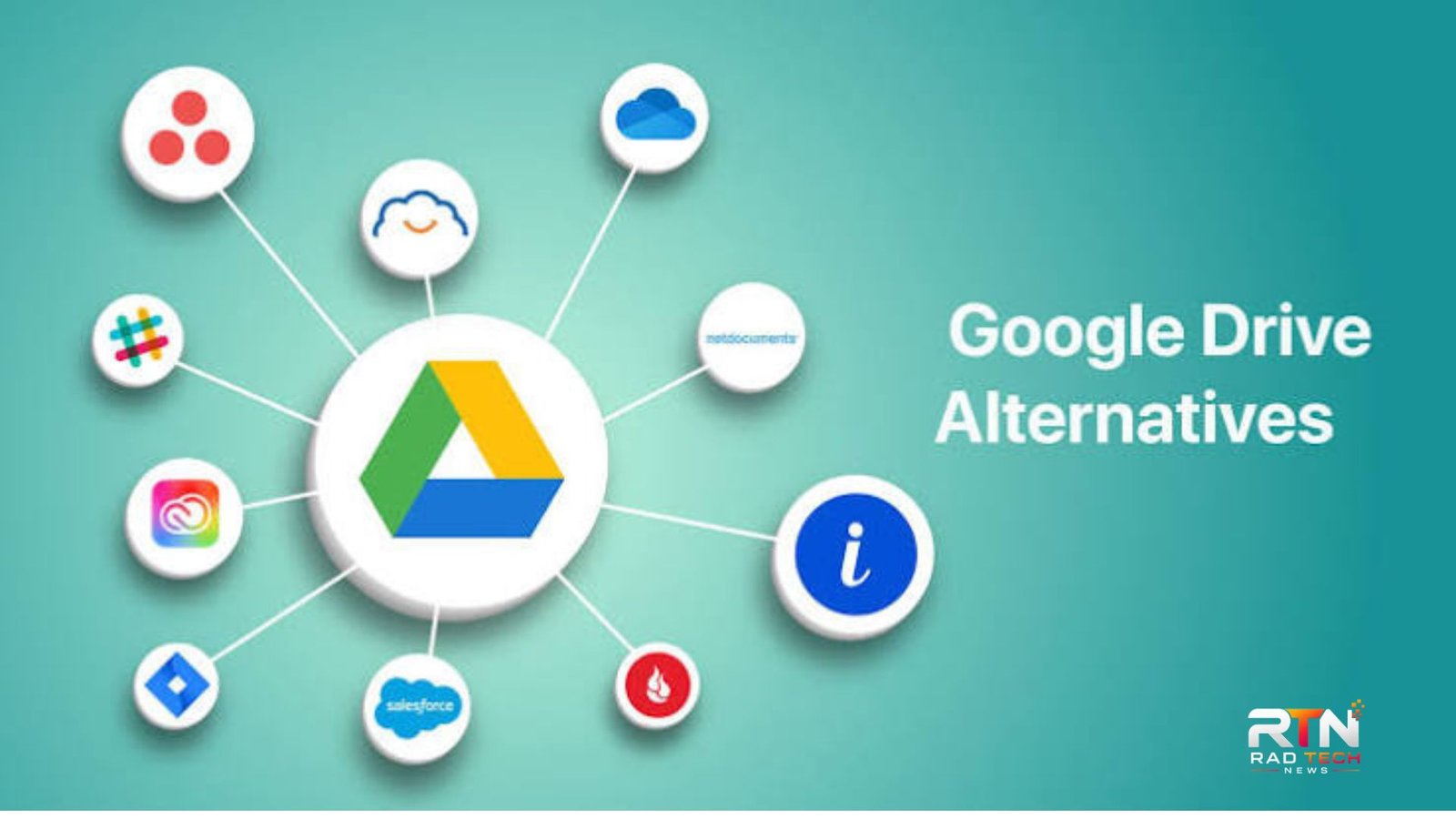
Google Drive remains a convenient choice for storing, syncing, and sharing files, but it is not the ideal fit for everyone. Some users want stronger privacy, while others prefer tighter integration with Microsoft products, better business controls, or a simpler file-sharing experience. The best Google Drive alternatives depend less on having the most features and more on matching the service to your workflow.
Google provides up to 15 GB of storage across Drive, Gmail, and Google Photos, so storage needs can also influence the decision.
What should you look for in Google Drive alternatives?
Before switching cloud storage providers, consider how you actually use your files. A photographer may care about large-file handling and sharing, while a Microsoft 365 user may value seamless access from Windows and Office apps.
The most useful criteria include:
- Storage: Check both free capacity and paid expansion options.
- File syncing: Look for reliable desktop and mobile synchronization.
- Sharing: Review permissions, links, expiration controls, and collaboration tools.
- Privacy: Understand how the provider encrypts and handles your data.
- Productivity: Consider whether the service works well with your existing office software.
- Business controls: Teams may need version history, administration, compliance features, and granular permissions.
There is no universal winner. The right choice depends on whether convenience, privacy, collaboration, or business management matters most.
5 Google Drive alternatives worth considering
| Service | Best for | Main strength | Potential drawback |
|---|---|---|---|
| Microsoft OneDrive | Microsoft 365 users | Office and Windows integration | Less compelling outside the Microsoft ecosystem |
| Dropbox | File syncing and sharing | Mature sharing and collaboration | Advanced features can require paid plans |
| Box | Businesses | Security, governance, and content management | More business-focused than casual users may need |
| Proton Drive | Privacy-conscious users | End-to-end encryption | Smaller productivity ecosystem |
| iCloud Drive | Apple users | Apple device integration | Less flexible across non-Apple environments |
Microsoft OneDrive
Microsoft OneDrive is one of the most practical Google Drive alternatives for people already using Windows or Microsoft 365. Its plans can combine cloud storage with Microsoft productivity applications, and Microsoft lists features such as real-time collaboration, version history, ransomware detection, Personal Vault, and file sharing.
It makes particular sense for households and workplaces built around Word, Excel, PowerPoint, and Windows. If your daily work already happens inside Microsoft’s ecosystem, moving files to another provider may create unnecessary friction.
Dropbox
Dropbox remains a strong option for straightforward file synchronization and sharing. Its tools allow users to share files and folders with people who do not have Dropbox accounts, while collaboration features include annotations, file recovery, and real-time work.
For freelancers, agencies, and teams that frequently exchange files with clients, Dropbox can be easier to understand than a broader productivity platform. It is especially useful when sharing and syncing are more important than having a large collection of built-in office applications.
Box
Box is among the more business-oriented Google Drive alternatives. Its platform combines cloud storage with file sharing, permissions, workflow management, version control, integrations, and content governance. Box also offers controls such as password protection and expiration settings for shared links.
That makes Box a particularly strong candidate for organizations managing sensitive documents, client materials, contracts, or large collections of business content. Individual users may find its broader enterprise capabilities unnecessary.
Proton Drive
For privacy-focused users, Proton Drive deserves close attention. Proton says Drive uses end-to-end encryption by default, including protection for file and folder metadata, and that Proton cannot decrypt end-to-end encrypted content.
That makes Proton Drive one of the most distinctive Google Drive alternatives for people who put confidentiality ahead of ecosystem breadth. It also provides web, desktop, and mobile access, secure sharing, and encrypted document collaboration.
💡 Pro Tip: Before migrating sensitive files, test the new service with a small folder first. Check upload speed, desktop syncing, mobile access, sharing permissions, and how easily you can retrieve your files before moving your entire library.
iCloud Drive
Apple users may find iCloud Drive more convenient than other Google Drive alternatives because it is built into the Apple ecosystem. It can be a natural choice for people whose primary devices are Macs, iPhones, and iPads.
The trade-off is ecosystem flexibility. If you regularly work across Windows, Android, and multiple business platforms, a service designed around broader cross-platform workflows may be easier to manage.
How to choose the right cloud storage service
Start with the ecosystem you already use. A Microsoft-heavy household or company should seriously consider OneDrive. Someone who frequently sends project files to clients may prefer Dropbox. Businesses with complex document controls can look toward Box.
Privacy changes the calculation. If preventing the provider from accessing stored content is a central requirement, Proton Drive’s end-to-end encryption gives it a clear distinction.
Cost should come after those practical requirements. A cheaper plan is not necessarily better if it lacks the storage, collaboration, recovery, or compatibility features you need. Likewise, paying for advanced business controls makes little sense for someone who only stores personal photos and documents.
📌 Key Takeaway: The best Google Drive alternatives are not simply the services with the largest storage quotas. OneDrive suits Microsoft users, Dropbox excels at familiar file sharing, Box targets organizational content management, Proton Drive prioritizes privacy, and iCloud Drive fits naturally into Apple’s ecosystem.
Frequently Asked Questions
What is the best alternative to Google Drive?
There is no single best option for everyone. OneDrive is a strong choice for Microsoft 365 users, Dropbox is useful for straightforward file sharing, Box is better suited to business content management, Proton Drive stands out for privacy, and iCloud Drive is convenient for Apple-focused users.
Is Proton Drive more private than Google Drive?
Proton Drive uses end-to-end encryption by default and states that it cannot decrypt end-to-end encrypted files. Google Drive provides substantial security controls, particularly for business customers, but it does not use the same default end-to-end encryption model for ordinary Drive storage.
Which cloud storage is best for Microsoft users?
OneDrive is usually the most natural choice because it integrates closely with Microsoft 365 and Windows. Microsoft also offers features including real-time editing, version history, Personal Vault, ransomware detection, and file-sharing controls.
Is Dropbox good for business file sharing?
Yes. Dropbox supports shared links, viewer and editor permissions, file requests, collaboration, annotations, and recovery features. Teams can also use more advanced sharing controls depending on their plan.
What should I check before switching cloud storage?
Test the provider’s desktop and mobile apps, upload and download performance, sharing controls, file recovery, compatibility with your existing software, and export options. Also check how much storage your current files actually consume before selecting a plan.
Choosing among Google Drive alternatives
The strongest choice is the service that removes friction from your existing workflow. Microsoft users may gain the most from OneDrive, collaboration-heavy users can consider Dropbox, organizations with governance requirements may prefer Box, and privacy-focused users have a compelling reason to examine Proton Drive.
For Apple households, iCloud Drive can be the simplest route. The important point is to compare how each service handles your actual files, devices, collaborators, and privacy expectations rather than choosing based on storage alone. For many users, that practical comparison makes Google Drive alternatives much easier to evaluate.
