

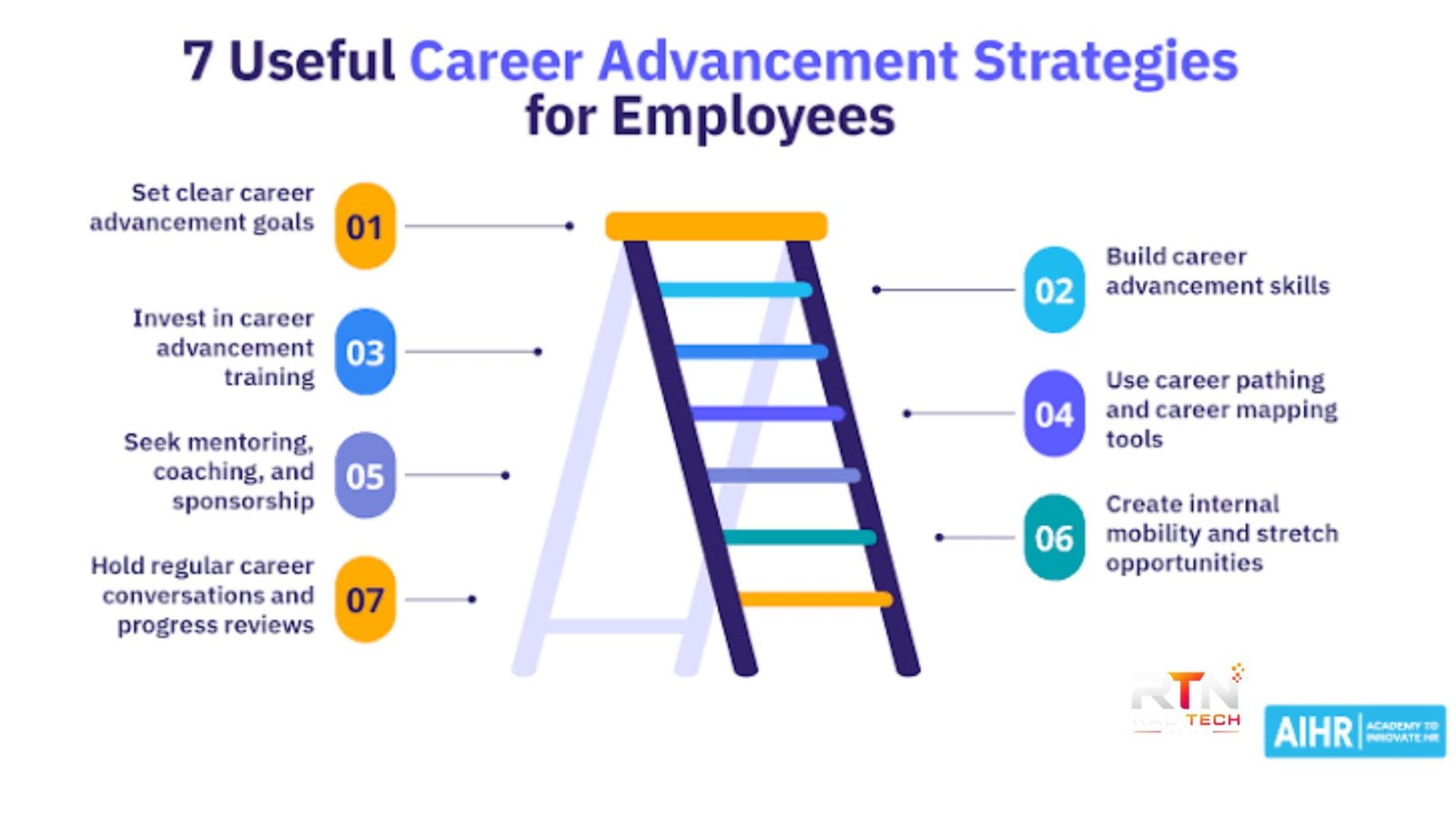
Career growth rarely happens by accident. Professionals who move into higher-responsibility roles usually make deliberate decisions about learning, networking, performance, and visibility. Effective career advancement strategies help employees understand where they want to go, identify the skills they need, and create practical steps toward reaching their goals.
Advancing a career is not only about receiving promotions. It can also involve expanding expertise, taking on meaningful projects, improving leadership abilities, changing career paths, or becoming recognized as a valuable contributor within an organization. A structured approach helps professionals make progress instead of waiting for opportunities to appear.
Career advancement strategies that create measurable professional progress
A successful career plan begins with self-awareness. Professionals need to evaluate their current position, understand their strengths, and identify areas that require improvement. This process allows them to focus their energy on actions that produce real results.
One of the strongest approaches is developing skills that match future opportunities. Industries continue to change, and employers increasingly value professionals who can adapt. Learning technical abilities, improving communication, strengthening leadership skills, or gaining industry-specific knowledge can increase career flexibility.
Setting clear goals is another essential step. A vague ambition such as “I want to grow professionally” is difficult to measure. A stronger goal might involve becoming a team leader within two years, gaining a professional certification, or managing a major project. Specific objectives make progress easier to track.
Build expertise through continuous learning
Professional development is a long-term investment. Many successful employees dedicate time to courses, workshops, certifications, industry events, and independent study. Learning does not always require formal education; practical experience and mentorship can also contribute significantly.
Employees should focus on skills that support their desired career direction. For example, someone aiming for management may need stronger decision-making, conflict resolution, and delegation skills. A specialist seeking advancement may benefit from deeper technical knowledge and the ability to communicate complex ideas clearly.
The most valuable learning opportunities are often connected to real workplace challenges. Applying new knowledge immediately helps transform information into capability.
Increase visibility and professional influence
Strong performance matters, but being invisible can limit career opportunities. Managers often recognize employees who consistently contribute, communicate effectively, and demonstrate initiative.
Professionals can improve visibility by sharing ideas during meetings, volunteering for important assignments, documenting achievements, and supporting team objectives. Building a reputation as someone who solves problems and delivers reliable results creates professional credibility.
Networking also plays a major role. Internal relationships with colleagues, managers, and leaders can expose employees to new projects and opportunities. External connections through professional associations and industry communities can provide broader career insights.
| Career focus area | Practical action | Expected benefit |
|---|---|---|
| Skill development | Learn relevant tools, methods, or industry knowledge | Greater capability and adaptability |
| Professional visibility | Share achievements and contribute to discussions | Increased recognition at work |
| Networking | Build relationships inside and outside the organization | More access to opportunities |
| Leadership growth | Practice decision-making and collaboration | Preparation for advanced roles |
💡 Pro Tip
Keep a career achievement record that includes completed projects, measurable results, positive feedback, and new skills. Updating it regularly makes performance reviews, interviews, and promotion discussions more effective.
Seek feedback and use it strategically
Feedback is one of the fastest ways to identify improvement opportunities. Many professionals avoid criticism, but constructive feedback provides information that may not be visible from personal perspective.
Regular conversations with managers or mentors can reveal expectations for advancement and highlight behaviors that support career growth. Instead of asking only “How am I doing?”, professionals can ask targeted questions about leadership potential, skill gaps, and future opportunities.
Acting on feedback is equally important. Receiving advice without making changes does not create progress. Demonstrating improvement shows commitment and professional maturity.
Develop relationships with mentors and sponsors
Mentors provide guidance, knowledge, and perspective based on their experience. A good mentor can help professionals understand workplace dynamics, make better decisions, and avoid common mistakes.
Sponsors play a different role by actively supporting someone’s advancement, often by recommending them for opportunities or increasing their visibility among decision-makers. Building relationships with experienced professionals can accelerate growth by connecting talent with meaningful opportunities.
Another part of effective career advancement strategies involves choosing relationships carefully. Strong professional networks are built on trust, mutual support, and consistent communication rather than occasional requests for help.
Take ownership of career direction
Organizations can provide opportunities, but individuals remain responsible for managing their own development. Waiting for someone else to plan a career path may result in missed opportunities.
Taking ownership means regularly reviewing goals, seeking new challenges, and making intentional decisions. Professionals should evaluate whether their current role is helping them develop toward their desired future.
Career changes also require thoughtful planning. Moving into a different department, industry, or position may require additional training, networking, or temporary adjustments. A clear strategy reduces uncertainty and improves decision-making.
📌 Key Takeaway
Career growth comes from consistent action rather than a single achievement. Professionals who combine skill development, visibility, feedback, networking, and goal-setting are better positioned to create sustainable advancement opportunities.
Frequently Asked Questions
What are the best career advancement strategies for employees?
The best career advancement strategies depend on individual goals, but common approaches include improving skills, building professional relationships, seeking feedback, taking on challenging projects, and communicating achievements. The most effective approach combines personal development with actions that demonstrate value to an organization.
How can I advance my career without changing companies?
Professionals can grow within their current organization by requesting new responsibilities, developing leadership skills, improving performance, and building relationships with decision-makers. Internal mobility, mentorship programs, and cross-functional projects can create advancement opportunities without requiring an external job change.
Why is networking important for career growth?
Networking helps professionals learn about opportunities, gain industry knowledge, and develop relationships that support long-term growth. Effective networking is not only about finding jobs; it also involves exchanging ideas, helping others, and building a strong professional reputation.
How often should I review my career goals?
Career goals should be reviewed regularly, such as every few months or during major professional changes. Regular reviews help professionals adjust their plans, identify new learning needs, and ensure their current actions align with their long-term objectives.
Can soft skills improve career advancement?
Yes, soft skills such as communication, teamwork, leadership, problem-solving, and emotional intelligence often influence professional success. Technical expertise may help someone perform a role, but strong interpersonal abilities frequently determine readiness for greater responsibility.
Conclusion
Building a successful career requires intentional choices, ongoing learning, and the ability to adapt. Professionals who apply career advancement strategies with consistency can create clearer paths toward growth while becoming more valuable in their fields. The strongest results come from combining expertise with relationships, visibility, and a commitment to continuous improvement.
