

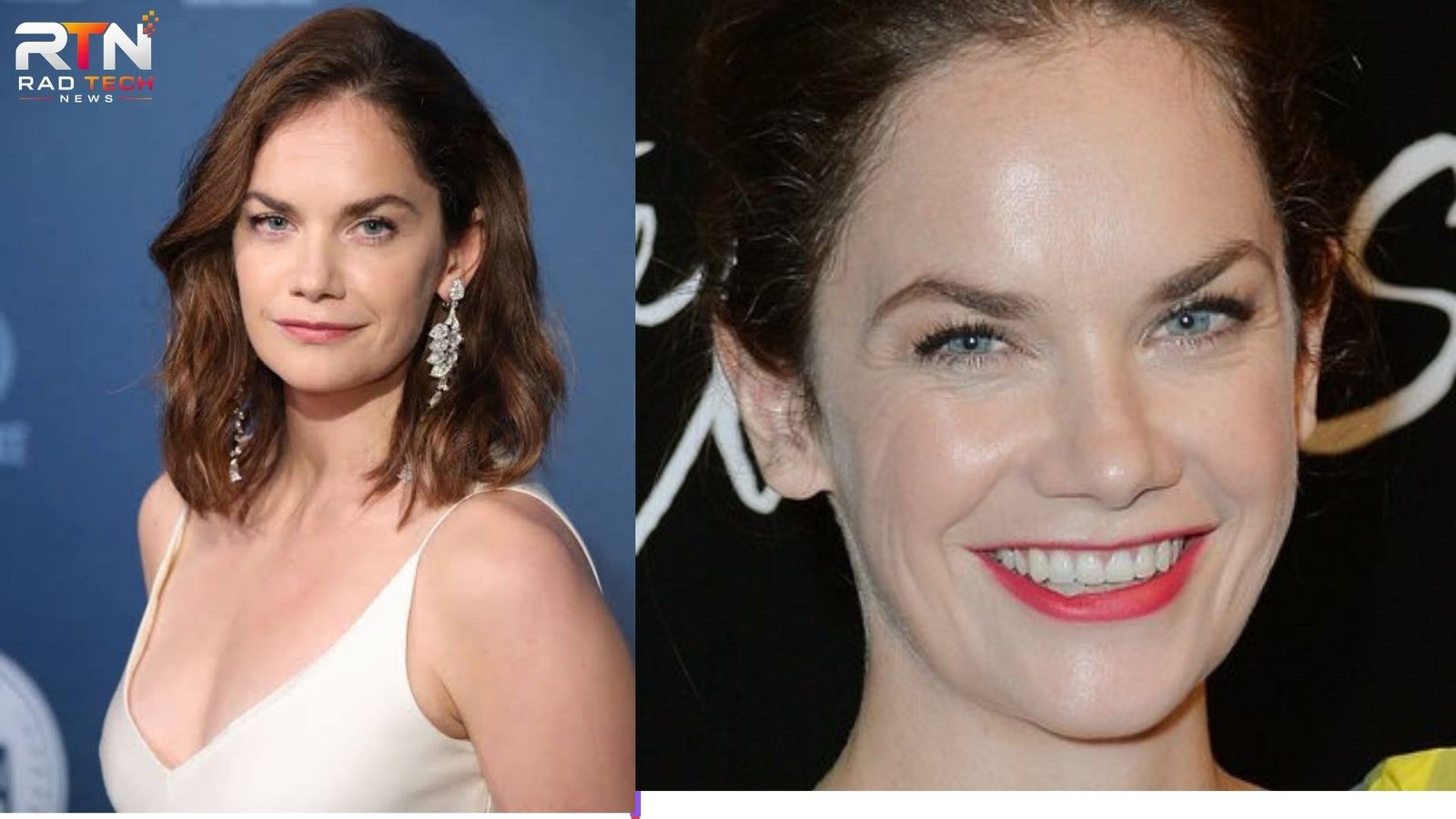
Ruth Wilson is one of those actors people often recognize before they can immediately name the film. Maybe you remember the unsettling intelligence she brought to Luther, the emotional unpredictability of The Affair, or her commanding performance as Mrs. Coulter in His Dark Materials. Then you search for Ruth Wilson movies and discover that her film career is quite different from her television work.
Rather than building a filmography around endless blockbuster leads, Wilson has repeatedly chosen psychologically complicated characters, literary adaptations, independent dramas, period pieces, and stories where discomfort matters more than spectacle. Her movie credits range from Anna Karenina and Saving Mr. Banks to the intimate True Things, rural drama Dark River, gothic mystery The Little Stranger, and 2026 horror-comedy Victorian Psycho.
That variety can make it difficult to know where to start. This guide breaks down her most worthwhile films, what makes each performance different, and which Ruth Wilson movie is likely to suit your taste.
Who Is Ruth Wilson?
Ruth Wilson is an English actress born on January 13, 1982. Her breakthrough came through television, particularly the 2006 adaptation of Jane Eyre, followed by memorable roles in Luther and The Affair. Her performance in The Affair earned her the 2015 Golden Globe for Best Actress in a Television Series – Drama.
Yet concentrating only on her television success misses an important part of her career.
Her films reveal an actor who seems especially comfortable playing characters who are emotionally cornered. Wilson rarely makes difficult characters easy for viewers. Instead, she lets uncertainty remain.
That quality explains why her strongest movies tend to be psychological dramas rather than conventional star vehicles.
Best Ruth Wilson Movies to Watch
True Things
If you want to understand what Ruth Wilson can do as a leading film actor, start with True Things.
Wilson plays Kate, a woman stuck in an unfulfilling routine who becomes intensely involved with a charismatic but unstable man played by Tom Burke. What initially appears to offer Kate escape gradually becomes something much more destructive.
The interesting part is how Wilson handles the transformation. She does not suddenly switch from confident to vulnerable. Kate’s excitement, loneliness, self-deception, desire and anxiety overlap.
That makes the relationship uncomfortable in a believable way.
Wilson also helped produce the movie. The BFI lists her among its producers, and her performance earned a British Independent Film Award nomination for Best Actress.
Watch it if you like: intimate psychological dramas, messy relationships and character-driven stories.
Dark River
Dark River is one of the most important Ruth Wilson movies for viewers interested in her dramatic range.
She plays Alice, who returns to her family’s Yorkshire farm following her father’s death. Coming home forces her to confront her brother, unresolved family tensions and traumatic memories connected to the place.
Wilson’s performance feels deliberately restrained.
Rather than explaining Alice through dramatic speeches, much of the character emerges through physical discomfort, silence and reaction. You sense that being back on the farm affects her before she openly discusses why.
This is also one of the films that reveals something distinctive about Wilson’s acting: she is particularly effective when a location becomes psychologically threatening.
The farm is not simply scenery. It represents memory.
Watch it if you like: serious British dramas, family conflict and emotionally demanding performances.
The Little Stranger
For gothic drama fans, The Little Stranger is an easy recommendation.
Wilson plays Caroline Ayres, a member of a declining aristocratic family living in a decaying English mansion after the Second World War. Domhnall Gleeson plays a doctor who becomes increasingly involved with the family and their strange home.
Wilson’s performance works because Caroline never feels like a standard gothic heroine.
She can appear practical and independent one moment, then vulnerable the next. That tension makes the character difficult to categorize.
The movie itself moves slowly, so viewers expecting a conventional horror film may find it restrained. Approach it instead as a psychological gothic mystery about class, obsession and a family unable to escape its past.
Watch it if you like: haunted-house atmosphere, period films and slow-burn mysteries.
Saving Mr. Banks
Ruth Wilson has a smaller role in Saving Mr. Banks, but it remains one of her most recognizable movie credits.
She plays Margaret Goff, the mother of the young P. L. Travers in flashbacks exploring the author’s childhood. Those sequences help explain the emotional history behind the woman who later created Mary Poppins.
Wilson shares this part of the story with Colin Farrell, who plays Travers’ troubled father.
Her role is not large enough to dominate the film, but she brings emotional weight to the family scenes.
It is also a useful reminder that a Ruth Wilson film does not always mean a Ruth Wilson lead performance.
Watch it if you like: biographical dramas, Disney history and emotionally accessible period stories.
Locke
Locke may be the strangest entry in Ruth Wilson’s filmography because you do not actually see her.
Tom Hardy plays construction manager Ivan Locke, who spends almost the entire movie driving while his professional and personal life begins collapsing through a series of telephone calls.
Wilson provides the voice of Katrina, Locke’s wife.
That sounds like a minor acting assignment until you watch the movie.
Because Wilson has no facial expressions or physical movement to communicate with, everything must come through timing, tone, silence and changes in her voice.
It is arguably one of the best demonstrations of her technical ability.
This leads to an overlooked insight about Wilson’s career: some of her strongest acting choices depend less on dramatic dialogue than on what she withholds. Locke strips that skill down to voice alone.
Watch it if you like: experimental thrillers, Tom Hardy performances and dialogue-driven movies.
Suite Française
In Suite Française, Wilson plays Madeleine Labarie in a story set during the German occupation of France during the Second World War.
The cast includes Michelle Williams, Matthias Schoenaerts and Kristin Scott Thomas.
Wilson has a supporting rather than central role, but the film suits one of the areas where she frequently excels: period drama.
Unlike The Little Stranger, however, the tension here comes from war, occupation, loyalty and forbidden relationships rather than supernatural uncertainty.
For someone exploring Ruth Wilson movies chronologically, Suite Française also shows how comfortably she moved between large ensemble productions and darker independent work.
Watch it if you like: wartime romances and historical dramas.
See How They Run
See How They Run offers a much lighter Ruth Wilson performance.
The 2022 murder mystery features Saoirse Ronan, Sam Rockwell, Adrien Brody and David Oyelowo, with Wilson playing theatre producer Petula Spencer.
The movie takes place around London’s theatrical world during the 1950s and plays with many classic whodunit conventions.
Wilson is part of the ensemble rather than its main focus, but that is exactly why the film is interesting within her career. Her characters are often associated with psychological intensity, so watching her operate inside a playful murder comedy gives audiences another side of her screen presence.
Watch it if you like: Agatha Christie-style mysteries, ensemble casts and period comedy.
Anna Karenina
Wilson appears as Princess Betsy Tverskoy in Joe Wright’s 2012 adaptation of Anna Karenina.
Keira Knightley leads the film alongside Jude Law and Aaron Taylor-Johnson.
Wilson’s role is supporting, but the movie became part of a significant transition in her career as she expanded from acclaimed British television work into major feature productions.
It also makes sense for her as an actor. Literary adaptations have repeatedly appeared throughout her career, from Jane Eyre on television to The Little Stranger and other period projects.
Watch it if you like: ambitious literary adaptations, elaborate production design and costume drama.
I Am the Pretty Thing That Lives in the House
Anyone looking specifically for a Ruth Wilson horror movie should know this one.
Wilson stars as Lily Saylor, a live-in nurse who moves into the isolated home of an elderly horror writer.
The movie is intentionally quiet and slow.
Rather than depending heavily on jump scares, it builds unease through empty rooms, narration, anticipation and isolation.
Some viewers will find the pace hypnotic. Others may find it frustrating.
That difference is worth knowing before watching. It is closer to atmospheric literary horror than mainstream supernatural entertainment.
Wilson’s ability to make anxiety visible without overplaying it fits the material particularly well.
Watch it if you like: minimalist horror, haunted houses and unsettling atmosphere.
The Lone Ranger
The Lone Ranger is probably the biggest traditional Hollywood blockbuster in Wilson’s filmography.
She plays Rebecca Reid alongside Armie Hammer and Johnny Depp in Disney’s large-scale Western adventure.
The film is very different from the smaller psychological dramas that later became closely associated with Wilson.
That makes it useful when looking at her career rather than simply ranking her performances.
In fact, 2013 offers perhaps the quickest demonstration of Ruth Wilson’s range. During roughly the same period, audiences could encounter her in the blockbuster The Lone Ranger, prestige drama Saving Mr. Banks, and stripped-down experimental thriller Locke. Her roles vary dramatically in size and style.
Few single years in her filmography show the contrast so clearly.
Victorian Psycho
One of Wilson’s newer film appearances is Victorian Psycho, a dark period horror-comedy directed by Zachary Wigon and adapted from Virginia Feito’s novel.
Maika Monroe stars as Winifred Notty, a governess arriving at a wealthy household in 1858. Wilson plays Mrs. Pounds, opposite Jason Isaacs as Mr. Pounds. The film also features Thomasin McKenzie.
The role almost feels like a collision of several familiar areas of Wilson’s career: period drama, gothic surroundings, dysfunctional households and psychologically dangerous characters.
But the tone is deliberately more exaggerated and darkly comic than something like The Little Stranger.
Watch it if you like: gothic horror, black comedy and unconventional period films.
What Is Ruth Wilson’s Best Movie?
There is no single answer because her films serve very different audiences.
For the strongest lead performance, I would start with True Things.
For something darker and more emotionally raw, choose Dark River.
For gothic atmosphere, watch The Little Stranger.
For an accessible mainstream movie, try Saving Mr. Banks.
For something unusual, Locke is especially interesting because Wilson creates a complete emotional presence without appearing on screen.
And if you want to see her inside a lighter ensemble, See How They Run is probably the easiest choice.
Ruth Wilson Movies vs. TV Shows
A common mistake when searching Ruth Wilson’s filmography is assuming several of her most famous projects are movies.
They are not.
Luther is a television crime drama in which Wilson plays Alice Morgan. The Affair is a television drama, and His Dark Materials is a fantasy series where she plays Marisa Coulter.
Her acclaimed Jane Eyre was also produced for television.
More recent television work includes The Woman in the Wall, A Very Royal Scandal and Down Cemetery Road. Apple lists Down Cemetery Road, starring Wilson alongside Emma Thompson, as a drama-mystery series that premiered in October 2025.
This distinction matters because Wilson’s television roles have generally received greater mainstream recognition than many of her feature films.
The Pattern Behind Ruth Wilson’s Best Performances
There is an interesting pattern that simple filmography lists often miss.
Wilson frequently performs best in what could be called pressure-chamber stories.
Consider the settings:
- a damaged family farm in Dark River
- a decaying mansion in The Little Stranger
- an isolated house in I Am the Pretty Thing That Lives in the House
- an emotionally destructive relationship in True Things
- a car containing an unraveling man’s life in Locke
Different genres, same basic dramatic pressure: someone becomes trapped by a place, relationship, memory or decision.
Wilson rarely needs to play the loudest character in these stories. She is good at suggesting that something complicated is happening underneath apparently controlled behavior.
That may explain why her independent movies often display her abilities more clearly than her larger productions.
How to Choose Your First Ruth Wilson Movie
If you are new to her film work, choose based on mood rather than release order:
- Best overall introduction: True Things
- Best serious drama: Dark River
- Best gothic movie: The Little Stranger
- Best mainstream choice: Saving Mr. Banks
- Best experimental choice: Locke
- Best mystery-comedy: See How They Run
- Best horror choice: I Am the Pretty Thing That Lives in the House
This approach works better than simply starting with her most commercially famous movie.
Common Mistakes When Exploring Ruth Wilson’s Filmography
One mistake is judging her career primarily through The Lone Ranger. It is a major production, but it does not represent the kind of material where her acting is usually most distinctive.
Another is overlooking Locke because Wilson appears only by voice. Listen closely and it becomes one of her more revealing performances.
Finally, do not expect every Ruth Wilson movie to place her at the center. Her film career contains lead roles, supporting performances and ensemble work. If you specifically want the fullest showcase of her acting, prioritize True Things, Dark River, The Little Stranger and I Am the Pretty Thing That Lives in the House.
Frequently Asked Questions
What are the best Ruth Wilson movies?
True Things, Dark River, The Little Stranger, Locke and Saving Mr. Banks are strong places to start. True Things gives Wilson one of her richest leading roles, while Dark River highlights her ability to handle difficult psychological material. Viewers wanting something lighter may prefer See How They Run.
What movies has Ruth Wilson been in?
Her film credits include Anna Karenina, The Lone Ranger, Locke, Saving Mr. Banks, Suite Française, I Am the Pretty Thing That Lives in the House, Dark River, The Little Stranger, True Things, See How They Run and Victorian Psycho, among others.
Is Ruth Wilson in Locke?
Yes. Ruth Wilson plays Katrina, the wife of Tom Hardy’s character, Ivan Locke. Her performance is entirely vocal because Katrina communicates with Ivan by telephone. It is a relatively unusual role and one worth noticing precisely because Wilson creates so much emotion without appearing on screen.
Is Luther a Ruth Wilson movie?
No. Luther is a BBC television crime series starring Idris Elba, with Wilson appearing as Alice Morgan. Alice became one of Wilson’s most recognizable characters, which is why Luther often appears when people search for her movies and TV shows.
What Ruth Wilson movie should I watch first?
Start with True Things if you want to see Wilson carrying a psychologically complex drama. Choose The Little Stranger if you prefer gothic stories or Saving Mr. Banks if you want something more mainstream. Dark River is the better choice for viewers interested primarily in serious acting.
Does Ruth Wilson mainly make movies or TV shows?
Wilson works across film, television and theatre, but many of her best-known popular roles have come from television. Her movie career is comparatively selective and includes a noticeable amount of independent and character-driven work. That difference is one reason her filmography can feel more varied than people initially expect.
Conclusion
Ruth Wilson’s movie career makes more sense when you stop looking for one defining blockbuster. Her strength lies in variety: intimate drama in True Things, trauma and family conflict in Dark River, gothic tension in The Little Stranger, voice acting in Locke, historical storytelling in Saving Mr. Banks, and dark period comedy-horror in Victorian Psycho.
For viewers discovering her through Luther, The Affair or His Dark Materials, the films reveal a quieter and often more experimental side of her work.
If you only have time for three, start with True Things, Dark River, and The Little Stranger. Together they offer a much clearer picture of why Ruth Wilson remains such an interesting screen performer.
