

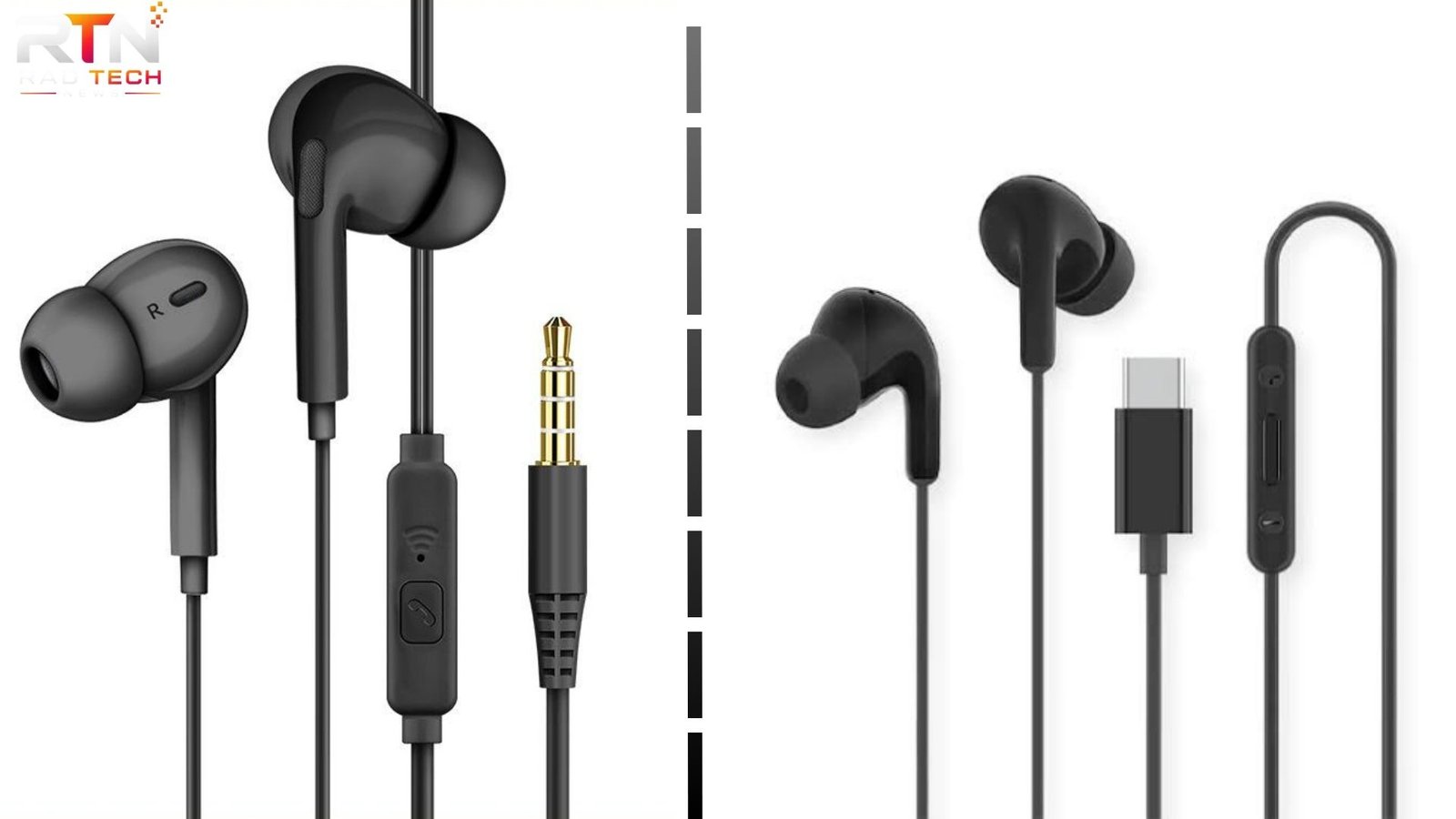
Wireless earbuds may dominate store shelves, but wired earphones still solve problems that Bluetooth cannot completely eliminate. There is no battery to charge before leaving home, no pairing menu to fight with, and almost no noticeable audio delay when watching videos, gaming, or joining an important call.
That simplicity is why many people still search for the best wired earphones, especially when they want reliable sound without paying extra for wireless features they may never use.
The confusing part is choosing the right pair.
One earphone may produce impressive bass but make voices sound muddy. Another may sound excellent yet become uncomfortable after 30 minutes. And if you are specifically shopping for iPhone wired earphones, connector compatibility becomes just as important as sound quality.
This guide explains what actually matters when comparing wired earphones, from driver tuning and microphones to cable durability, comfort, connectors, and real-world use. More importantly, it will help you choose earphones based on how you actually listen rather than buying whichever model has the biggest specifications printed on the box.
Are Wired Earphones Still Worth Buying?
Yes. Wired earphones remain a practical choice for people who value reliability, low latency, easy operation, and consistent audio.
Their biggest advantage is predictability.
Plug them in and they work.
There is normally no concern about:
- Battery percentage
- Bluetooth pairing
- Charging cases
- Connection drops
- Wireless interference
- Audio synchronization delays
That makes wired earphones particularly useful for students, office workers, commuters, gamers, frequent callers, and anyone who keeps earphones in a bag as a dependable backup.
They can also offer surprisingly good sound for the price because manufacturers do not need to spend part of the product budget on batteries, Bluetooth chips, wireless antennas, and charging electronics.
However, wired does not automatically mean better. Poorly tuned wired earphones can sound worse than good wireless earbuds. The real advantage is that more of your money can potentially go toward the parts directly responsible for audio.
What Makes the Best Wired Earphones?
There is no single pair that is best for everyone.
A bass-heavy listener and someone who spends six hours a day in online meetings need completely different things.
The best wired earphones usually balance five areas:
- Sound quality
- Comfort
- Cable durability
- Microphone performance
- Device compatibility
Specifications matter, but they rarely tell the full story.
Sound Tuning Matters More Than Huge Driver Numbers
Many product listings aggressively advertise driver size.
You might see:
- 8 mm drivers
- 10 mm drivers
- 12 mm drivers
- 13 mm drivers
A larger driver can potentially move more air, but it does not guarantee better sound.
The way the driver is tuned matters much more.
A well-designed 9 mm driver can sound cleaner and more balanced than a poorly tuned 13 mm driver.
When listening, focus on three areas.
Bass: It should have impact without covering vocals.
Midrange: Voices, podcasts, guitars, and dialogue should remain clear.
Treble: High frequencies should provide detail without becoming sharp or tiring.
For general everyday listening, a slightly warm but balanced sound usually works better than extremely boosted bass.
Choose Sound Based on What You Actually Listen To
Different listening habits benefit from different tuning.
For Pop, Hip-Hop, and Electronic Music
A mildly elevated bass response can make kick drums and low frequencies more enjoyable.
Avoid earphones where bass overwhelms everything else. Excessive bass may sound impressive during the first song but becomes tiring during longer listening sessions.
For Podcasts, Audiobooks, and Calls
Midrange clarity matters more than powerful bass.
Human voices sit heavily within the mid frequencies, so earphones with clean mids will usually make speech easier to understand.
For Acoustic, Classical, and Detailed Music
Look for balanced tuning with controlled bass and clean treble.
You want separation between instruments rather than one dominant frequency range.
For Gaming
Low latency is one of the strongest reasons to choose wired earphones.
Competitive games depend on small audio cues such as footsteps, reload sounds, and directional movement. Wired connections avoid much of the delay associated with Bluetooth transmission.
Fit Can Change the Sound More Than You Expect
Here is something many buying guides overlook:
The same earphone can sound dramatically different in two people’s ears simply because of fit.
This is particularly important with in-ear models using silicone tips.
If the ear tip does not create a proper seal, bass escapes. The earphones may suddenly sound thin even though nothing is wrong with the driver.
A better seal usually improves:
- Bass response
- Passive noise isolation
- Perceived volume
- Overall sound balance
Try different ear-tip sizes rather than assuming the pre-installed pair is correct.
If your earphones include small, medium, and large tips, spend a few minutes testing each size.
One ear can even require a different size from the other.
In-Ear vs Earbud-Style Wired Earphones
Both designs have advantages.
In-Ear Earphones
These use silicone or foam tips that enter the opening of the ear canal.
They generally provide:
- Better passive noise isolation
- Stronger bass perception
- More secure fit
- Better performance in noisy environments
They are particularly useful during commuting.
The downside is pressure. Some people dislike the sealed feeling produced by silicone tips.
Traditional Earbuds
These sit closer to the outer ear instead of sealing the canal.
They typically feel lighter and more open.
They can be better for:
- Long phone calls
- Office use
- Casual listening
- People who dislike silicone tips
However, outside noise enters more easily.
Choosing between the two is often more important than choosing between two similar brands.
Best Wired Earphones for Everyday Use
For most people, an everyday pair should prioritize balance rather than one spectacular feature.
Look for:
- Comfortable lightweight shells
- Balanced sound
- In-line microphone
- Play/pause controls
- Reinforced cable joints
- Compatible connector
- Multiple ear-tip sizes if using in-ear designs
Extremely expensive earphones are unnecessary for basic commuting, videos, calls, and casual music.
Likewise, choosing the cheapest pair available can become false economy if the cable fails after several weeks.
A good everyday pair should disappear into your routine. You should not constantly adjust it, recharge it, troubleshoot it, or worry about breaking it.
iPhone Wired Earphones: Check the Connector First
Buying wired earphones for an iPhone requires one extra step.
You need to know which physical connector your phone supports.
Depending on the iPhone generation, wired audio may connect through:
- Lightning
- USB-C
Traditional 3.5 mm earphones can also work with compatible adapters.
Before buying anything, look at the charging port on your iPhone and confirm the earphone connector matches it.
This sounds obvious, but connector confusion is one of the easiest purchasing mistakes to make.
Lightning Wired Earphones
Some iPhone models use the Lightning connector.
For these devices, you can either use earphones designed with a Lightning plug or use compatible 3.5 mm earphones through a Lightning audio adapter.
USB-C Wired Earphones
Newer iPhones use USB-C.
USB-C earphones are convenient because they connect directly without a separate adapter.
However, not every USB-C earphone behaves identically across every device.
USB-C can carry digital audio, which means some earphones contain their own small digital-to-analog converter, commonly called a DAC.
Compatibility and implementation therefore matter more than simply checking whether the plug physically fits.
A Useful Insight About USB-C Earphones
Here is a detail frequently ignored in basic buying guides.
With traditional analog earphones, much of the audio conversion happens inside the phone or adapter. With many USB-C earphones, some of that conversion happens inside the earphone cable or connector.
That means two USB-C earphones using similar physical drivers can still perform differently because their internal electronics differ.
So when comparing iPhone wired earphones, do not judge compatibility only by connector shape.
Also consider:
- Stable audio output
- Microphone support
- Volume control support
- Call functionality
Physical compatibility and full functional compatibility are not always exactly the same thing.
What About 3.5 mm Wired Earphones?
The traditional 3.5 mm headphone jack remains extremely useful because it works with many devices.
A good pair can potentially be used with:
- Laptops
- Desktop computers
- Audio interfaces
- Older phones
- Tablets
- Game controllers
- Airplane entertainment systems
For an iPhone without a headphone jack, you simply need the appropriate audio adapter.
The advantage is flexibility.
Instead of buying separate earphones for several devices, one good 3.5 mm pair can follow you between them.
The disadvantage is carrying an adapter.
If you frequently switch between multiple devices, 3.5 mm earphones may actually be more convenient in the long run.
Don’t Ignore the Microphone
A pair of earphones can sound fantastic for music while having a disappointing microphone.
If you regularly make calls, attend online classes, record voice notes, or join Zoom or Teams meetings, microphone quality deserves serious attention.
Look for microphones that reproduce speech clearly rather than simply loudly.
A practical wired microphone should minimize:
- Clothing rubbing noise
- Cable movement noise
- Excessive background pickup
- Muffled speech
Microphone position also matters.
An in-line mic located reasonably close to the mouth generally performs better than one positioned unusually low on the cable.
Cable Quality Is Often the Real Lifespan Test
Many wired earphones do not fail because the speakers stop working.
They fail because the cable does.
The most vulnerable areas are usually:
- Where the cable enters the plug
- Where the cable enters each earpiece
- Around the microphone/control module
Repeated bending slowly weakens internal wires.
When evaluating construction, look for flexible strain relief around these joints.
A thicker cable is not automatically stronger. A flexible cable with good reinforcement around stress points can last longer than a stiff, heavy cable.
The Pocket-Wrapping Mistake
A common habit is wrapping earphones tightly around a phone or fingers before putting them away.
That creates repeated sharp bends in the cable.
Instead, loosely coil the cable using wider loops.
It takes only a few additional seconds but reduces unnecessary stress near the connector.
Do Expensive Wired Earphones Always Sound Better?
Not necessarily.
Moving from extremely cheap earphones to a well-designed mid-range pair can produce a noticeable improvement.
After that, improvements often become smaller and more subjective.
More expensive earphones may offer:
- Better materials
- Detachable cables
- Multiple drivers
- Improved tuning
- Better accessories
- More detailed sound
But price does not guarantee that you personally will prefer the sound.
For example, a technically detailed earphone with bright treble might impress an audio reviewer but feel uncomfortable to someone sensitive to high frequencies.
Your ears matter more than the price tag.
Wired Earphones for Calls and Work
For work, prioritize clarity and comfort before heavy bass.
Imagine spending three hours moving between calls.
The earphones might sound exciting for music, but if the fit creates pressure or the microphone rubs against your shirt, that becomes far more important than an extra bit of bass.
For office use, look for:
- Lightweight construction
- Clear microphone
- Comfortable fit
- Easy-access controls
- Long enough cable
- Balanced voice reproduction
A traditional open earbud design can sometimes be more comfortable than sealed in-ear earphones for extended calls.
Wired Earphones for Travelling
Travel creates a different set of priorities.
A good travel pair should be compact, durable, and reasonably isolating.
Silicone-tip in-ear models usually perform well because passive isolation reduces surrounding noise.
There is another practical benefit: wired earphones do not become useless because you forgot to charge them.
Keep a small wired pair in your backpack and they can serve as a reliable emergency option even if your primary wireless earbuds run out of battery.
Common Mistakes When Buying Wired Earphones
Buying Only for Bass
More bass does not automatically mean better sound.
Too much low-end energy can hide vocals and fine details.
Ignoring Connector Compatibility
Always check whether you need Lightning, USB-C, or 3.5 mm.
Assuming More Drivers Means Better Sound
Multiple drivers can improve performance when engineered correctly, but driver count alone tells you very little about tuning quality.
Ignoring Comfort
A technically excellent earphone that hurts after 20 minutes is unlikely to become your favorite pair.
Choosing Extremely Long or Short Cables
Too much cable becomes annoying during commuting. Too little becomes restrictive when using a laptop or keeping your phone in a bag.
Overlooking Controls
Check whether the in-line controls support the functions you actually use, particularly volume, calls, and playback.
Three Details That Can Make a Bigger Difference Than Specifications
1. Ear Tip Bore Size Can Affect Sound
Silicone tips differ not only in size but also in the width of their central opening.
A wider opening can sometimes make higher frequencies feel more noticeable, while narrower tips may slightly alter perceived bass and treble balance.
That means changing ear tips can affect sound as well as comfort.
2. Cable Noise Can Ruin Otherwise Good Earphones
When a cable rubs against clothing, vibrations can travel directly into sealed in-ear earphones.
This effect is known as microphonics.
It becomes particularly noticeable when walking.
A soft, flexible cable and secure fit can reduce it considerably.
3. Listening Volume Often Changes When Isolation Improves
People frequently increase volume in noisy places because external noise competes with music.
Better passive isolation can make music easier to hear without requiring the same level of volume.
So a good seal is not only about getting stronger bass. It can also improve everyday listening comfort.
How to Choose the Best Wired Earphones for You
Use this simple process before buying.
- Identify your main device. Determine whether you need Lightning, USB-C, or 3.5 mm.
- Choose your preferred fit. Decide between sealed in-ear tips and traditional earbuds.
- Think about your primary use. Music, gaming, commuting, calls, and office work have different priorities.
- Choose suitable sound tuning. Bass lovers and podcast listeners should not automatically buy the same model.
- Check the microphone. This matters if you make frequent calls.
- Inspect cable construction. Look for flexible reinforcement around the connector and earpieces.
- Prioritize comfort. Especially if you listen for several hours at a time.
Following these steps is usually more useful than comparing specification sheets line by line.
Frequently Asked Questions
Are wired earphones better than wireless earbuds?
Wired earphones can be better when you want reliable connectivity, virtually no wireless latency, and no battery management. Wireless earbuds are more convenient when freedom of movement is the priority. Sound quality depends heavily on the actual models rather than connection type alone.
Which wired earphones are best for iPhone?
The best option depends first on your iPhone’s connector. Choose compatible Lightning or USB-C earphones, or use quality 3.5 mm earphones with an appropriate adapter. After compatibility, focus on comfort, microphone quality, sound tuning, and cable durability.
Can I use normal wired earphones with an iPhone?
Yes, but you may need an adapter if your earphones use a 3.5 mm plug. The adapter needs to match the connector on your iPhone, such as Lightning or USB-C. Once connected correctly, ordinary wired earphones can still be a practical option.
Are USB-C wired earphones good for iPhone?
USB-C wired earphones can be an excellent choice for compatible iPhones because they connect directly without requiring a separate 3.5 mm adapter. Check that microphone and media controls are also properly supported. Connector compatibility alone does not always guarantee every function will behave identically.
Are wired earphones good for gaming?
Yes. Their low latency makes wired earphones particularly useful for gaming, especially when timing and directional audio cues matter. You also avoid interruptions caused by low batteries or unstable Bluetooth connections.
How long should wired earphones last?
Lifespan depends heavily on build quality and how the cable is handled. Repeatedly pulling the earphones by the cable, sharply bending the connector, or tightly wrapping the wire can cause early failure. A reasonably constructed pair handled carefully can last significantly longer than one subjected to constant cable stress.
Conclusion
Choosing the best wired earphones is less about finding the model with the largest driver or longest specification list and more about matching the earphones to your daily routine.
Start with compatibility. Then consider fit, sound tuning, microphone performance, cable construction, and how long you normally listen.
For iPhone users, determining whether you need Lightning, USB-C, or an adapter prevents the most obvious compatibility mistake. For everyone else, comfort and tuning will usually influence long-term satisfaction more than impressive numbers printed on packaging.
A good pair of wired earphones should feel simple: plug them in, hear everything clearly, and forget about the technology between you and the sound.
