
Businesses rarely struggle because they lack marketing channels. The harder problem is choosing the right channels, connecting them to measurable goals, and improving performance without wasting budget. Professional digital marketing services bring SEO, paid advertising, content, social media, email, analytics, and conversion optimization into one coordinated strategy.
The objective is not simply generating more traffic. Effective digital marketing turns relevant visibility into qualified leads, customers, and sustainable revenue while giving businesses clearer insight into what drives results.
What Are Digital Marketing Services?
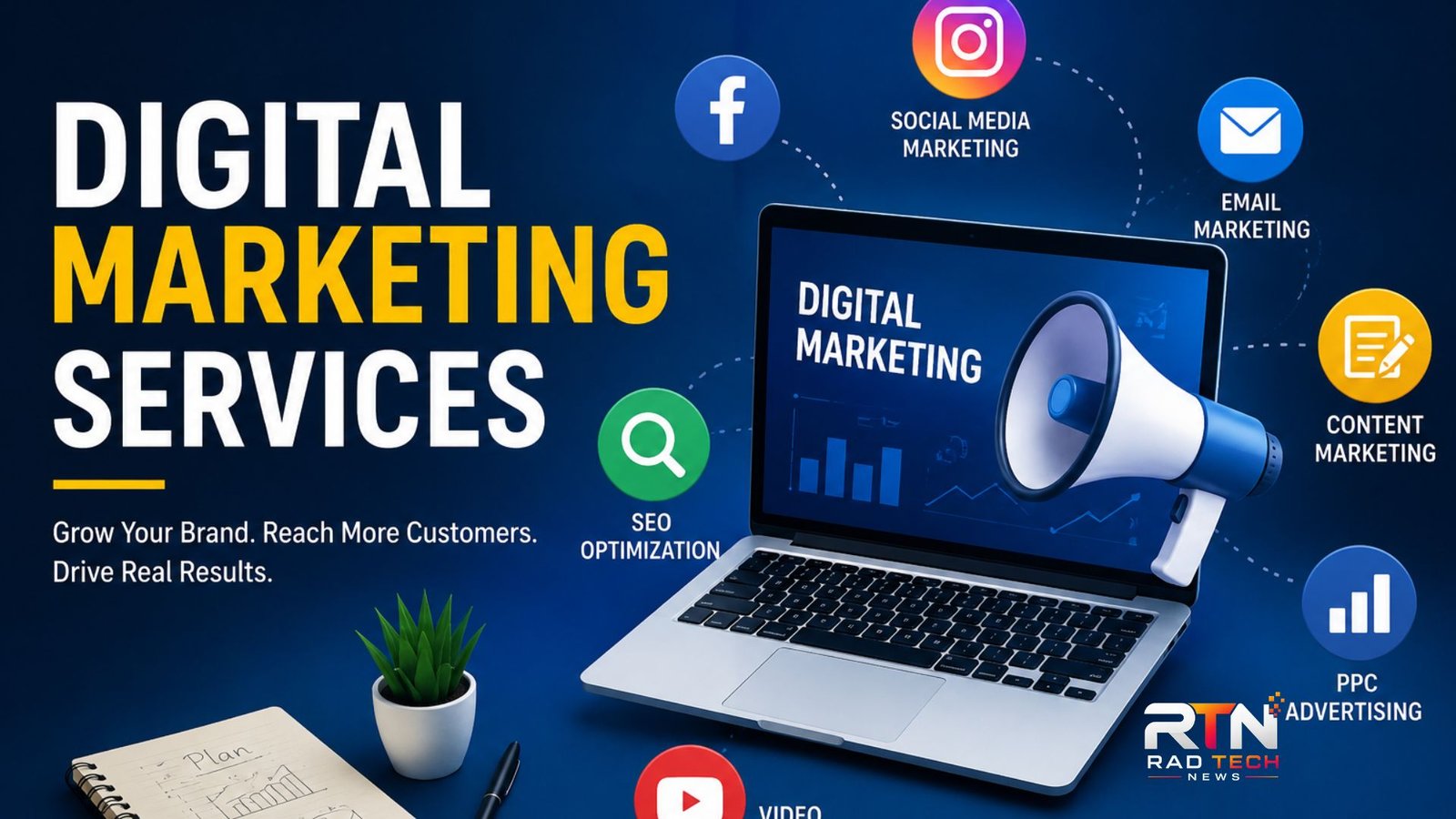
Digital marketing services are specialized strategies used to promote businesses across search engines, websites, social platforms, email, and other online channels. Providers may handle one discipline or manage an integrated digital strategy.
Common services include:
- Search engine optimization (SEO) for organic visibility
- Pay-per-click advertising (PPC) for targeted paid traffic
- Content marketing for authority and audience education
- Social media marketing for reach and engagement
- Email marketing for lead nurturing and retention
- Conversion rate optimization (CRO) for improving website performance
- Analytics and reporting for measuring outcomes
The right mix depends on business goals, audience behavior, competition, budget, and existing digital assets.
How Digital Marketing Services Support Business Growth
Strong campaigns connect customer intent with the appropriate marketing channel. SEO can capture people actively researching solutions, while paid search can create immediate visibility for commercially valuable queries. Content supports both by answering questions and building topical authority.
Social and email channels serve different purposes. Social media can strengthen discovery and customer relationships, while email helps businesses nurture prospects and reconnect with existing customers.
| Service | Primary Purpose | Useful Performance Indicators |
|---|---|---|
| SEO | Increase organic search visibility | Rankings, organic leads, conversions |
| PPC | Capture targeted paid traffic | CPC, conversion rate, cost per acquisition |
| Content Marketing | Educate and build authority | Qualified traffic, leads, assisted conversions |
| Social Media | Grow awareness and engagement | Reach, engagement, referral conversions |
| Email Marketing | Nurture and retain audiences | Clicks, conversions, unsubscribe rate |
💡 Pro Tip: Evaluate channels by their contribution to business outcomes rather than surface-level metrics. A campaign producing fewer qualified visitors may be more valuable than one generating thousands of visits that never convert.
Choosing Digital Marketing Services That Fit Your Goals
Start with the business objective rather than a fashionable platform. A local service company may prioritize local SEO, Google Business Profile optimization, and paid search. An ecommerce brand might place greater emphasis on product SEO, shopping campaigns, email automation, and CRO.
Before hiring a digital marketing agency or consultant, assess:
- Strategy: Can they explain why each recommended channel supports your goals?
- Transparency: Will you retain access to advertising accounts, analytics, and campaign data?
- Measurement: Are conversions and meaningful KPIs defined before campaigns begin?
- Expertise: Does the provider demonstrate knowledge relevant to your market and business model?
- Reporting: Do reports explain outcomes and next actions rather than simply displaying metrics?
Be cautious of guaranteed rankings, unexplained proprietary methods, or promises of instant organic growth. Search performance and customer acquisition depend on numerous competitive and technical factors.
📌 Key Takeaway: The best digital strategy is not the one using the most channels. It is the one connecting appropriate channels to customer intent, measurable objectives, reliable data, and continuous improvement.
Frequently Asked Questions
What services are included in digital marketing?
Digital marketing can include SEO, PPC advertising, content creation, social media management, email marketing, online reputation management, CRO, marketing automation, and analytics. Packages vary considerably between providers. Businesses should select services according to their objectives and customer journey instead of assuming every available channel needs to be included.
How much do digital marketing services cost?
Costs depend on campaign scope, market competition, geographic targeting, advertising spend, service complexity, and the provider’s expertise. SEO retainers, PPC management, and content programs use different pricing structures. Rather than comparing price alone, businesses should examine deliverables, account ownership, reporting standards, strategic involvement, and how performance will be measured.
How long does digital marketing take to show results?
The timeline varies by channel. Paid advertising can begin producing traffic soon after campaigns launch, although optimization takes time. SEO and content marketing generally require longer-term work because search visibility develops through technical improvements, useful content, authority, and competition. Reliable providers should establish realistic milestones instead of promising a universal timeline.
Should I hire a digital marketing agency or build an in-house team?
The better option depends on budget, workload, required expertise, and long-term priorities. Agencies can provide access to specialists across several disciplines without requiring multiple full-time hires. In-house teams offer closer day-to-day integration with the business. Some organizations use a hybrid model, keeping strategy internally while outsourcing specialist execution.
Conclusion
Effective digital marketing services combine strategy, execution, measurement, and ongoing optimization rather than treating SEO, advertising, content, and social media as isolated activities. Choose channels based on customer intent and commercial objectives, establish reliable conversion tracking, and judge performance by meaningful business outcomes. That approach creates a stronger foundation for scalable, accountable online growth.
