

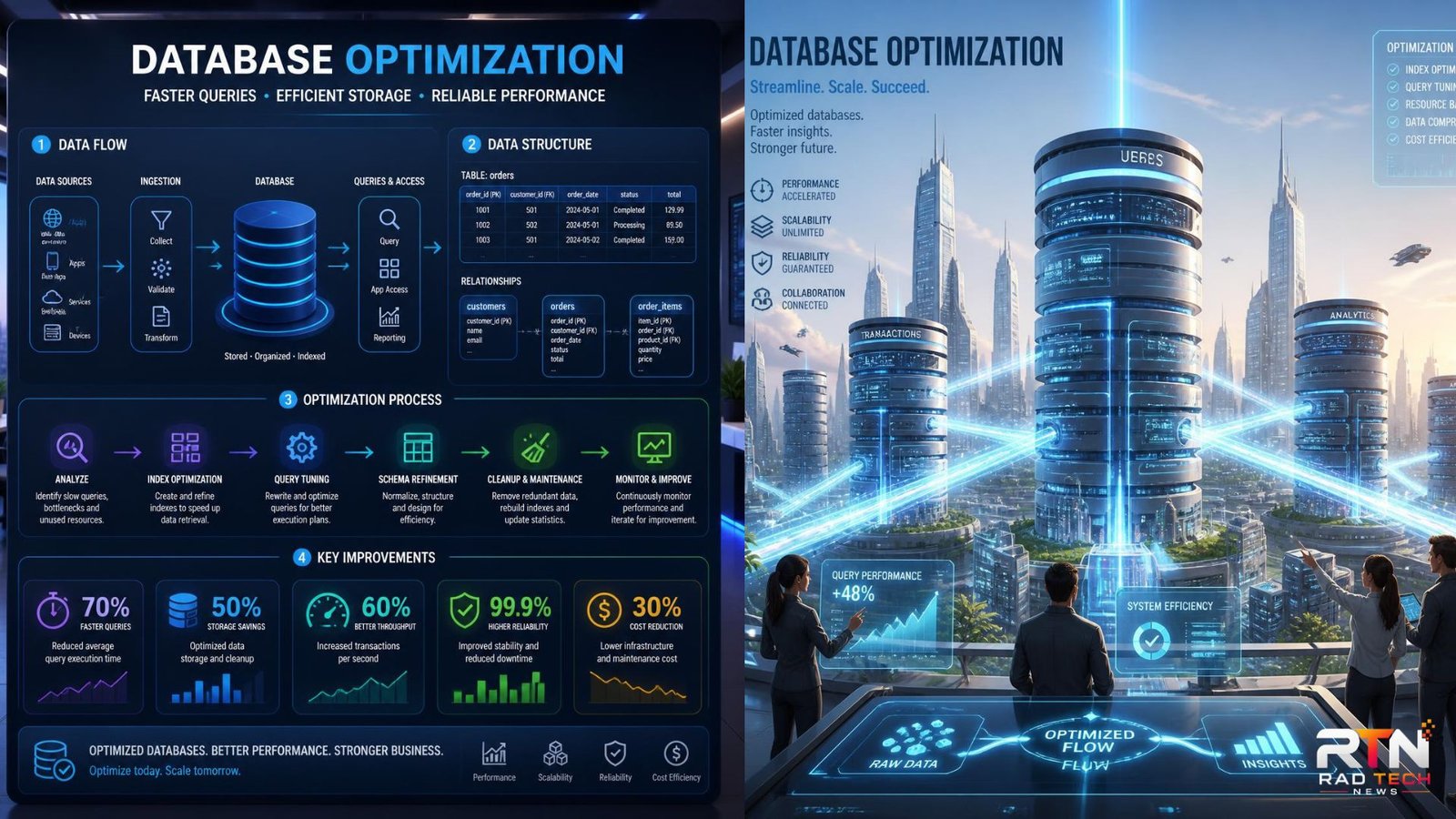
Database optimization is the backbone of high-performing web applications, enterprise software, and modern digital platforms. As data volumes expand exponentially, unoptimized queries and bloated tables can cripple server response times. System administrators and developers must continuously refine database structures to ensure seamless user experiences and prevent costly infrastructure scaling.
Effective performance tuning requires a systematic approach to identifying bottlenecks. Whether managing relational database management systems like MySQL and PostgreSQL or handling unstructured data, maintaining clean architecture prevents latency spikes. Slow queries consume valuable CPU cycles, starving other processes and degrading overall application throughput.
Core Strategies for Effective Database Optimization
Modern database optimization relies on a blend of indexing strategies, query refactoring, and hardware resource allocation. Without proper indexing, database engines must perform full table scans, reading millions of rows to find a single matching record. Creating targeted indexes on frequently filtered columns drastically reduces disk I/O operations and speeds up retrieval times.
Query refactoring plays an equally vital role. Developers should avoid selecting unnecessary columns, minimize expensive joins, and utilize execution plans to diagnose inefficiencies.
| Optimization Technique | Primary Benefit | Best Implemented For |
| Indexing | Accelerates data retrieval | Frequently searched columns and foreign keys |
| Query Caching | Reduces database load | Repetitive, read-heavy queries |
| Partitioning | Improves manageability | Extremely large tables with historical data |
| Normalization | Eliminates data redundancy | Transactional (OLTP) databases |
Proper resource management also involves configuring connection pools and memory buffers. Allocating adequate RAM for caching frequently accessed data minimizes disk read operations, keeping response times exceptionally low.
💡 Pro Tip: Regularly analyze your slow query logs to pinpoint the exact SQL statements causing latency, rather than guessing which parts of your schema require tuning.
Database maintenance goes beyond initial setup; it requires ongoing monitoring and automated cleanup routines. Dead tuples, fragmented indexes, and outdated table statistics accumulate over time, misleading the query planner into choosing suboptimal execution paths. Scheduling routine maintenance tasks ensures peak operational efficiency.
📌 Key Takeaway: Consistent monitoring, precise indexing, and regular query refactoring form the foundation of a robust database optimization strategy that scales alongside your growing application.
Conculsion
Maintaining peak operational efficiency requires a proactive mindset and a commitment to continuous infrastructure refinement. By combining disciplined indexing, clean query syntax, and regular maintenance routines, engineering teams can guarantee reliable scalability and superior application performance over the long term. Ultimately, treating performance tuning as an ongoing lifecycle rather than a one-time fix safeguards your application against sudden traffic spikes and ensures a seamless experience for every user.
Frequently Asked Questions
What is the primary cause of slow database performance?
Slow database performance typically stems from missing indexes, poorly written queries that trigger full table scans, and insufficient memory allocation. When a database engine lacks proper indexing, it must scan every single row on a disk to satisfy a request, consuming massive amounts of CPU and I/O resources.
How often should database indexes be rebuilt?
Indexes should be rebuilt or reorganized when fragmentation levels exceed moderate thresholds, usually between thirty and forty percent. Regular maintenance schedules depend heavily on write activity; high-transaction environments require more frequent index health checks than read-heavy archives.
Does database normalization always improve speed?
Normalization reduces data redundancy and improves write efficiency in transactional systems, but excessive joining across normalized tables can slow down read operations. Analytical systems often use denormalization or star schemas to optimize query performance for large reporting workloads.
How does query caching impact server resources?
Query caching stores the result set of a query in memory, allowing subsequent identical requests to bypass execution entirely. While this drastically reduces CPU utilization and speeds up response times, high write frequencies can invalidate the cache rapidly, introducing overhead.
Maintaining peak efficiency requires a proactive mindset. By combining disciplined indexing, clean query syntax, and regular maintenance routines, engineering teams can guarantee reliable scalability and superior application performance over the long term.
