

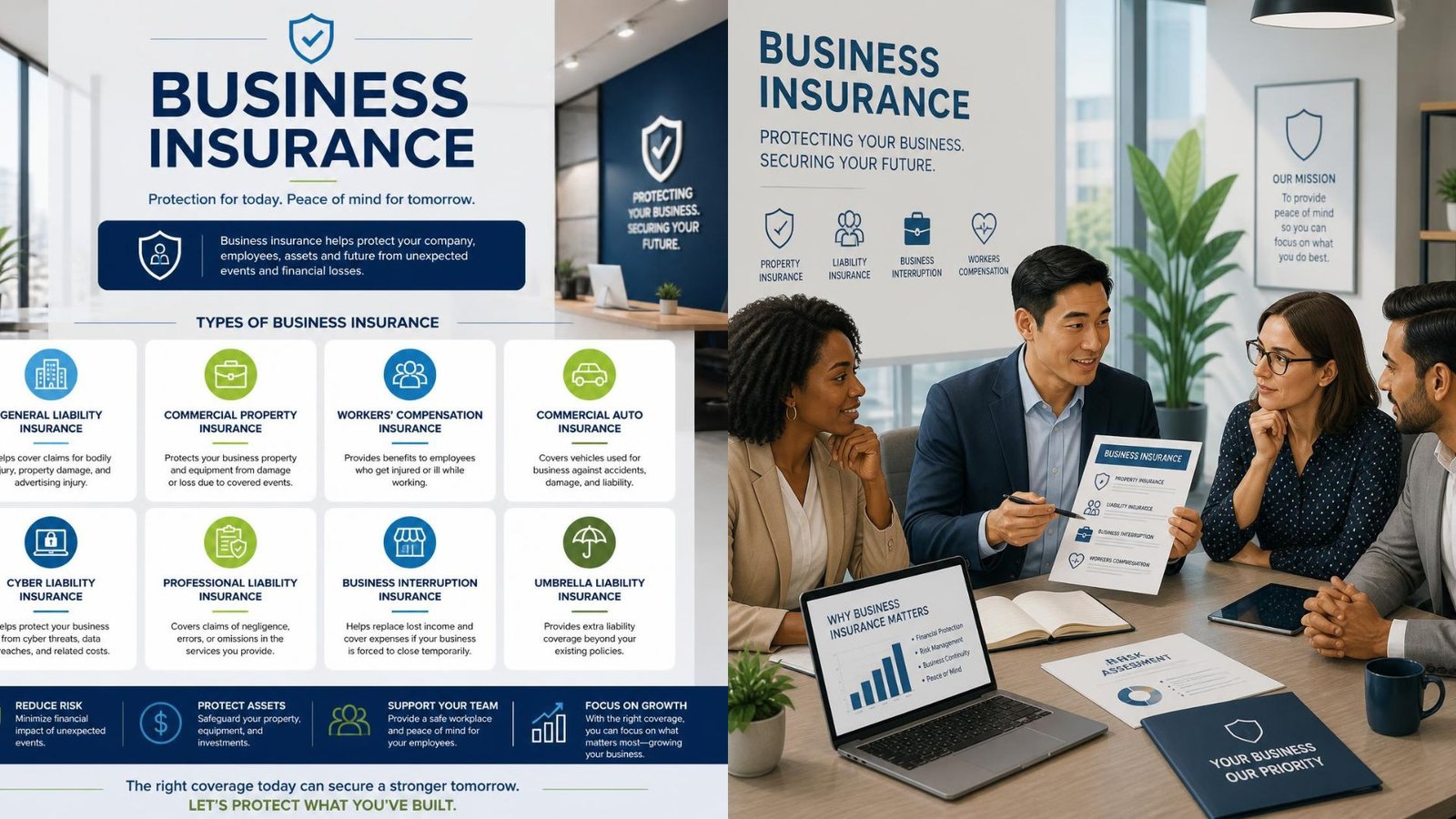
Protecting your enterprise from unforeseen liabilities requires a thorough understanding of commercial policies and risk management frameworks. Operating any commercial venture exposes owners to continuous operational uncertainties, property damages, and unexpected litigation risks. Without proper financial safeguards, a single catastrophic event can jeopardize years of hard work and accumulated capital. Navigating the complexities of business insurance ensures that commercial assets remain secure while operations scale sustainably across competitive markets.
Understanding Core Commercial Coverage Types
Commercial protection involves multiple specialized policies designed to shield companies from distinct financial liabilities. General liability policies form the backbone of corporate security, covering third-party bodily injury, property damage, and personal injury claims. Property insurance safeguards physical assets including buildings, inventory, equipment, and furniture against theft, fire, or severe weather events.
- General Liability: Protects against customer injuries and third-party property damage.
- Commercial Property: Covers physical headquarters, inventory, and operational equipment.
- Workers Compensation: Mandatory coverage providing medical and wage benefits for injured employees.
Beyond foundational policies, professional liability protects service providers against allegations of negligence, errors, or omissions. Cyber liability has also become essential as digital threats escalate, covering data breaches, extortion demands, and regulatory fines. Comprehensive risk management requires auditing operational vulnerabilities to determine optimal coverage limits and deductibles. Choosing the right business insurance policy is critical for long-term stability.
| Coverage Type | Primary Protection Focus | Recommended For |
| General Liability | Third-party bodily injury and property claims | All operating enterprises |
| Professional Liability | Financial losses from service errors or negligence | Consultants, agencies, and advisors |
| Commercial Auto | Fleet vehicles and delivery-related accidents | Logistics, couriers, and service fleets |
| Directors and Officers | Protection for management against legal claims | Corporations and non-profit boards |
Assessing Risk and Determining Policy Limits
Calculating appropriate coverage limits involves evaluating maximum foreseeable loss scenarios, industry-specific regulations, and contractual requirements from vendors or landlords. Underinsurance leaves companies vulnerable to significant out-of-pocket expenses during major claims. Conversely, over-insuring unnecessarily drains operational cash flow that could otherwise fuel growth initiatives. Finding reliable business insurance providers allows organizations to secure tailored policies matching their exact exposure profile.
💡 Pro Tip: Review your commercial policies annually with a licensed broker to adjust coverage limits as your payroll, revenue, and physical inventory expand.
Working alongside experienced underwriters helps align policy parameters with actual operational exposure. Small enterprises often benefit from bundled packages like a Business Owner’s Policy, which combines property and liability protection into a single cost-effective solution. Incorporating comprehensive business insurance into your financial planning mitigates unexpected disaster recovery costs.
📌 Key Takeaway: Comprehensive commercial protection balances mandatory legal requirements with customized policies tailored to your specific industry vulnerabilities and growth trajectory.
Frequently Asked Questions
What does a standard commercial liability policy cover?
A standard commercial liability policy addresses third-party claims alleging bodily injury, property damage, or advertising mistakes. It covers legal defense costs, settlements, and medical expenses resulting from incidents on your premises or caused by your operations. Securing adequate business insurance ensures these unexpected legal expenses do not drain your operating capital.
Is workers compensation mandatory for small businesses?
Workers compensation is legally required in almost every jurisdiction once a business hires a specific threshold of employees. This policy covers medical treatments, rehabilitation expenses, and partial wage replacement for workers who sustain injuries or illnesses directly related to their employment duties.
How is the cost of a commercial policy calculated?
Insurance providers evaluate multiple risk factors to determine premium rates. Key variables include your annual revenue, total payroll, industry risk classification, geographic location, claims history, and chosen deductible amounts. Evaluating multiple business insurance quotes helps organizations secure competitive rates without compromising necessary coverage breadth.
Can I bundle multiple policies to save money?
Bundling multiple policies, such as combining general liability and property insurance into a Business Owner’s Policy, typically reduces overall premium expenses. Insurance carriers offer these packages to streamline administration and provide comprehensive protection for small to mid-sized commercial entities.
What is the difference between occurrence and claims-made policies?
Occurrence policies cover incidents that happen during the policy period, regardless of when the claim is formally filed. Claims-made policies only cover incidents if both the event and the resulting claim occur while the active policy remains in force, requiring continuous renewal or tail coverage.
Conclusion
Securing adequate business insurance remains a fundamental pillar of responsible enterprise management and long-term financial stability. By carefully analyzing operational risks, selecting appropriate coverage limits, and maintaining proactive safety standards, founders can insulate their ventures against unexpected shocks. Prioritizing robust business insurance safeguards both current assets and future growth potential in an unpredictable economic landscape, ensuring that your enterprise thrives regardless of external market pressures.
