

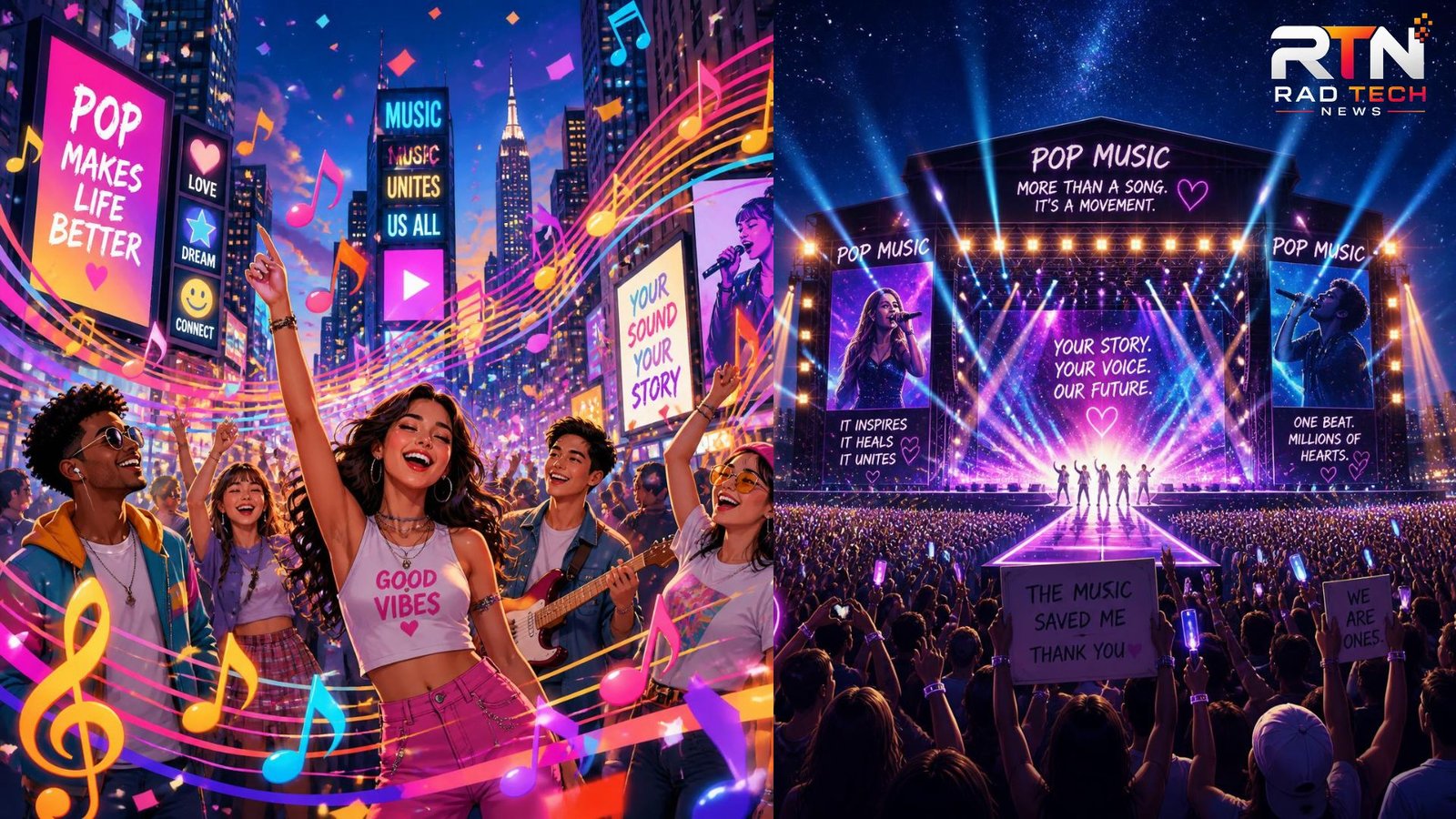
Pop music and its impact extend far beyond catchy choruses and crowded concert venues. As one of the world’s most accessible forms of entertainment, pop reflects changing attitudes, introduces new artists, and influences the way people dress, speak, dance, and connect.
From radio broadcasts to streaming platforms, popular music has adapted to every major shift in media. Its broad appeal comes from a simple strength: pop can make complex emotions and social ideas feel immediate, memorable, and personal.
How Pop Music Shapes Society
Pop songs often capture the mood of a generation. Themes such as love, independence, mental health, equality, ambition, and heartbreak appear repeatedly because they reflect experiences shared by millions of listeners.
Artists also use their visibility to raise awareness of social issues. A song may not change public policy on its own, but it can start conversations, give underrepresented communities a voice, and make unfamiliar experiences easier to understand.
The genre’s influence is especially visible in youth culture. Music videos, live performances, celebrity fashion, and dance trends often move quickly from entertainment into mainstream behavior.
| Area of influence | How pop music affects it |
|---|---|
| Fashion | Popular artists introduce styles that spread through social media and retail |
| Language | Lyrics and fan communities popularize expressions and cultural references |
| Identity | Songs help listeners explore belonging, confidence, relationships, and self-expression |
| Technology | New platforms change how music is created, promoted, discovered, and shared |
| Social awareness | Artists can bring attention to causes and public conversations |
The Business and Technology Connection
The modern music industry is built around accessibility. Streaming services allow listeners to discover songs from different countries within seconds, while short-form video platforms can turn an unknown track into an international hit.
This shift has changed the traditional path to success. Record labels still matter, but independent musicians can now release music, build a fan base, and promote their work without relying entirely on radio or television.
Data also plays a major role. Playlist placement, search behavior, audience retention, and social engagement help music companies understand what listeners want. However, successful pop still depends on more than algorithms. A memorable melody, distinctive voice, emotional honesty, and strong visual identity remain difficult to automate.
💡 Pro Tip: When analyzing a pop song’s cultural influence, examine its lyrics, visual presentation, audience response, distribution platform, and timing rather than judging the song by popularity alone.
Global Reach and Cultural Exchange
Pop music has become increasingly international. English-language releases continue to dominate many global charts, but artists from South Korea, Latin America, Africa, Europe, and South Asia have expanded the definition of mainstream success.
This exchange creates exciting collaborations and introduces listeners to new languages, rhythms, instruments, and performance traditions. At the same time, it raises questions about cultural ownership and representation. Borrowing from another culture can encourage appreciation, but careless imitation may reduce meaningful traditions to commercial decoration.
The strongest global pop succeeds by combining familiarity with originality. It offers a structure audiences recognize while adding a sound, story, or perspective they have not heard before.
Benefits and Concerns
Pop music can support emotional wellbeing by helping people process grief, celebrate important moments, or feel less alone. Shared listening also creates communities around concerts, fan groups, online discussions, and cultural events.
Yet its influence is not always positive. Repetitive beauty standards, materialistic messages, explicit content, and intense celebrity culture may affect younger audiences. Commercial pressure can also encourage formulaic songwriting and limit artistic risk.
The answer is not to dismiss popular music, but to listen critically. Audiences can enjoy entertainment while considering whose stories are being promoted, which voices are missing, and how marketing shapes personal taste.
📌 Key Takeaway: Pop music is both a mirror and a megaphone: it reflects public feeling while amplifying ideas that can influence culture, commerce, identity, and social discussion.
Frequently Asked Questions
Why is pop music so popular?
Pop music is popular because it usually combines memorable melodies, accessible song structures, polished production, and themes that many listeners understand. Its wide distribution through radio, streaming services, films, advertising, and social media also makes it easy to encounter repeatedly. Familiarity strengthens recognition, while emotional storytelling encourages listeners to form personal connections with songs.
How does pop music influence fashion?
Pop artists influence fashion through music videos, award-show appearances, concert costumes, album artwork, and social media content. Fans often adopt recognizable hairstyles, colors, accessories, or clothing associated with performers. Designers and retailers may then adapt those trends for wider audiences, turning music-related style into a broader commercial and cultural movement.
Can pop music affect mental health?
Pop music can influence mental health in different ways. Comforting lyrics may help listeners manage sadness, stress, or loneliness, while energetic songs can support motivation and mood regulation. However, music is not a substitute for professional care. Lyrics that romanticize harmful behavior may also affect listeners differently depending on their age, circumstances, and emotional state.
What makes a pop song successful?
A successful pop song usually combines a strong hook with clear production, memorable lyrics, effective promotion, and a compelling performance. Timing also matters: a track may resonate because it reflects a current cultural mood or works well on a popular platform. Long-term success generally requires more than one viral moment; it depends on audience loyalty and artistic consistency.
Conclusion
Pop music and its impact remain powerful because the genre connects personal emotion with public culture. It shapes trends, supports global exchange, influences business decisions, and gives artists a platform to discuss important issues.
Its future will continue to evolve with technology, but the central appeal will remain familiar: a well-crafted song can express what people feel, help them understand one another, and become part of the soundtrack of their lives.
