

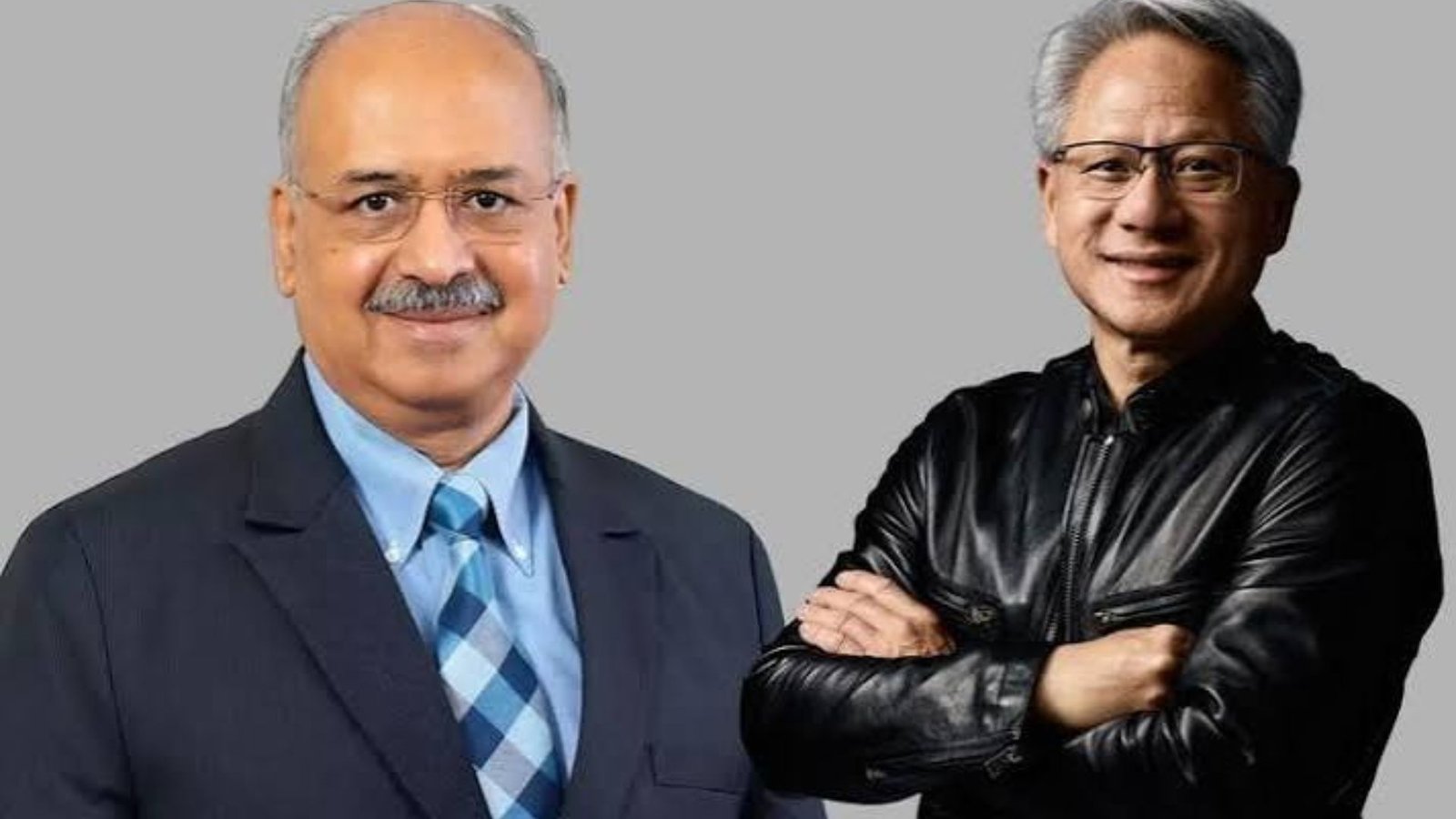
What connects a pharmaceutical entrepreneur who transformed India’s medicine industry with a technology leader driving the artificial intelligence revolution? Dilip Shanghvi and Jensen Huang built their reputations in different industries, yet both demonstrate how long-term thinking, innovation, and strategic decisions can turn ambitious businesses into global enterprises. Understanding their careers reveals important lessons about entrepreneurship, leadership, and business growth. Their stories also raise a natural question: are these two influential founders directly connected, or are their similarities primarily professional?
Are Dilip Shanghvi and Jensen Huang Connected?
Dilip Shanghvi and Jensen Huang are business leaders associated with two major companies: Sun Pharmaceutical Industries and NVIDIA. Shanghvi built his business in pharmaceuticals, while Huang co-founded NVIDIA and helped develop its position in graphics processing, accelerated computing, and artificial intelligence.
No established direct business partnership or shared venture between Dilip Shanghvi and Jensen Huang is documented in the authoritative public profiles reviewed for this article. Their main point of comparison is their entrepreneurial success, long-term leadership, and influence on industries that depend heavily on specialized knowledge and innovation.
Dilip Shanghvi and Jensen Huang: Complete Profile Comparison
The following table summarizes their professional backgrounds and the principal differences between their careers.
| Comparison Factor | Dilip Shanghvi | Jensen Huang |
|---|---|---|
| Full name | Dilip Shanghvi | Jensen Huang |
| Known for | Building Sun Pharmaceutical Industries | Co-founding and leading NVIDIA |
| Industry | Pharmaceuticals and healthcare | Semiconductors, computing, and AI |
| Company | Sun Pharmaceutical Industries | NVIDIA Corporation |
| Company founded | Sun Pharma was established in 1983 | NVIDIA was founded in 1993 |
| Founding role | Founder of Sun Pharma | Co-founder of NVIDIA |
| Current leadership role | Executive Chairman of Sun Pharma | President and CEO of NVIDIA |
| Business focus | Medicines, specialty pharmaceuticals, and healthcare products | GPUs, accelerated computing, AI computing platforms, and related software |
| Education | Commerce graduate from the University of Calcutta | Electrical engineering degrees from Oregon State University and Stanford University |
| Primary growth drivers | Pharmaceutical expansion, product development, international markets, and acquisitions | Computing innovation, GPU technology, software platforms, and AI infrastructure |
| Main business challenge | Developing medicines, regulatory compliance, competition, and healthcare access | Technology competition, semiconductor supply, export restrictions, and rapid changes in computing |
| Leadership lesson | Build a sustainable business through specialization and strategic expansion | Invest in technology platforms that can support future computing needs |
The comparison highlights two different approaches to building a global enterprise. Shanghvi’s business grew around pharmaceutical products and international expansion, while Huang’s company evolved from graphics technology into a broader computing platform. Their achievements are best evaluated within their respective industries rather than through a simple one-to-one ranking.
1. Who Is Dilip Shanghvi?
Dilip Shanghvi is an Indian entrepreneur and the founder of Sun Pharmaceutical Industries, one of India’s leading pharmaceutical companies. His career is associated with the development of a medicines business into an international pharmaceutical organization.
Shanghvi entered an industry where product quality, manufacturing standards, regulatory approval, and distribution all influence commercial success. Rather than building a business around consumer entertainment or short product cycles, he focused on medicines and healthcare markets that require technical expertise and consistent operations.
His professional experience includes pharmaceutical business strategy, research and development, international expansion, and acquisitions. These activities helped Sun Pharma expand beyond its original market and develop a broader business portfolio.
How Did Dilip Shanghvi Build Sun Pharma?
Sun Pharma was established in 1983. The company began as a pharmaceutical business and gradually expanded its products, operations, and geographic reach.
Its growth illustrates several important business principles:
- Specialization: Pharmaceutical companies can build expertise in selected therapeutic areas and product categories.
- Market expansion: Entering additional markets can increase the number of customers and healthcare providers a company serves.
- Acquisitions: Purchasing other businesses can provide products, facilities, intellectual property, and access to new markets.
- Research and development: Investment in scientific capabilities can support the development of more specialized medicines.
- Operational discipline: Manufacturing quality and regulatory compliance are essential in the pharmaceutical industry.
Dilip Shanghvi’s role in Sun Pharma’s growth makes his career relevant to entrepreneurs studying how specialized businesses expand over several decades.
2. Who Is Jensen Huang?
Jensen Huang is a Taiwanese-born American entrepreneur and the co-founder, president, and chief executive officer of NVIDIA. He helped establish the company in 1993 and has remained its chief executive since its founding.
Huang studied electrical engineering at Oregon State University and earned a master’s degree in electrical engineering from Stanford University. Before founding NVIDIA, he worked at semiconductor companies, including Advanced Micro Devices and LSI Logic.
His technical background helped prepare him for an industry in which hardware design, software development, computing performance, and long-term research investments can shape entire markets.
How Did Jensen Huang Build NVIDIA?
NVIDIA initially concentrated on graphics processing technology. Its GPUs became important in computer graphics and gaming before expanding into other demanding computing applications.
The company’s technology subsequently gained significance in scientific computing, data centers, machine learning, and generative artificial intelligence.
NVIDIA’s wider business strategy includes more than selling chips. Its computing platforms combine hardware, software, development tools, and systems that help organizations build and operate demanding applications.
Key factors in NVIDIA’s development include:
- GPU innovation: Developing processors designed to handle many calculations in parallel.
- Software ecosystems: Supporting developers who build applications using NVIDIA technology.
- AI infrastructure: Providing computing platforms used to train and run artificial intelligence models.
- Research investment: Developing technology for emerging computing workloads.
- Long-term planning: Preparing products and systems for markets that may take years to mature.
Jensen Huang’s career demonstrates how a company can expand beyond its original market when its core technology becomes useful for new applications.
3. What Is the Main Difference Between Dilip Shanghvi and Jensen Huang?
The central difference is the industries they serve and the problems their companies solve.
Shanghvi’s business focuses on medicines and healthcare products. Pharmaceutical companies must consider clinical evidence, safety, manufacturing quality, patents, regulatory requirements, and access to healthcare markets.
Huang’s business focuses on computing technology. Semiconductor and AI infrastructure companies must address processing performance, software compatibility, energy consumption, manufacturing capacity, and rapidly changing technical requirements.
Although the operating environments differ, both businesses depend on specialized knowledge, sustained investment, and the ability to adapt to changing market conditions.
Their Business Models Compared
| Business Dimension | Sun Pharma | NVIDIA |
|---|---|---|
| Main offering | Pharmaceutical products and specialty medicines | GPUs, computing systems, software, and AI platforms |
| Primary customers | Distributors, pharmacies, healthcare providers, institutions, and patients through appropriate channels | Cloud providers, technology companies, enterprises, developers, researchers, and consumers |
| Research focus | Medicines, formulations, therapeutic development, and delivery technologies | Processor architecture, computing systems, software, and AI acceleration |
| Regulation | Pharmaceutical approvals, safety, and manufacturing requirements | Product-specific technology, trade, export, and other applicable regulations |
| Market opportunity | Healthcare needs and demand for effective medicines | Demand for computing, data processing, and AI infrastructure |
| Commercial risks | Clinical setbacks, generic competition, pricing pressure, and compliance | Technology transitions, competition, supply constraints, and changes in AI investment |
| Growth strategy | Product development, acquisitions, geographic expansion, and portfolio development | Product innovation, software ecosystems, platform adoption, and expansion into new computing markets |
Neither model is universally superior. Each succeeds when its strategy matches customer needs, technical capabilities, and the realities of its market.
4. What Do Dilip Shanghvi and Jensen Huang Have in Common?
Despite working in different sectors, Dilip Shanghvi and Jensen Huang share several professional characteristics.
Long-Term Business Building
Both leaders are associated with companies developed over decades rather than businesses designed around a short period of popularity. Their careers illustrate the importance of building organizational capabilities that can support future growth.
Industry Knowledge
Pharmaceutical and semiconductor businesses require specialized expertise. Leaders must understand the technical foundations of their products while making decisions about investment, talent, competition, and commercial priorities.
Innovation and Adaptation
Innovation takes different forms in each industry. In pharmaceuticals, it can involve new medicines, formulations, and treatment approaches. In computing, it can involve faster processors, improved software, and new AI applications.
International Ambition
Both companies operate in international markets. Global expansion can create new revenue opportunities, but it also introduces regulatory complexity, local competition, supply-chain demands, and cultural differences.
Leadership Continuity
Long-serving founders can provide strategic direction and institutional knowledge. However, successful companies must also develop strong management teams, independent oversight, and succession plans so their operations do not depend on a single individual.
These shared characteristics explain why comparing Dilip Shanghvi and Jensen Huang can be useful for understanding founder-led businesses, even without an established direct professional relationship.
5. How Are Their Leadership Styles Different?
Leadership style should be evaluated through documented decisions, organizational structures, and business outcomes rather than assumptions about personality.
Shanghvi’s professional record is closely associated with pharmaceutical expansion, acquisitions, business development, and long-term portfolio strategy. His sector requires balancing commercial objectives with patient safety, regulatory obligations, and the uncertainty of research.
Huang’s career is closely associated with technical innovation and the expansion of NVIDIA’s computing platforms. His company’s strategy requires coordination among hardware engineers, software developers, researchers, manufacturing partners, and customers.
The contrast can be summarized as follows:
| Leadership Area | Shanghvi’s Business Context | Huang’s Business Context |
|---|---|---|
| Strategic priority | Pharmaceutical portfolio and global business development | Computing platforms and technology development |
| Innovation cycle | Product development and regulatory processes can take years | Hardware and software development also require long planning cycles, with rapid changes in some markets |
| Major investment decisions | Research, manufacturing, acquisitions, and market access | Research, chip development, computing systems, and software |
| External pressures | Healthcare policy, medicine pricing, patents, and regulation | Technology competition, export rules, supply chains, and computing demand |
| Long-term objective | Sustainable pharmaceutical growth and healthcare market participation | Continued computing innovation and platform adoption |
The important lesson is that effective leadership depends on the operating environment. A strategy that works for a semiconductor platform may not translate directly to a pharmaceutical company, and vice versa.
6. How Did Their Companies Achieve Global Recognition?
The global recognition of Sun Pharma and NVIDIA comes from different sources of demand.
Sun Pharma operates in a healthcare market where patients and providers need medicines across numerous therapeutic categories. The company’s development has involved product expansion, international operations, acquisitions, and the growth of specialty medicines.
NVIDIA operates in a computing market where increasingly demanding applications require substantial processing capacity. GPUs became valuable beyond graphics as researchers and businesses sought to accelerate complex calculations, machine learning, and AI workloads.
Three factors help explain their international growth:
- A clear market need: Both businesses serve customers who require specialized products rather than generic solutions to every problem.
- Investment in capabilities: Scientific research, engineering, manufacturing, software, and distribution require long-term investment.
- Adaptation to market changes: Companies must respond to new competitors, customer expectations, regulation, and technological developments.
Their experiences show that international growth usually requires more than a successful product. It also requires reliable execution, capable teams, and a strategy that can adapt to changing conditions.
7. What Can Entrepreneurs Learn From Dilip Shanghvi and Jensen Huang?
Entrepreneurs can apply several lessons from these business careers without attempting to copy either company’s entire strategy.
Start With a Specific Problem
Successful businesses identify a meaningful customer need. That need might involve access to effective medicines, faster computing, lower operating costs, or a better technical solution.
A clearly defined problem helps a business decide which products to develop and which customers to serve.
Build Expertise Before Expanding
Expansion can increase sales, but it also creates operational complexity. Businesses benefit from developing strong products, dependable processes, and a capable team before entering too many markets.
Invest for the Long Term
Research and development rarely guarantee immediate returns. Entrepreneurs must balance current financial requirements with investments that may create future opportunities.
Make Growth Decisions Carefully
Acquisitions, new product launches, and geographic expansion can accelerate growth, but each decision introduces risks. Leaders should evaluate strategic fit, costs, integration requirements, and potential returns.
Build Systems That Outlast the Founder
A sustainable company needs documented processes, strong management, clear accountability, and succession planning. Founder experience can be valuable, but an organization should be able to operate effectively as leadership responsibilities evolve.
These lessons are relevant to small businesses and large corporations alike. The appropriate investment level and growth strategy will depend on the company’s resources, industry, and objectives.
8. How Do Sun Pharma and NVIDIA Influence Their Industries?
The influence of these companies extends beyond their founders.
Sun Pharma participates in the pharmaceutical industry, where manufacturers develop, produce, and distribute medicines subject to applicable safety and quality requirements. Its business contributes to the wider system of pharmaceutical research, manufacturing, and healthcare supply.
NVIDIA supplies computing technologies used in gaming, scientific research, data centers, and artificial intelligence. Its GPUs and software platforms help organizations perform computational tasks that would otherwise require different hardware or larger amounts of processing time.
The companies therefore create value through different mechanisms:
- Sun Pharma focuses on pharmaceutical products and healthcare markets.
- NVIDIA provides computing infrastructure and related technology.
- Sun Pharma’s commercial success depends on medicine portfolios, quality, market access, and regulatory compliance.
- NVIDIA’s commercial success depends on computing performance, software adoption, product development, and demand for accelerated computing.
This distinction matters when discussing their global impact. A pharmaceutical company and a semiconductor company can both be influential without serving the same customers or competing in the same market.
9. What Challenges Could Shape Their Businesses in the Future?
Neither company can rely indefinitely on its past achievements. Both industries continue to change, creating opportunities alongside substantial risks.
Challenges for Sun Pharma
Sun Pharma operates in a highly regulated industry. Its future performance can depend on several factors:
- Competition from generic medicines and other pharmaceutical manufacturers.
- The cost, complexity, and uncertainty of developing new products.
- Pricing pressure and reimbursement policies in different markets.
- Compliance with manufacturing, safety, and quality standards.
- The commercial performance of specialty products.
- The successful integration of acquisitions and expansion initiatives.
Pharmaceutical research can create valuable opportunities, but new products must meet relevant scientific and regulatory requirements before they can reach patients.
Challenges for NVIDIA
NVIDIA faces a different set of strategic pressures:
- Competition from other chip designers and custom AI processors.
- Dependence on complex semiconductor manufacturing and packaging supply chains.
- High customer expectations for computing performance and energy efficiency.
- Export controls and other government restrictions that may affect particular markets.
- The possibility that customers could change their computing architectures or spending plans.
- The need to keep its hardware and software platforms competitive.
Demand for artificial intelligence can create substantial opportunities, but future results depend on customer spending, technical progress, competition, and execution.
Why These Risks Matter to Both Founders
A founder’s influence cannot eliminate industry risk. Strong leadership requires recognizing uncertainty, allocating resources carefully, and preparing the organization for different outcomes.
For readers comparing Dilip Shanghvi and Jensen Huang, the most useful question is not which business faces fewer challenges. It is how each company responds to the challenges specific to its market.
10. Are Dilip Shanghvi and Jensen Huang Billionaires?
Both men are widely recognized as billionaires, but their personal wealth estimates can change considerably.
A founder’s net worth generally depends on assets such as publicly traded shares, private investments, and other holdings, minus relevant liabilities. For founders of major public companies, share prices can significantly influence estimates of personal wealth.
Their fortunes should not be treated as fixed figures. Different wealth rankings may use different valuation dates, asset assumptions, and calculation methods.
A responsible comparison should distinguish between three measures:
| Measure | What It Means | Why It Matters |
|---|---|---|
| Personal net worth | Estimated value of an individual’s assets minus liabilities | Provides an approximate picture of personal wealth |
| Company market capitalization | Market value of a company’s outstanding shares | Measures the public market’s valuation of the business |
| Company revenue | Income generated from business operations before expenses | Indicates the scale of commercial activity |
These figures are not interchangeable. A company can generate substantial revenue without its founder personally owning the entire business, and a founder’s net worth can rise or fall without a corresponding change in annual revenue.
Because market valuations change frequently, this article does not assign either man an undated or potentially outdated net worth figure.
11. Why Are People Searching for Dilip Shanghvi and Jensen Huang Together?
There are several reasonable explanations for paired-name searches.
First, both men are prominent founders associated with internationally recognized businesses. Readers researching entrepreneurship may want to compare their achievements, backgrounds, and leadership decisions.
Second, both represent industries that rely on specialized knowledge. Pharmaceutical research and semiconductor engineering require significant technical capabilities, investment, and long-term planning.
Third, business audiences often compare wealthy founders to understand how different strategies produce different commercial outcomes.
However, a shared search phrase does not establish a personal relationship, partnership, investment, or joint business activity.
The most evidence-based interpretation is that Dilip Shanghvi and Jensen Huang offer an interesting comparison between pharmaceutical entrepreneurship and technology leadership. Any claim that they are directly connected would require specific supporting evidence.
12. What Makes Their Entrepreneurial Journeys Worth Studying?
Their careers demonstrate that major businesses can emerge from very different starting points.
Shanghvi’s journey illustrates the development of a pharmaceutical company through specialization, market expansion, acquisitions, and organizational growth. Huang’s journey illustrates how sustained investment in computing technology can help a business move from one application market into several others.
Neither story suggests that success follows a guaranteed formula. Both industries involve uncertainty, competition, regulation, and substantial investment requirements.
The broader lessons are practical:
- Understand the technical and commercial foundations of your industry.
- Focus on products that address real customer needs.
- Invest in capabilities that competitors cannot easily reproduce.
- Expand when the organization has the resources to support growth.
- Build a strong management team and plan for leadership transitions.
- Evaluate business results using evidence rather than reputation alone.
For students, entrepreneurs, and business readers, these principles offer a more useful framework than comparing founders solely by wealth or public recognition.
Frequently Asked Questions
1. Are Dilip Shanghvi and Jensen Huang business partners?
No established direct business partnership between Dilip Shanghvi and Jensen Huang appears in the authoritative public profiles reviewed for this article. Shanghvi is associated with Sun Pharma, while Huang leads NVIDIA. Their careers are best understood as separate entrepreneurial journeys.
2. Who is Dilip Shanghvi?
Dilip Shanghvi is an Indian entrepreneur who founded Sun Pharmaceutical Industries in 1983. He is known for building the company into an international pharmaceutical business and serves as its Executive Chairman.
3. Who is Jensen Huang?
Jensen Huang is the co-founder, president, and CEO of NVIDIA, which he helped establish in 1993. He is known for guiding the company’s development from graphics processing into accelerated computing and artificial intelligence technology.
4. What is the main difference between Dilip Shanghvi and Jensen Huang?
The main difference is their industry focus. Shanghvi built a pharmaceutical enterprise centered on medicines and healthcare markets, whereas Huang built a semiconductor and computing company whose technology supports graphics, data centers, scientific computing, and AI applications.
5. Who is wealthier, Dilip Shanghvi or Jensen Huang?
A definitive comparison requires current, consistently dated wealth estimates. Both are recognized as billionaires, but their estimated net worths fluctuate with share prices and other asset valuations. Company market capitalization should not be confused with personal wealth.
6. What business lessons can entrepreneurs learn from both founders?
Entrepreneurs can learn to identify a specific market need, develop specialized expertise, invest for the long term, expand carefully, and build organizations that can operate beyond the founder’s direct involvement. The precise strategy should reflect the business’s industry and resources.
Conclusion:
Dilip Shanghvi and Jensen Huang demonstrate how different forms of expertise can support the growth of influential businesses. Shanghvi built Sun Pharma through pharmaceutical specialization and expansion, while Huang helped transform NVIDIA into a major force in computing and artificial intelligence.
Their careers share themes of long-term investment, technical knowledge, strategic adaptation, and organizational development. However, their industries, products, and operating challenges remain distinct, and no established direct partnership between them has been demonstrated by the public profiles reviewed here.
For readers studying entrepreneurship, the strongest lesson is to look beyond wealth and reputation. Examine the decisions, capabilities, and business models that help companies grow and remain competitive.

1 Comment
Pingback: Alex Gorsky and Heidi Capozzi: Are They Really Connected?