

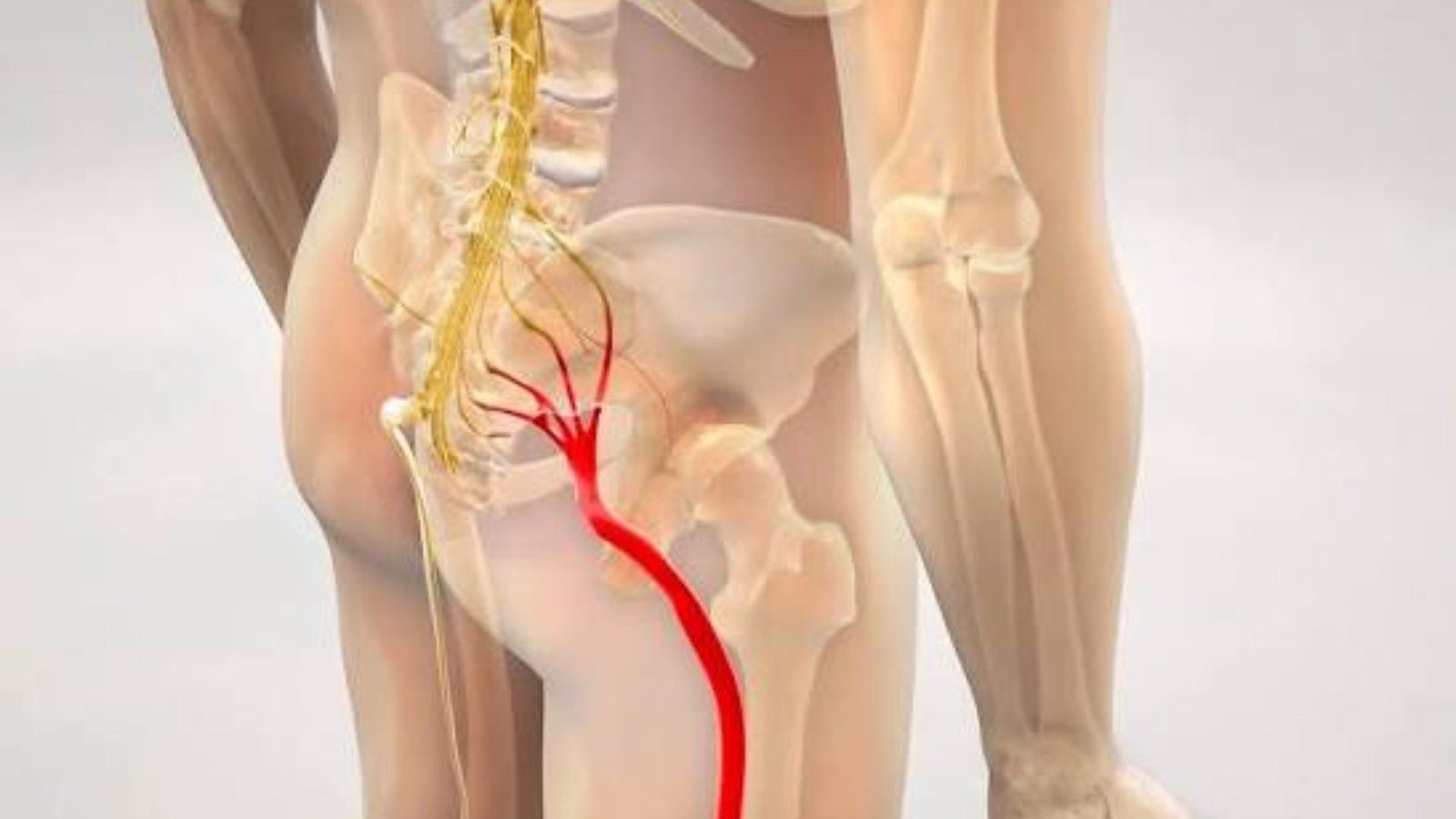
Sciatica can turn ordinary activities such as walking, sitting, sleeping, and working into painful challenges. Many people continue to experience shooting leg pain, tingling, numbness, or weakness despite trying different treatments. The latest sciatica research news offers important findings about injections, acupuncture, complementary therapies, and nerve-block procedures. Several new studies are also helping doctors understand which treatments provide meaningful relief and which require further investigation.
1. What Is Sciatica and Why Is It Receiving More Research Attention?
Sciatica describes pain that travels along the sciatic nerve pathway, usually from the lower back or buttock into one leg. It commonly develops when a spinal nerve root becomes irritated or compressed.
The condition is frequently associated with lumbar disc herniation, spinal canal narrowing, and other changes affecting the lower spine.
Unlike ordinary muscular back pain, sciatica involves symptoms that follow a nerve distribution. These symptoms may affect one or both legs, although one-sided symptoms are more typical.
Common symptoms include:
- Sharp or shooting pain from the lower back into the leg.
- Burning sensations around the buttock or thigh.
- Tingling or pins-and-needles sensations.
- Numbness in the leg or foot.
- Muscle weakness affecting walking or standing.
- Increased discomfort during prolonged sitting, coughing, or sneezing.
Researchers are paying closer attention to sciatica because its effects extend beyond physical discomfort. Persistent nerve pain can interfere with employment, physical activity, sleep quality, and everyday independence.
Another important research question involves identifying which patients can recover with conservative treatment and which may require injections or surgical assessment.
The latest sciatica research news reflects this broader approach to understanding nerve-related back pain.
2. Sciatica Research News 2026: The Most Important Medical Developments
Research published during 2026 has produced several findings worth understanding. Some studies suggest potential benefits from particular treatments, while others challenge commonly used procedures.
The following developments represent different stages of medical evidence. Completed clinical trials provide patient outcome data, whereas ongoing clinical trials identify treatments that researchers still need to evaluate.
Major research developments at a glance
| Research development | Publication or study period | Main finding | Evidence status |
|---|---|---|---|
| Dexamethasone epidural injection | September 2026 | No significant advantage over saline placebo | Completed randomized trial |
| Acupuncture for disc-related sciatica | June 2026 | Better short-term leg-pain improvement than traction | Secondary analysis of randomized trial |
| Fire cupping therapy | October 2026 | Greater short-term improvement than TENS in a small study | Completed randomized trial |
| Ultrasound-guided sciatic nerve block | May 2026 onward | Researchers are comparing nerve blocks with standard emergency care | Ongoing clinical trial |
| NICE sciatica guideline update | July 2026 | Updated recommendations include pharmacological management | Official clinical guidance |
These findings show why patients and healthcare professionals should evaluate individual treatments rather than assume that every new procedure offers better results.
3. New Research Questions the Effectiveness of Steroid Injections for Sciatica
One of the most important findings in the 2026 sciatica research news comes from a randomized clinical trial published in the European Journal of Pain in September 2026.
Researchers investigated whether dexamethasone injections could improve symptoms in people experiencing acute sciatica caused by lumbar disc herniation.
The study, known as the DEXHIA trial, included 106 participants.
Researchers divided participants into two groups:
- Dexamethasone group: Received 16 mg of dexamethasone through an ultrasound-guided caudal epidural injection.
- Placebo group: Received a saline injection without dexamethasone.
The researchers evaluated disability, leg pain, lower back pain, quality of life, repeat injections, and subsequent surgery.
What did researchers discover?
The primary outcome was the change in the Oswestry Disability Index (ODI), a measurement used to assess how back-related problems affect everyday activities.
After three weeks, the researchers reported:
| Measurement | Dexamethasone group | Saline group |
|---|---|---|
| Participants | 53 | 53 |
| Mean ODI improvement | 9.5 points | 13.8 points |
| Statistical comparison | colspan | P = 0.18 |
| Significant treatment advantage | No | No |
The researchers found no statistically significant advantage for dexamethasone over saline.
They also reported no significant differences in the relevant secondary outcomes during the six-month follow-up.
Injection-related adverse events were generally mild and temporary, but occurred more frequently in the dexamethasone group.
What does this mean for people with sciatica?
This study challenges the assumption that a steroid injection automatically provides additional relief for acute disc-related sciatica.
However, it does not establish that every type of epidural injection is ineffective. The researchers examined a specific medication, injection route, and patient population.
Doctors must consider the cause of nerve irritation, symptom duration, examination findings, and individual treatment risks before recommending an injection.
The findings are particularly important because epidural steroid injections remain part of discussions about treatment for persistent nerve-related pain.
4. Acupuncture Shows Short-Term Benefits in New Sciatica Research
Another interesting development in the sciatica research news 2026 involves acupuncture for patients experiencing sciatica during the remission phase of lumbar disc herniation.
The study was published in Medicine on June 5, 2026.
Researchers from institutions associated with the China Academy of Chinese Medical Sciences examined whether acupuncture could provide better symptom relief than traction.
The analysis included 78 participants:
- 39 received acupuncture.
- 39 received traction.
- Both groups received three weeks of treatment.
- Researchers followed participants for 16 weeks.
What were the results?
Researchers measured leg pain using the Visual Analogue Scale (VAS), alongside other measurements of disability and physical function.
The findings showed:
| Follow-up period | Difference in leg-pain score | Statistical significance |
|---|---|---|
| Week 3 | 0.63 cm in favour of acupuncture | P = 0.019 |
| Week 4 | 0.86 cm in favour of acupuncture | P = 0.017 |
| Week 16 | 0.51 cm in favour of acupuncture | Not statistically significant |
The acupuncture group also demonstrated better Japanese Orthopaedic Association (JOA) scores after treatment.
The reported excellent outcome rate was 67.57% in the acupuncture group compared with 47.22% in the traction group.
However, researchers did not identify significant differences in lower back pain or Oswestry Disability Index scores.
Adverse events in the acupuncture group occurred in 8.1% of participants and were described as mild and temporary.
Should patients consider acupuncture?
The findings suggest that acupuncture may help reduce leg pain in selected patients during the remission phase of disc-related sciatica.
However, the results should not be interpreted as proof that acupuncture permanently treats nerve compression or works equally well for every patient.
The study involved a relatively small subgroup and demonstrated clearer benefits in short-term leg-pain measurements than in longer-term outcomes.
More extensive research will help establish which patients are most likely to benefit.
5. Fire Cupping Therapy Enters the Latest Back Pain Sciatica Research News
Fire cupping therapy is another treatment receiving research attention in 2026.
A randomized controlled clinical trial published in the European Journal of Integrative Medicine in October 2026 evaluated fire cupping for patients experiencing sciatica.
The study compared fire cupping, also known as Hijama bi’l Nār, with transcutaneous electrical nerve stimulation (TENS).
Researchers initially randomized 45 patients into two treatment groups.
Both treatments were administered for 20 minutes on alternate days over 15 days.
What did the study find?
Forty participants completed the study, with 20 in each group.
Researchers assessed pain intensity and physical disability using established clinical measurement tools.
The fire cupping group demonstrated greater short-term improvement than the TENS group.
| Outcome | Result favouring fire cupping | P-value |
|---|---|---|
| Pain intensity (VAS) | 1.05 points | 0.012 |
| Disability (ODI) | 3.50 points | 0.004 |
One participant experienced mild bruising, which resolved without additional treatment.
Are these findings enough to recommend cupping?
Not yet.
The results are interesting, but the study involved only 45 participants and followed patients for 15 days.
It also compared two active treatments rather than comparing fire cupping with a placebo or no-treatment group.
Therefore, researchers need larger studies with longer follow-up periods to determine whether the benefits remain over time.
People considering cupping should also understand that fire-based procedures can cause burns, and treatment should never replace appropriate medical assessment.
6. Researchers Are Testing Ultrasound-Guided Sciatic Nerve Blocks
A new clinical trial at the University of California, San Francisco (UCSF) is investigating another approach to managing acute sciatic pain.
The study began in May 2026 and is expected to finish around January 31, 2027.
Researchers are examining whether an ultrasound-guided transgluteal sciatic nerve block can provide better pain relief than standard emergency department treatment.
How does this procedure work?
A sciatic nerve block involves administering a local anaesthetic near the sciatic nerve to interrupt pain signals temporarily.
In the UCSF study, researchers are comparing:
- Ultrasound-guided transgluteal sciatic nerve block.
- Standard medical care for acute sciatic pain.
The study expects to enroll approximately 100 participants aged 18 years and older.
Researchers will assess pain scores and walking ability to understand whether the nerve-block procedure improves immediate patient outcomes.
Why is this research important?
Patients arriving at emergency departments with severe sciatica sometimes struggle to walk or perform basic movements.
A treatment that provides faster pain relief could improve their ability to move while doctors evaluate the underlying cause.
However, this study is ongoing. Its effectiveness has not yet been established, and the results should not be presented as proof that nerve blocks are superior to standard care.
7. What Changed in the 2026 NICE Guidelines for Sciatica?
Clinical guidelines help doctors select treatments based on available scientific evidence.
One important development in the back pain sciatica research news is the updated guidance from the UK’s National Institute for Health and Care Excellence (NICE).
The NICE guideline NG59 addresses the assessment and management of lower back pain and sciatica in people aged 16 and older.
The guideline was originally published in November 2016 and received an update on July 29, 2026.
The latest update includes changes to recommendations concerning pharmacological management.
It also withdraws previous recommendations concerning psychological therapy for low back pain with or without sciatica and combined physical and psychological programmes.
What areas does the guideline cover?
| Clinical area | Purpose |
|---|---|
| Initial assessment | Identify symptoms and possible underlying causes |
| Physical treatment | Consider suitable non-invasive management |
| Medication | Review appropriate pharmacological options |
| Imaging | Determine when diagnostic imaging is necessary |
| Invasive procedures | Evaluate injections and other procedures |
| Surgery | Consider appropriate surgical assessment |
| Follow-up | Monitor symptoms and functional recovery |
An important point is that guidelines are not automatic treatment instructions for every patient.
Doctors must consider individual symptoms, medical history, examination findings, treatment preferences, and possible risks.
The July 2026 update makes NICE guidance particularly relevant to anyone following sciatica research news today.
8. Sciatica Research News 2025: What Research Developments Should Readers Understand?
The year 2025 is important when reviewing the development of sciatica research because clinical investigations often take several years to produce published results.
A study registered in December 2025, for example, concerns C-1101, an investigational treatment for chronic painful lumbosacral radiculopathy.
The study is designed as a Phase 1 randomized, double-blind, single-dose escalation investigation.
Researchers aim to assess the safety and tolerability of transforaminal epidural administration of C-1101 compared with sterile saline.
This is an early-stage investigation, not an established treatment recommendation.
Why are early-stage studies important?
Clinical research generally progresses through different stages.
- Phase 1: Investigates initial safety and tolerability.
- Phase 2: Explores treatment effectiveness and appropriate dosing.
- Phase 3: Evaluates effectiveness and safety in larger patient populations.
- Post-approval monitoring: Examines longer-term safety and treatment performance in broader populations.
For patients following sciatica research news 2025, understanding these stages prevents confusion between experimental treatments and clinically established options.
A treatment entering a clinical trial does not mean it has been proven effective.
Researchers must complete the necessary investigations before healthcare professionals can make reliable recommendations.
9. What Are the Most Promising Areas of Future Sciatica Research?
Recent findings suggest that researchers are examining several different approaches to treating nerve-related back pain.
These approaches focus on pain control, physical function, treatment safety, and identifying patients who may benefit from specific interventions.
1. More targeted nerve treatments
Researchers are studying ultrasound-guided procedures to improve the accuracy of nerve blocks.
Better visualization may help clinicians identify anatomical structures and guide needle placement.
However, improved procedural accuracy does not automatically guarantee better long-term outcomes.
2. Individualized treatment selection
Not every patient experiences sciatica for the same reason.
Some patients have disc-related nerve irritation, while others experience symptoms associated with spinal stenosis or other spinal conditions.
Future research may help doctors identify which treatments are most suitable for specific patient groups.
3. Improved assessment of nerve function
Researchers continue to examine how pain intensity, sensory changes, muscle weakness, and functional limitations relate to recovery.
These measurements can help distinguish temporary symptom improvement from meaningful improvements in everyday mobility.
4. Better evidence for complementary treatments
Acupuncture and cupping have attracted research attention.
However, their effectiveness, appropriate patient selection, treatment frequency, and long-term safety require further investigation.
5. Long-term recovery and recurrence prevention
Reducing pain is only one part of successful treatment.
Researchers also need to understand how patients can maintain mobility, return to normal activities, and reduce the risk of recurring symptoms.
These areas are likely to remain important subjects in future back pain sciatica research news.
10. Which Sciatica Treatments Have Scientific Support?
Patients often encounter different treatment recommendations when searching for ways to relieve sciatic nerve pain.
However, treatments should not be judged solely by popularity or individual testimonials.
The following table explains common approaches and their general clinical purpose.
| Treatment | Main purpose | Important consideration |
|---|---|---|
| Physical therapy | Improve movement, strength, and physical function | Exercises should match the patient’s condition |
| Appropriate physical activity | Maintain mobility and reduce inactivity | Avoid activities that significantly worsen symptoms |
| Pain medication | Manage symptoms when clinically appropriate | Benefits and risks depend on the medication |
| Acupuncture | Potential short-term symptom relief | Evidence varies by patient group and treatment protocol |
| Epidural injections | Target inflammation and pain around spinal nerve roots | Benefits may be limited and depend on the procedure |
| Nerve blocks | Temporarily interrupt pain signals | Long-term effectiveness requires further investigation |
| Spinal surgery | Address selected structural causes of nerve compression | Requires careful clinical assessment |
Why does conservative treatment matter?
Many patients with sciatica improve without surgery.
Depending on the cause and severity, doctors may recommend maintaining suitable daily activity, guided exercises, and appropriate symptom management.
However, treatment should be individualized.
Patients experiencing worsening neurological symptoms should not delay medical assessment simply because conservative treatment is generally preferred initially.
11. How Do Doctors Diagnose Sciatica?
Correct diagnosis is essential before selecting a treatment.
A doctor generally begins by reviewing the patient’s medical history and examining the lower back, legs, muscle strength, sensation, and reflexes.
The examination helps identify whether symptoms are consistent with lumbar radiculopathy.
Common diagnostic approaches
1. Medical history
Doctors ask about:
- Where the pain begins.
- Whether it travels below the knee.
- How long symptoms have continued.
- Whether numbness or tingling occurs.
- Whether walking or sitting makes symptoms worse.
- Whether the patient experiences weakness.
2. Physical examination
A clinical examination may include:
- Straight Leg Raise testing.
- Muscle strength assessment.
- Sensory testing.
- Reflex examination.
- Walking and movement assessment.
3. MRI scanning
Magnetic Resonance Imaging (MRI) can help identify disc herniation, spinal stenosis, and other structural abnormalities.
However, MRI is not necessary for every patient.
Doctors generally consider imaging when the results are likely to change management, when serious underlying conditions are suspected, or when persistent symptoms require further investigation.
4. Additional investigations
Depending on the patient’s symptoms, doctors may recommend other tests to investigate alternative causes of pain or neurological symptoms.
An accurate diagnosis helps prevent unnecessary procedures and supports more appropriate treatment decisions.
12. When Does Sciatica Require Immediate Medical Attention?
Most cases of sciatica do not represent a medical emergency. However, certain symptoms can indicate serious nerve compression or another underlying spinal condition.
One particularly important condition is cauda equina syndrome.
This condition occurs when the nerve roots at the lower end of the spinal cord become severely compressed.
Medical emergency warning
Seek emergency medical attention if you experience:
- New difficulty passing urine or inability to urinate.
- Loss of bladder or bowel control.
- Numbness around the genitals, buttocks, or inner thighs (saddle numbness).
- Severe or rapidly worsening weakness in both legs.
- New sexual dysfunction associated with other neurological symptoms.
These symptoms require urgent assessment because delayed treatment can result in permanent neurological damage.
Progressive leg weakness also requires prompt medical evaluation, even without bladder or bowel symptoms.
13. How Can Patients Support Their Recovery From Sciatica?
Medical treatment is important, but everyday habits can also influence comfort, mobility, and recovery.
Patients should follow an individualized plan developed with a qualified healthcare professional.
Maintain appropriate physical activity
Long periods of bed rest can contribute to reduced muscle strength and physical conditioning.
When medically appropriate, gentle walking and regular movement can help patients maintain daily function.
Avoid prolonged sitting
Sitting for extended periods may aggravate symptoms in some people.
Consider changing positions regularly and taking short movement breaks.
Follow a suitable exercise programme
A physiotherapist may recommend exercises that address:
- Core muscle strength.
- Hip mobility.
- Lower back movement.
- Leg flexibility.
- Functional movement and balance.
Not every exercise is suitable for every type of sciatica.
Stop activities that cause significant worsening of symptoms and discuss them with your healthcare professional.
Maintain a healthy body weight
Excess body weight can increase mechanical demands on the spine.
A balanced diet and appropriate physical activity can support general musculoskeletal health.
Prioritize sleep and recovery
Poor sleep can make persistent pain more difficult to manage.
A comfortable sleeping position and consistent sleep routine may help improve overall recovery.
14. What Does the Latest Sciatica Research Mean for Patients?
The most important lesson from the current research is that treatment effectiveness depends on the condition being treated, the patient population, and the quality of the evidence.
A treatment that helps one group may not provide the same benefit to another.
The following table summarizes the practical implications of the latest findings.
| Research finding | What patients should understand |
|---|---|
| Dexamethasone injection trial | A specific caudal injection showed no significant advantage over saline |
| Acupuncture study | Short-term leg-pain benefits were observed in a selected patient group |
| Fire cupping trial | Positive short-term results require confirmation in larger studies |
| UCSF nerve-block trial | Effectiveness remains under investigation |
| NICE guideline update | Medication recommendations have been updated |
| Early-stage C-1101 study | Safety and tolerability are being investigated, not established effectiveness |
Patients should discuss treatment decisions with qualified clinicians rather than relying on individual research headlines.
Research findings provide useful information, but they cannot replace an examination of the underlying cause of symptoms.
15. Frequently Asked Questions About Sciatica Research News
1. What is the latest sciatica research news in 2026?
Research published in 2026 has examined steroid injections, acupuncture, fire cupping, and ultrasound-guided nerve blocks. A particularly important finding was that a randomized trial found no significant advantage of caudal dexamethasone injections over saline for acute disc-related sciatica.
2. Is there any new treatment for sciatica in 2026?
Researchers are investigating ultrasound-guided sciatic nerve blocks and other treatment approaches. Acupuncture and fire cupping have also produced encouraging short-term findings in small clinical studies. However, these findings do not establish a universally effective new treatment.
3. What does sciatica research news 2025 reveal about future treatments?
Research developments from 2025 include early-stage investigations into treatments for chronic lumbosacral radicular pain. These studies are important for evaluating treatment safety and planning future clinical investigations, but experimental treatments should not be considered proven therapies.
4. Can sciatica go away without surgery?
Yes. Many patients improve without surgery, depending on the underlying cause and severity of nerve irritation. Doctors may recommend appropriate physical activity, guided exercises, and symptom management. Surgery may be considered when symptoms persist or significant neurological problems develop.
5. Does an MRI always confirm sciatica?
No. MRI can identify structural problems such as lumbar disc herniation and spinal stenosis, but imaging findings do not always explain a patient’s symptoms. Doctors interpret MRI results alongside medical history and physical examination findings.
6. When should someone see a doctor for sciatica?
Anyone experiencing persistent, worsening, or recurrent shooting leg pain, numbness, or weakness should seek medical assessment. New bladder or bowel dysfunction, saddle numbness, or rapidly worsening leg weakness requires emergency medical attention.
Conclusion: What Comes Next for Sciatica Research?
The latest sciatica research news highlights an important change in how researchers evaluate back pain and nerve-related conditions. Instead of assuming that one treatment works for everyone, scientists are investigating which approaches provide meaningful improvements for specific patient groups.
The 2026 findings on dexamethasone injections, acupuncture, fire cupping, and ultrasound-guided nerve blocks offer useful insights. However, differences in study size, treatment methods, and follow-up periods mean that researchers still need stronger evidence before making broad treatment recommendations.
Patients should focus on accurate diagnosis, evidence-based treatment, and appropriate medical supervision rather than relying on unverified treatment claims.
As new clinical trials produce results, understanding the science behind sciatica treatment will become increasingly important.
